
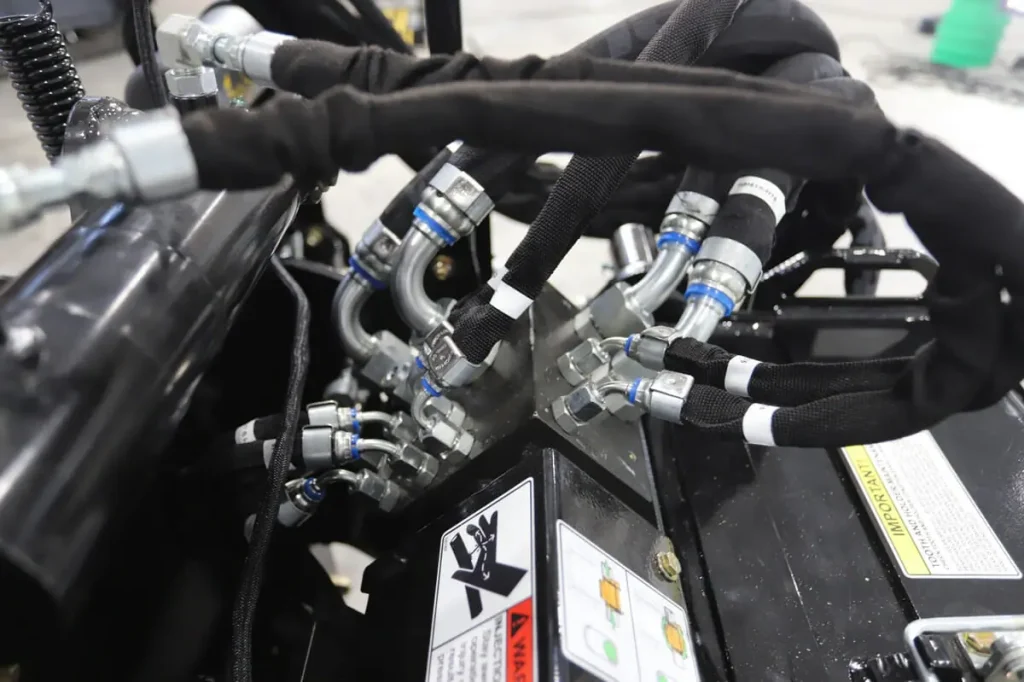
If you run a skid steer loader, you already know how much attachments improve productivity. But the real efficiency comes from how quickly and securely you can connect those attachments. That is where skid steer couplers come in.
Whether you are searching for the best skid steer quick attach system, hydraulic couplers for skid steer, or trying to understand skid steer attachment compatibility, this guide covers everything in one place.
What Is a Skid Steer Coupler?
A skid steer coupler is the system that connects your skid steer loader to attachments like buckets, grapples, augers, and trenchers.
There are two main components:
- Skid steer quick attach coupler that mounts the attachment
- Hydraulic quick couplers that connect hydraulic lines
Both are essential for smooth operation, fast attachment changes, and job site safety.
Types of Skid Steer Couplers and Their Functionality
Understanding different skid steer coupler types helps you choose the right setup for your machine and applications.
Attachment Mounting Couplers
These are often referred to as skid steer quick attach systems or skid steer attachment mounts.
1. Manual Coupler (Pin-On Coupler)
Manual couplers, also known as pin-on couplers, are one of the most basic skid steer attachment mounting systems.
How it works:
The attachment is aligned with the loader arms and secured using pins or manual locking mechanisms.
Best for:
- Heavy-duty skid steer applications
- Operators who do not frequently change attachments
Key benefits:
- Strong and rigid connection
- Lower cost compared to quick attach systems
- Minimal maintenance
Limitations:
- Slow attachment changes
- Requires manual effort
2. Manual Quick Attach Coupler
This is a common step up for operators looking for a skid steer quick attach without hydraulics.
How it works:
The operator hooks the coupler onto the universal mounting plate and manually locks it using levers.
Best for:
- Moderate attachment changes
- Budget-friendly operations
Key benefits:
- Faster than pin-on systems
- No hydraulic setup required
Limitations:
- Operator must leave the cab
- Slower than hydraulic quick attach
3. Hydraulic Quick Attach Coupler
Hydraulic quick attach systems are the industry standard for modern skid steer loaders.
How it works:
Hydraulic cylinders engage locking pins that secure or release attachments from inside the cab.
Best for:
- High productivity environments
- Frequent attachment changes
Key benefits:
- Fast attachment changes
- Increased safety
- Reduced downtime
Limitations:
- Higher upfront cost
- Requires hydraulic compatibility
4. Universal Quick Attach System
Also known as the skid steer universal mounting plate, this is the most widely used system.
How it works:
The coupler hooks onto the top edge of the attachment plate and locks into place at the bottom using pins.
Best for:
- Multi-brand attachment use
- Contractors and rental fleets
Key benefits:
- Works with most skid steer attachments
- Easy to find compatible tools
- Highly versatile
Limitations:
Slight variation in fit across brands
Hydraulic Couplers for Skid Steer Attachments
Hydraulic couplers connect fluid lines between your skid steer and powered attachments. Choosing the right type improves efficiency and reduces connection issues.
1. Flat-Face Hydraulic Couplers
Flat-face couplers are the most common hydraulic quick couplers for skid steer machines today.
How it works:
Flat mating surfaces connect and allow hydraulic fluid to flow with minimal spillage.
Best for:
- Construction sites
- Clean working environments
Key benefits:
- Minimal fluid loss
- Easy to clean
- Reduced contamination
Limitations:
Can be difficult to connect under pressure
2. Poppet-Style Hydraulic Couplers
These are traditional hydraulic couplers still found on older skid steer equipment.
How it works:
Internal poppet valves open when the couplers are connected, allowing fluid to pass through.
Best for:
- General-purpose applications
- Older machines
Key benefits:
- Durable and proven design
- Handles pressure well
Limitations:
- More fluid leakage during connection
- Higher contamination risk
3. Push-Pull Couplers
Push-pull hydraulic couplers are designed for fast connection and disconnection.
How it works:
They lock when pushed together and can be disconnected by pulling, sometimes even under pressure.
Best for:
- High-speed operations
- Frequent attachment changes
Key benefits:
- Quick and easy operation
- Reduced connection time
Limitations:
Can wear faster with heavy use
4. Decompression Hydraulic Couplers
Decompression couplers solve one of the most common problems in skid steer operation: trapped hydraulic pressure.
How it works:
They release built-up pressure before connecting, making it easier to attach hydraulic lines.
Best for:
- High-pressure systems
- Operators dealing with connection difficulty
Key benefits:
- Easier connection under pressure
- Reduces wear on seals
- Improves operator experience
Limitations:
- More complex design
- Higher cost
Why the Right Skid Steer Coupler Matters
Choosing the right skid steer attachment coupler impacts your entire workflow.
Faster Attachment Changes
Using a skid steer quick attach system reduces downtime and increases productivity.
Improved Safety
Secure couplers and leak-free hydraulic connections lower job site risks.
Better Equipment Performance
Proper alignment and strong connections reduce wear on both attachments and your skid steer loader.
Key Features to Look For
When buying the best skid steer coupler, focus on features that improve real-world performance.
- Heavy-duty construction for durability
- Universal compatibility with skid steer attachments
- Reliable locking mechanism
- Easy hydraulic connection
- Low maintenance requirements
Common Problems and Solutions
Skid Steer Hydraulic Couplers Not Connecting
- Cause: trapped pressure
- Solution: use decompression couplers or relieve pressure before connecting
Hydraulic Fluid Leaks
- Cause: worn seals or dirty couplers
- Solution: clean and inspect regularly
Loose Attachments
- Cause: worn locking pins
- Solution: replace worn components and check engagement
Maintenance Tips for Skid Steer Couplers
- Clean hydraulic couplers before connecting
- Inspect skid steer quick attach system daily
- Lubricate moving parts
- Replace seals and worn components early
When to Upgrade Your Skid Steer Coupler
Upgrade your coupler system if:
- You frequently change attachments
- Hydraulic connections are difficult
- You experience frequent leaks or downtime
Switching to hydraulic quick attach and flat-face hydraulic couplers can significantly improve efficiency.
Final Thoughts
A skid steer coupler is one of the most important components of your machine. Choosing the right skid steer quick attach system and hydraulic couplers can save time, reduce maintenance, and improve job site performance.
If you want better productivity and smoother operation, investing in the right coupler setup is a smart move.
FAQs
What is the best skid steer coupler type?
Hydraulic quick attach couplers with flat-face hydraulic couplers are the most popular for modern machines.
Are skid steer couplers universal?
Most use a universal quick attach system, but always check compatibility.
Why won’t my skid steer hydraulic couplers connect?
Trapped pressure is the most common reason. Decompression couplers can solve this issue.
What are flat-face hydraulic couplers used for?
They are used to reduce hydraulic fluid leaks and contamination in skid steer attachments.
If you are looking to improve efficiency, reduce downtime, and get more from your attachments, upgrading your skid steer coupler system is one of the most practical investments you can make.