A skid steer snow blade is one of the most versatile snow removal attachments you can put on your machine. It pushes, angles, and windrows snow off driveways, parking lots, and roads, and some models double as a material blade once the snow melts. But a blade is not the right tool for every job. Snow pushers move more snow straight ahead, snow blowers throw it off the site, and V-blades break through heavy drifts.
This guide explains how a skid steer snow blade works, which features matter most, how it compares with other snow removal attachments, and how to size one for your machine and property.
Quick answer: Choose a snow blade if you need to push snow to the side along roads, driveways, and lot edges. Choose a snow pusher to move large volumes straight ahead in open parking lots. Choose a snow blower when there is no room left to pile snow. Choose a V-blade for heavy, drifted, or packed snow.
What Is a Skid Steer Snow Blade?
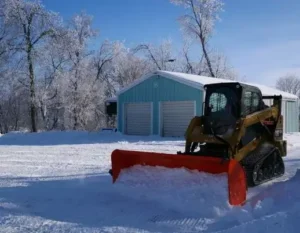
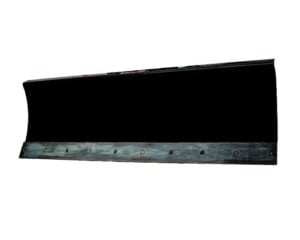
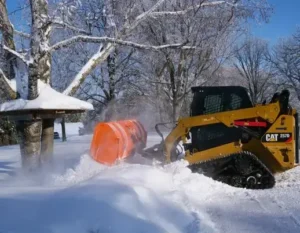
A skid steer snow blade is a curved steel moldboard that mounts to your machine’s quick attach and pushes snow forward or off to either side. Hydraulic angle cylinders, powered by your skid steer’s auxiliary hydraulics, let you swing the blade left or right from the cab. That means you can windrow snow off a road or driveway in one pass instead of pushing it all straight ahead.
How Does a Skid Steer Snow Blade Work?
- Mount the blade: Lock the blade onto the skid steer’s quick attach and connect its hydraulic hoses to the auxiliary circuit.
- Set the angle: Use the auxiliary controls to angle the blade left, right, or straight ahead.
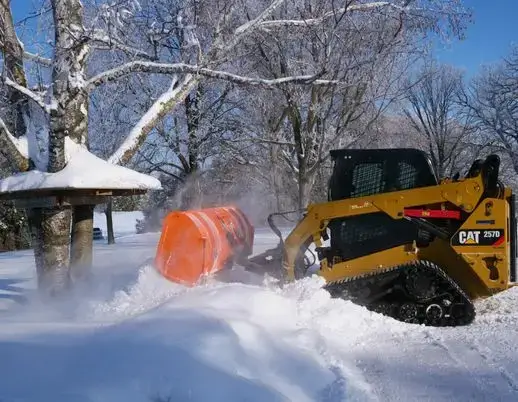
- Push and roll the snow: As you drive forward, the cutting edge scrapes the surface and the curved moldboard rolls snow up and off the trailing side of the blade.
- Trip over hidden obstacles: If the edge catches a buried curb or raised slab, the spring trip lets the moldboard tip forward and reset, protecting the blade, the machine, and the operator.
Key Parts of a Skid Steer Snow Blade
- Moldboard: The curved main surface that catches and rolls snow. A taller, deeper moldboard holds more snow per pass.
- Angle cylinders: Hydraulic cylinders that swing the blade left or right. Two cylinders give more strength and more precise control than one.
- Cutting edge: The replaceable steel strip that scrapes the pavement. A reversible edge can be flipped to extend its life.
- Skid shoes: Shoes that carry the blade’s weight, set the cutting height, and help it ride over uneven surfaces.
- Trip mechanism: Springs that let the moldboard tip when it hits an obstruction, then return it to position.
Snow Blade vs. Snow Pusher vs. Snow Blower vs. V-Blade
The best skid steer snow attachment depends on where the snow needs to go. Here is how the most common options compare:
| Attachment |
Best for |
How it moves snow |
Keep in mind |
| Snow blade |
Roads, driveways, lot edges, windrowing |
Pushes straight or angles snow to either side |
Snow can spill off the ends on long straight pushes unless you add a wing kit |
| Snow pusher |
Large, open parking lots and stacking piles |
Box-style side plates contain snow and move big volumes straight ahead |
Cannot angle snow to the side; needs room to pile |
| Snow blower |
Deep snow, tight sites, nowhere left to pile |
Augers feed snow into a fan that throws it out of the area |
Needs adequate hydraulic flow; travel speed is slower than pushing |
| V-blade |
Drifts, packed or heavy snow, mixed jobs |
Works in V, scoop, straight, and angled positions |
Higher cost and weight than a standard blade |
Want a blade and a pusher in one attachment? The hydraulic snow blade pusher combo uses hydraulic wings so you can switch between angling and containing snow from the cab. For a deeper comparison, read our guide to hydraulic snow blades vs. snow pushers or our roundup of the best skid steer snow removal attachments.
Advantages of a Skid Steer Snow Blade
- Directional snow placement: Angle snow to either side to clear long routes and windrow snow away from traffic.
- Maneuverability: A skid steer’s tight turning radius lets the blade work around buildings, parked vehicles, curbs, and loading docks where a truck plow cannot fit.
- Efficient clearing: A wide, curved moldboard clears a full lane each pass and rolls snow off instead of bulldozing it.
- Flexible applications: Use it on roads, parking lots, driveways, and other paved or gravel surfaces.
- Year-round use: Some blades, including the Skid Pro snow blade, have a locking trip moldboard so you can use them for light dirt work, material moving, and above-ground grading after winter.
Types of Skid Steer Snow Blades
- Straight (fixed) snow blade: Stays square to the machine and pushes snow straight ahead. It is simple and economical for small properties and short driveways, but snow builds up in front of the blade on longer runs.
- Hydraulic angle snow blade: Uses hydraulic cylinders to angle the moldboard left or right from the cab. It is the most popular choice for contractors because you can windrow snow without stopping to reposition the blade. The Skid Pro snow blade is this type.
- V-blade: Hinges in the middle so it can form a V to split drifts, a scoop to carry snow, or a straight or angled blade. It is best for heavy or changing snow conditions. See the Skid Pro V-blade.
- Blade and pusher combo: A hydraulic blade with hydraulic end wings that extend to contain snow like a pusher, then retract so the blade can angle.
Key Features to Look for in a Skid Steer Snow Blade
- Heavy-duty construction: Look for thick steel and a reinforced frame, back, and attach area. The Skid Pro snow blade uses 7-gauge construction built for commercial work.
- Tall, curved moldboard: A tall, deep-dish moldboard holds more snow and rolls it off cleanly. Skid Pro’s blade stands 33 inches tall.
- Dual angle cylinders: Two cylinders give more power to angle into heavy snow and finer control than single-cylinder designs.
- Reversible, replaceable cutting edge: A high-carbon steel edge that flips when one side wears lowers long-term cost. Skid Pro uses a 5/8″ x 6″ reversible edge.
- Adjustable spring trip: Protects the blade, machine, and operator when you hit something buried under the snow. Adjustable tension lets you set how easily the moldboard trips.
- Oversized, hardened skid shoes: Last longer and help the blade ride over uneven surfaces with the right down pressure.
- Optional wing kit: Adds end plates that contain snow and give pusher-like performance in open lots.
How to Choose the Right Skid Steer Snow Attachment
- Decide where the snow needs to go: If you push snow to the side of a road or driveway, choose a blade. If you push snow into large piles in an open lot, choose a pusher. If you are out of room to pile it, choose a blower.
- Know your snow: Light, dry snow is easy for any attachment. Wet, heavy, drifted, or packed snow calls for a heavier blade with dual cylinders, or a V-blade.
- Size the blade to your machine: Choose a blade whose fully angled width is at least as wide as your skid steer’s tires or tracks, so the machine drives on cleared pavement. A blade is narrower when angled; Skid Pro’s 72″ to 108″ blades measure 62″ to 98″ at full angle.
- Check capacity and hydraulics: Confirm that the attachment’s weight is within your skid steer’s rated operating capacity and that your auxiliary hydraulics meet its requirements. Skid Pro snow blades weigh from 846 to 1,100 lbs.
- Match the width to the site: Wider blades clear more per pass but are harder to maneuver around parked cars, posts, and narrow entrances.
- Prioritize durability for commercial work: Inspect welds, frame reinforcement, cylinders, trip springs, and skid shoes. A breakdown in the middle of a storm costs more than the price difference between a light-duty and heavy-duty blade.
- Plan for maintenance and support: Make sure cutting edges and wear parts are replaceable, and that the manufacturer provides a parts breakdown, owner’s manual, and warranty.
Skid Pro Snow Blade Specifications
| Blade width |
Angled width |
Operating weight |
Height |
Cutting edge |
| 72″ |
62″ |
846 lbs |
33″ |
5/8″ x 6″ reversible |
| 84″ |
74″ |
928 lbs |
33″ |
5/8″ x 6″ reversible |
| 96″ |
86″ |
1,010 lbs |
33″ |
5/8″ x 6″ reversible |
| 108″ |
98″ |
1,100 lbs |
33″ |
5/8″ x 6″ reversible |
Every model includes two industrial angle cylinders, a spring trip moldboard with adjustable tension that locks out for dirt work, XL hardened skid shoes, and a universal quick attach that fits major skid steer brands, including Bobcat, CAT, Case, John Deere, Kubota, New Holland, and more.
Get the Right Snow Blade Before the First Storm
If you need to push and windrow snow with directional control, a skid steer snow blade is hard to beat. The Skid Pro snow blade comes in 72″, 84″, 96″, and 108″ widths with hydraulic angle control, dual cylinders, a reversible cutting edge, spring trip protection, and an optional HD wing kit.
Download the Price List to compare snow blade sizes and pricing, or call 877-378-4642 to talk with our team about the right size for your machine. You can also browse all Skid Pro snow removal attachments.
Frequently Asked Questions
What size snow blade do I need for my skid steer?
Choose a blade whose angled width covers the width of your machine’s tires or tracks and whose weight is within your skid steer’s rated operating capacity. Smaller machines generally pair best with narrower blades, while larger machines working open lots can handle wider ones. If you are unsure, contact Skid Pro with your machine’s make and model.
Is a snow blade or a snow pusher better for a skid steer?
A snow blade is better when you need to angle snow to the side, such as on roads, driveways, and lot edges. A snow pusher is better for moving large volumes of snow straight ahead in wide-open parking lots. Many contractors run both, or use a blade with a wing kit.
Does a skid steer snow blade need auxiliary hydraulics?
A hydraulic angle blade does. Its angle cylinders run off your skid steer’s auxiliary hydraulic circuit so you can change the blade angle from the cab.
Can a skid steer snow blade be used for jobs other than snow removal?
Some can. The Skid Pro snow blade has lockable trip springs, so you can lock the moldboard and use it for light material handling, light dirt work, and above-ground grading.
What blade widths are available for the Skid Pro snow blade?
Skid Pro offers 72″, 84″, 96″, and 108″ snow blades. Their angled widths are 62″, 74″, 86″, and 98″, and operating weights range from 846 to 1,100 lbs.
How does a reversible cutting edge reduce maintenance?
When one side of a reversible cutting edge wears, you flip it and use the second edge. Once both sides are worn, you replace only the edge instead of the whole blade. The Skid Pro snow blade uses a 5/8″ x 6″ high-carbon steel reversible edge.
What does the snow blade wing kit do?
The optional HD wing kit adds end plates that help the blade contain and carry snow, giving it pusher-like performance. The wings pin back for storage on the blade when you do not need them.