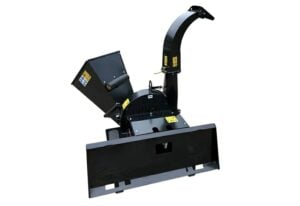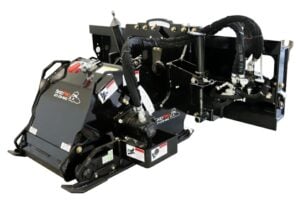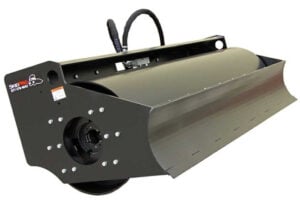

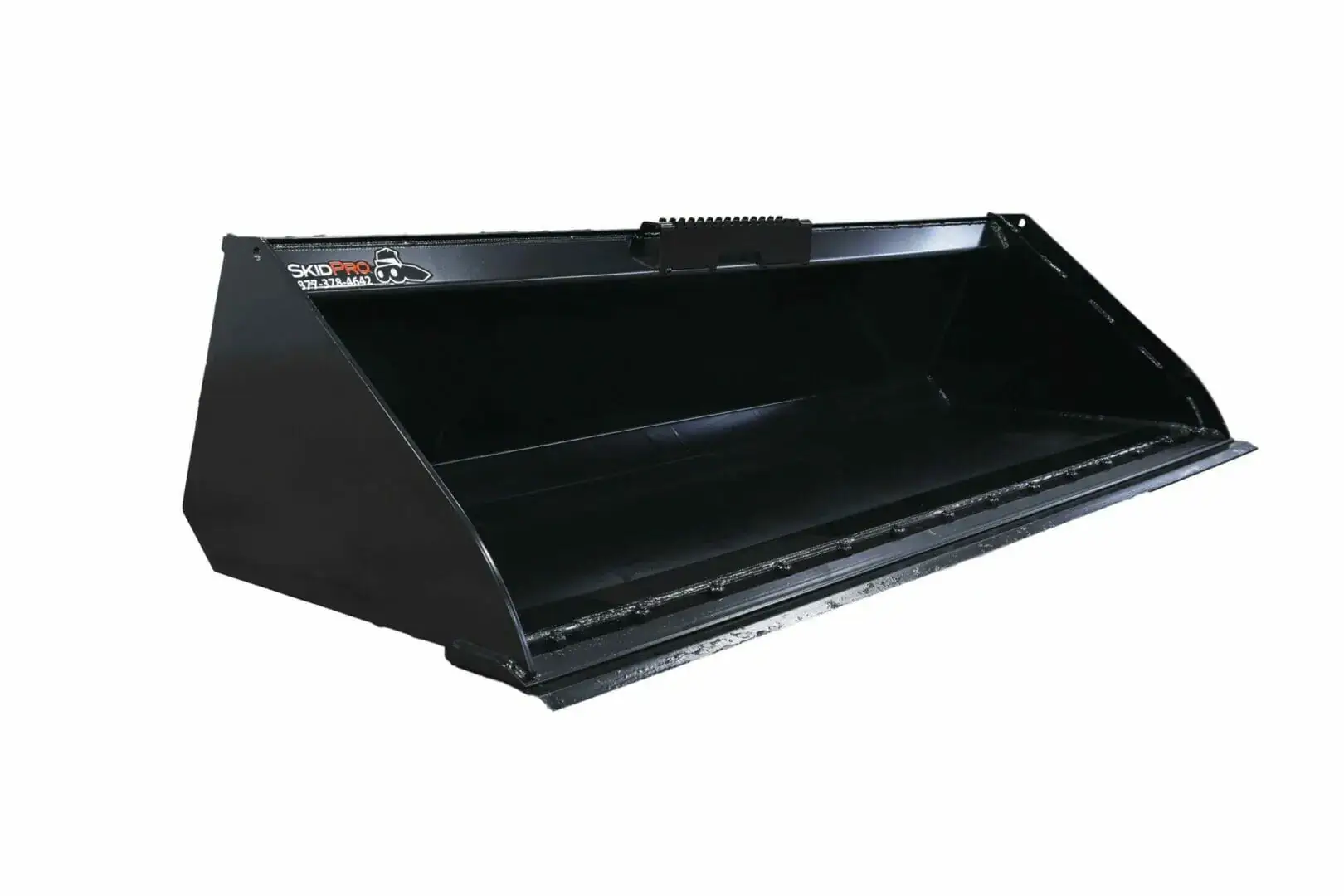
Best overall: a general-purpose skid steer bucket. Best for pallet handling: pallet forks. Best for seasonal snow contracts: a snow pusher. The best skid steer attachments for equipment rental yards in 2026 match a defined customer job, fit the assigned loader, and come with operating instructions your counter staff can explain.
A rental attachment has to work for the customer and the yard. Your staff must assign a compatible machine, explain the operating method, and inspect the attachment when it returns. An attachment that fits the mounting plate still needs the correct hydraulic supply and a suitable carrier.
For your 2026 fleet plan, separate general handling tools from job-specific attachments. Buckets and forks address material handling; trenchers, augers, and brush cutters require a more specific job discussion. Buy against recorded requests and compatible machines—not an assumed utilization rate.
Skid Pro manufactures skid steer attachments and sells directly to equipment owners. That gives rental buyers access to manufacturer guidance, but it does not replace checking the exact attachment against the exact loader.
Use these 5 fit checks before comparing construction details or deciding how many attachments to purchase:
Do not treat “high flow” or a loader brand name as a complete compatibility answer. Put the actual machine specifications beside the attachment requirements. Skid Pro’s Product Gurus provide live support; use that access to resolve fit questions before placing an order.
This 2026 shortlist ranks attachment categories by their role in a rental fleet. It is a buying sequence, not a claim that one model outperforms another.
| Rank | Attachment | Best for | Standout function | Key limitation |
|---|---|---|---|---|
| 1 | General-purpose bucket | Loose-material handling | Scoops, carries, and places material | Does not secure irregular loads |
| 2 | Pallet forks | Palletized deliveries | Supports loads beneath the pallet | Capacity depends on the carrier and load position |
| 3 | Skid steer auger | Repeated post holes | Drills with a rotating bit | Ground conditions determine tooling needs |
| 4 | Skid steer grapple bucket | Irregular cleanup loads | Clamps material during handling | Adds hydraulic and moving-component checks |
| 5 | Skid steer trencher | Defined trench routes | Cuts a narrow excavation path | Requires suitable ground and utility clearance |
| 6 | Sweeper | Surface cleanup | Collects or moves loose surface debris | Collection and angle-broom methods differ |
| 7 | Brush cutter | Vegetation maintenance | Cuts vegetation within its rated application | Requires guarding and operating-area controls |
| 8 | Snow pusher | Open-area snow clearing | Pushes accumulated snow | Depends on local winter work |
A general-purpose bucket is the default first purchase for a yard serving customers who move soil, aggregate, or other loose material. It scoops and carries material without adding a separate powered work function. Select the bucket around the loader and the intended material, not width alone.
Bucket pros:
Bucket cons:
Best for: Customers moving loose material around a site.
Inspect the cutting edge, attachment plate, welds, and bucket shell between rentals. Confirm whether the customer wants loading, grading, or another task before assuming a general-purpose bucket is sufficient.
Verdict: Buy first for a general-purpose material-handling fleet.
Pallet forks give customers a way to handle palletized materials with a compatible skid steer or track loader. Fork length, frame configuration, attachment rating, and the loader’s limits all matter. A fork rating alone does not establish what the complete machine can safely lift.
Pallet fork pros:
Pallet fork cons:
Best for: Contractors receiving palletized materials on accessible ground.
Ask what the customer is lifting, how the load is packaged, and where it must travel. Do not substitute forks for a grapple when material cannot sit securely on the tines.
Verdict: Buy alongside a bucket when pallet handling is a documented rental need.
An auger uses a hydraulic drive and rotating bit to bore holes. It fits fence and post-hole work when the selected tooling matches the ground and the required hole. Confirm diameter, depth, access, and subsurface conditions before selecting the assembly.
Auger pros:
Auger cons:
Best for: Customers installing posts with a confirmed drilling plan.
Record the drive unit and bit supplied together. Inspect the bit, teeth, retaining hardware, hoses, and drive connections on return, following the manufacturer’s instructions. Establish utility-location requirements before drilling starts.
Verdict: Buy when post-hole requests support a dedicated drilling attachment.
A grapple bucket combines a supporting bucket or lower structure with a hydraulic clamp. The clamp helps retain material that a plain bucket cannot secure. Match the configuration to the debris rather than treating every grapple as interchangeable.
Grapple bucket pros:
Grapple bucket cons:
Best for: Cleanup customers handling suitable brush or irregular debris.
Ask whether the customer needs to retain loose material or let soil fall through. That distinction affects the appropriate lower structure. Verify the loader’s capacity with the selected attachment and intended load.
Verdict: Buy for a defined cleanup application; skip a generic one-grapple-fits-all policy.
A trencher cuts a narrow excavation using a digging chain. Selection starts with the required trench dimensions and ground conditions, then moves to carrier compatibility and chain configuration. A trenching request is not complete until the customer explains what the trench must accommodate.
Trencher pros:
Trencher cons:
Best for: Customers with a planned trench and suitable site conditions.
Include chain condition, tension checks, teeth, hoses, and guarding in the inspection procedure. Follow the attachment manual rather than applying one maintenance setting across different trenchers.
Verdict: Hold until trench requests and compatible carriers justify the purchase.
Choose the sweeping method before choosing the attachment. A collection sweeper gathers debris; an angle broom directs it across the surface. The customer’s disposal plan and site conditions determine which method fits.
Sweeper pros:
Sweeper cons:
Best for: Customers cleaning suitable paved or hard surfaces.
Ask where the debris must end up. Moving material to the edge of a site is not the same result as collecting it for disposal. Inspect the brush and any collection mechanism according to the model’s instructions.
Verdict: Buy the sweeping method your customers request, not an unspecified “broom.”
A brush cutter serves customers cutting vegetation within the attachment’s published limits. Selection requires the vegetation type, hydraulic requirements, guarding requirements, and site conditions. Do not treat a brush cutter and a forestry mulcher as equivalent tools.
Brush cutter pros:
Brush cutter cons:
Best for: Qualified operators maintaining vegetation within the cutter’s rated application.
Confirm all required carrier protection and operating precautions from the equipment manufacturers. Explain inspection, shutdown, and clearance procedures before dispatch.
Verdict: Hold until the yard can support application screening and a proper operating handoff.
A snow pusher moves accumulated snow toward a planned storage area. It fits a different job from a snow blower, which discharges snow away from the attachment. Site layout and the available stacking area determine whether pushing is the appropriate method.
Snow pusher pros:
Snow pusher cons:
Best for: Customers clearing suitable open areas with designated snow storage.
For your 2026 winter plan, confirm surface type, edge selection, machine fit, and obstacle-management instructions. Do not select solely by clearing width.
Verdict: Buy for documented winter customers; hold where seasonal requests do not support it.
The order prioritizes defined jobs, machine fit, operating instruction, and inspection requirements. It does not represent measured rental demand or model-level durability testing. Your own booking requests and service records determine whether a specialized attachment belongs higher on your purchase list.
Skid Pro’s manufacturer-direct model provides a route to attachment-specific guidance. Ask about the exact configuration, required maintenance, and documented machine fit before approving your 2026 purchase order.
Start with a bucket and pallet forks when your customers need general material handling. Add an auger for post-hole work, a grapple for irregular cleanup, and a trencher for defined excavation requests. Treat sweepers, brush cutters, and snow pushers as application-led additions.
Before dispatch, complete 3 handoff steps: verify the machine-and-attachment pairing, demonstrate operation and shutdown, and record the attachment’s condition. Keep 2 records together: the approved compatibility information and the signed checkout inspection. Neither replaces the equipment manuals or required operator training.
Choose attachments for your rental fleet
Review attachment choices, then confirm machine specifications and application with a Product Guru.
Buckets and pallet forks are the starting choices for general material-handling rentals. Add specialized attachments against recorded customer requests and verified carrier compatibility.
Choose a bucket first for loose-material handling and a grapple for loads that need clamping. The customer’s material and handling method determine the choice.
The required GPM comes from the exact attachment’s published specifications. Check pressure, return requirements, connections, and the assigned loader’s hydraulic configuration as well.
Do not assume one attachment fits every loader. Verify the mounting interface, hydraulic requirements, attachment weight, carrier limits, and intended application for each pairing.
A brush cutter and a forestry mulcher are different attachment categories. Select according to the manufacturer’s stated material limits, operating method, and carrier requirements.
Inspect the mounting components, structure, wear parts, guarding, and any hydraulic components specified by the manufacturer. Record damage and resolve safety defects before the next dispatch.
Skid Pro provides access to live Product Gurus for attachment guidance. Supply the machine model, hydraulic specifications, and intended job so the discussion addresses the actual pairing.
An attachment can connect correctly and still be wrong for the job. Label each approved fleet pairing with the machine identification and operating requirements—not just the attachment name. That gives counter staff a specific dispatch reference instead of relying on memory.