
Snow removal contractors’ skid steer attachments are tools for pushing, directing, loading, or throwing snow with the aim of keeping contracted surfaces clear. Choose the attachment around the site’s snow-storage plan, then verify the loader’s mounting interface, hydraulic flow in GPM, pressure, operating capacity, and required controls.
Your attachment has to fit both the loader and the contract. Clearing pavement does not finish the job if the resulting pile blocks parking, hides a sightline, or leaves nowhere to put the next snowfall.
Choose the snow destination before choosing the attachment. Open pavement with designated stacking space calls for a different operating method than a confined property where snow must be discharged beyond the travel path or loaded for removal.
Skid Pro manufactures attachments and sells directly to equipment owners. That gives contractors a direct source for attachment selection and machine-fit questions; it does not remove the need to check the specific loader and attachment combination.
For your 2026 equipment plan, separate clearing, stacking, discharge, and loading tasks. One attachment can perform several jobs, but each operating method has limits. A bucket handles loading; a blade directs snow; a blower throws it. None solves every property constraint.
Start with a property walk and a marked site plan. Identify where snow can remain, where it must move, and which areas need access throughout the storm. You can do this with photographs and a paper sketch before discussing equipment.
A large attachment does not compensate for a poor stacking plan. Long pushes, repeated repositioning, and blocked access all belong in the selection decision—not just the width of the pavement.
Record the following for each contracted property:
Use the loader manual and attachment documentation first. A familiar mounting plate or matching machine brand is not enough: hydraulic requirements, controls, attachment mass, and load position also determine fit.
For a hydraulic attachment, compare the specified operating range with the auxiliary circuit you will actually use. Record flow in GPM and pressure in psi separately. Flow and pressure are different requirements; one matching value does not establish compatibility.
When documents use different units, 1 US gallon equals approximately 3.785 liters, 1 psi equals approximately 6.895 kPa, and 1 inch equals 25.4 millimeters. These are unit conversions, not attachment operating limits. Keep original specifications beside converted values so a transcription error does not become an ordering error.
Check these items before approving a combination:
Choose the method manually from your site plan before comparing models. Push snow toward approved storage, angle snow along a route, throw snow toward a safe discharge zone, or load it when it must leave the property.
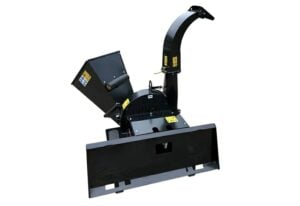
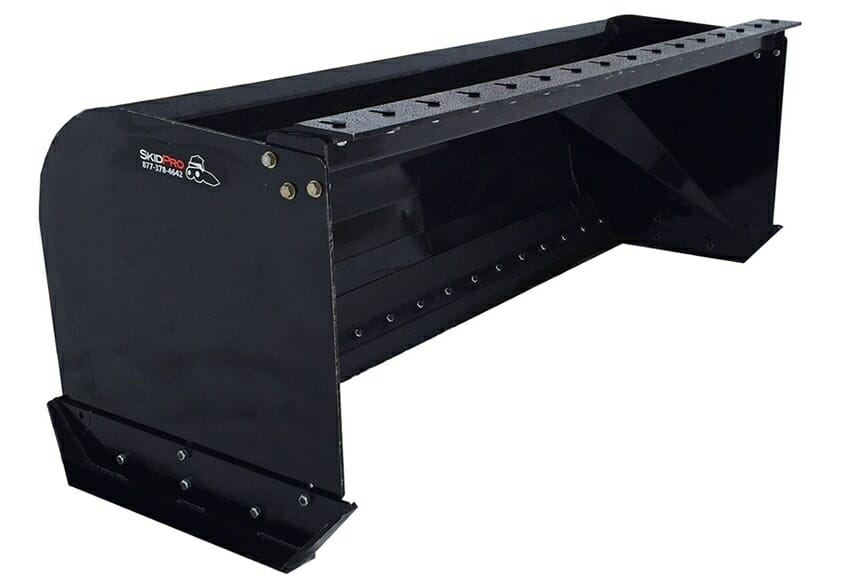
A snow pusher keeps material moving ahead of the loader. An angled blade directs it to one side. A snow blower uses powered components to collect and discharge it. A bucket scoops and carries it. Those differences matter more than a general claim that an attachment is good for winter work.
Skid Pro offers snow blowers, buckets, and other attachment categories, with live Product Guru support available 24 hours a day. Use that advice to check a documented machine-and-job combination, rather than asking for the widest attachment available.
For your 2026 selection, bring these details to the discussion:
Inspect the property before snow hides its hazards. Raised utility covers, expansion joints, curbs, gravel transitions, and damaged pavement affect how you approach the work and set ground contact.
Follow the attachment manual for cutting-edge adjustment, skid shoes, float functions, and any trip mechanism. Do not assume those features are present on every model. A setting suitable for paved ground is not automatically suitable for gravel or an uneven surface.
Use a controlled first pass to check contact and handling. Stop and correct digging, excessive material pickup, or unstable handling before continuing across the site.
Plan the route on paper, then confirm it on the property. Establish the direction of travel, the order of clearing, and the final location of snow. Keep the operating method consistent with the attachment’s instructions and the loader’s limits.
For a blower, plan discharge direction before engaging the attachment. For a pusher or blade, leave room to maneuver near the pile. For a bucket, keep travel and dumping within the loader’s documented operating limits.
Your 2026 route sheet should explain what the operator does when the primary pile location fills. Without that instruction, clearing decisions become improvised during the storm.
Use a written pre-use inspection and a simple job log. Follow the loader and attachment manuals for inspection points, lubrication, maintenance, and shutdown. Record defects before dispatch, not after they interrupt a contracted job.
Measure performance against the work your contract requires. A cleared area, an accessible entrance, and an acceptable snow pile are more useful outcomes than an operator’s impression that an attachment feels fast.
For your 2026 review, compare records from similar sites and conditions. Do not treat a wet-snow loading job and a light-snow pavement pass as equivalent evidence.
The best attachment is the one that moves snow to the required destination within your machine’s limits. This comparison describes operating methods, not specifications for a particular model. Verify width, weight, hydraulic requirements, and controls in the documentation for the attachment you select.
| Option | Best for | Practical advantage | Key limitation |
|---|---|---|---|
| Snow pusher | Open paved areas with designated stacking space | Contains snow ahead of the loader during a push | Requires room for pushing, maneuvering, and storing the accumulated snow |
| Snow blade | Directing snow along lanes and routes | An angled blade directs snow to the side while traveling | Creates windrows that still need an acceptable destination |
| Snow blower | Sites requiring controlled discharge beyond the clearing path | Throws collected snow rather than relying only on pushing | Requires verified hydraulic fit and a safe discharge zone |
| Bucket | Loading, relocating piles, and handling gathered snow | Scoops and carries material for placement or loading | Uses a scoop-and-dump cycle rather than continuous clearing |
| Rotary broom | Light loose snow and surface cleanup within the model’s stated application | Sweeps material from the surface | Is not a substitute for bulk snow removal or bonded-ice treatment |
A pusher and a blower are not interchangeable answers to the same site problem. The pusher needs storage space reachable by the loader; the blower needs a safe place to discharge snow and a compatible hydraulic circuit.
A bucket remains useful when the job changes from clearing to loading. Its limitation is the handling cycle: scooping, traveling, and dumping are separate operations. Choose it for that job rather than expecting it to behave like a continuous snow-clearing attachment.
For manufacturer-direct snow attachment selection, Skid Pro provides live fit advice. The contractor still needs to supply accurate machine specifications and property constraints; advice cannot replace those inputs.
Check your snow attachment fit
Have your loader model, hydraulic specifications, and snow-handling plan ready for a Product Guru.
A wide attachment is not useful if it cannot work through the property’s narrowest passage or turn near the approved pile. Check access and maneuvering space before selecting width. Include the attachment’s working position, not just the loader’s dimensions.
High flow is a loader configuration, not a guarantee of attachment fit. A powered attachment needs its specified flow and pressure range. Confirm the circuit, controls, couplers, and any required case drain instead of relying on a machine badge.
A clean traffic lane beside a blocked entrance is unfinished work. Put stacking locations and discharge exclusions on the site plan. Define the alternative before the primary storage area fills.
A broom’s surface-cleaning role does not make it a bulk-removal attachment. Likewise, pushing snow does not remove bonded ice. Separate bulk clearing, residual cleanup, and ice treatment in the contract and equipment plan.
Gravel, uneven pavement, and finished surfaces need attention to ground contact. Follow the model’s adjustment instructions and inspect the first pass. Carrying a setting from another property without checking the surface risks digging or unwanted material pickup.
The best skid steer attachments for snow removal contractors depend on where the snow must go: pushers for open areas with stacking space, blades for directing snow, blowers for controlled discharge, and buckets for loading. Check each attachment against the loader’s mounting interface, hydraulics, operating capacity, and controls.
A snow pusher suits parking lots with usable stacking space; a snow blower suits jobs requiring snow discharge beyond the clearing path. Neither is universally better because storage space, discharge restrictions, and machine fit determine the choice.
You need the hydraulic flow and pressure specified for the particular snow blower, not high flow by default. Verify the selected loader circuit, control connections, couplers, and any case-drain requirement before ordering.
Use a snow attachment on gravel only as permitted by its instructions, with ground-contact settings appropriate to that surface. Inspect the first pass for digging or material pickup, and keep any discharge zone clear.
The same snow attachment fits both machines only when each machine meets the attachment’s mounting, hydraulic, control, and operating requirements. A shared-looking mounting plate does not establish complete compatibility.
A rotary broom does not replace a snow pusher for bulk snow removal. Use a broom for light loose snow or cleanup only within the model’s documented application, and plan separately for accumulated snow and bonded ice.
Have your loader model, hydraulic flow and pressure specifications, control details, and property snow-handling plan ready before contacting Skid Pro. Include surface type, access restrictions, and whether you need to push, throw, or load the snow.
Measure the usable snow-storage area, not just the area you must clear. A property can have room for the loader but no acceptable destination for another pile. For your 2026 plan, mark that constraint before buying an attachment; it determines whether your job needs pushing, controlled discharge, or loading.