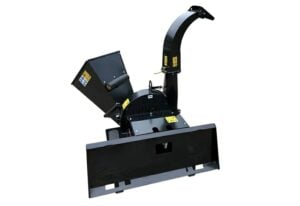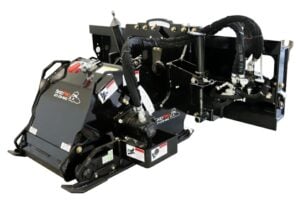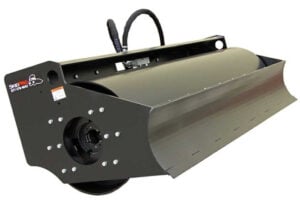

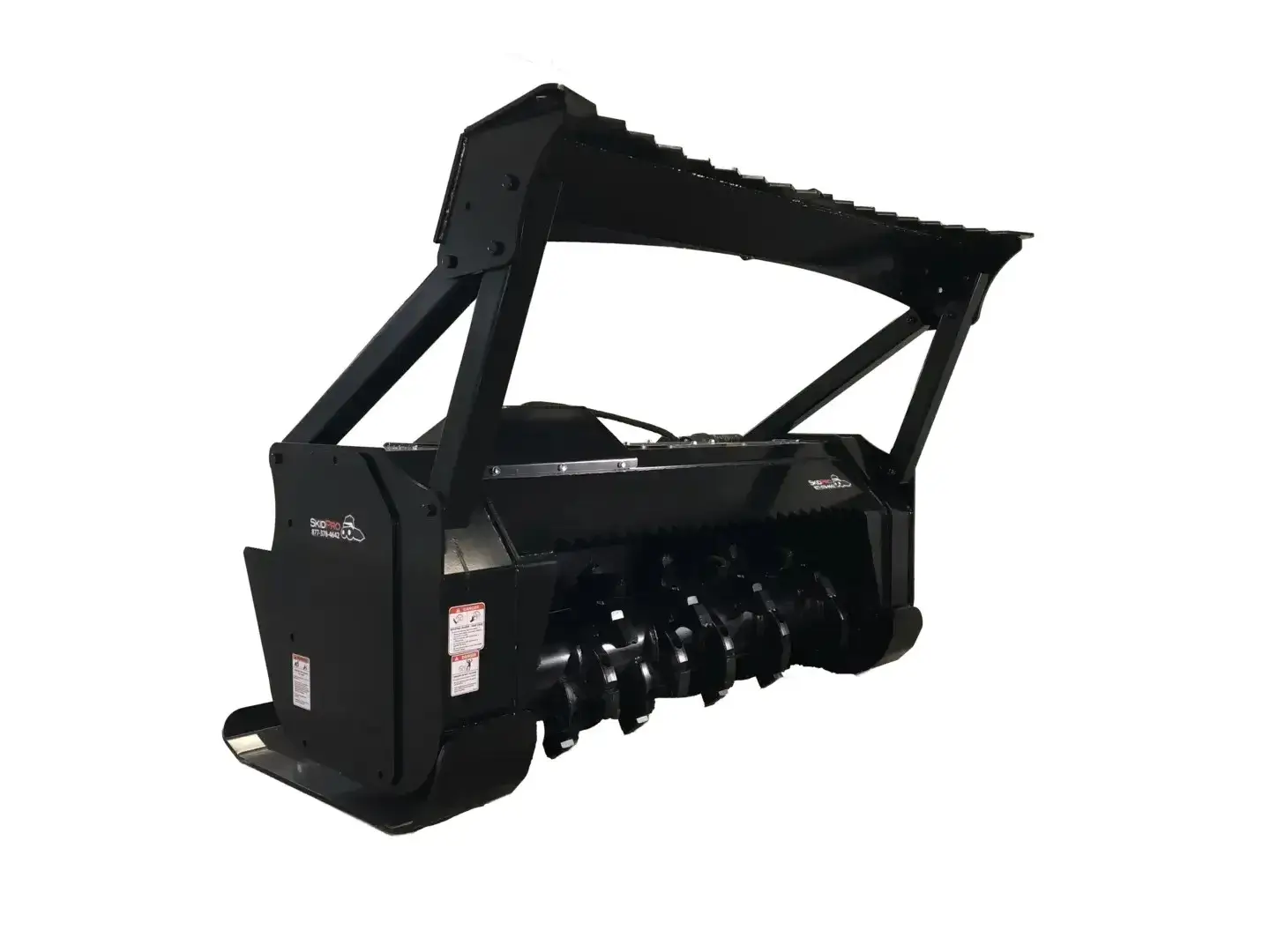
Forestry mulching contractors’ skid steer attachment selection is the process of matching cutting, handling, and finishing tools to the carrier and vegetation so you can deliver the specified clearing result. This 2026 guide starts with hydraulic flow in GPM, pressure, attachment weight, mounting interface, and operating method—not a machine-brand compatibility claim.
Forestry work asks more of attachment selection than a mounting-plate match. You must account for sustained hydraulic operation, changing vegetation, hidden obstacles, debris handling, and the condition the customer expects when you leave.
Before comparing Skid Pro attachments, write down the carrier’s actual specifications and the job’s acceptance criteria. A compatible attachment must fit the machine mechanically and operate within its hydraulic, weight, and application limits.
For your 2026 equipment plan, separate three outcomes: cutting vegetation, moving material, and finishing the site. One attachment does not automatically complete all three. A mulched site can still contain material that needs handling, while a cleared site is not necessarily graded or ready for seeding.
Choose the required result first, then match the attachment and carrier. That order prevents a cutting-tool purchase from becoming a substitute for a complete work plan.
Start with a site walk and a written scope. Identify the vegetation you must process, the material you must retain or remove, and the ground disturbance the customer accepts. Distinguish standing brush from downed timber, stumps, embedded wire, and accumulated debris.
Do not treat every clearing request as a mulching job. A customer asking for access through vegetation has a different acceptance standard from a customer asking for a planting-ready surface. Specify whether residue stays onsite and whether follow-up handling or grading belongs in your contract.
Mark hazards before equipment enters the work area. Where excavation or soil disturbance is planned, use the applicable utility-location process and confirm any additional requirements for private utilities. Keep cutting decisions separate from assumptions about what lies underground.
Close the scope with these concrete checks:
Use the carrier manual and the attachment manual, not a marketplace compatibility list. Record available auxiliary flow in GPM and operating pressure in PSI. Match both to the attachment’s published requirements; checking flow alone leaves an incomplete hydraulic assessment.
Determine whether the attachment requires a case drain, a particular electrical connection, or a specific control arrangement. Confirm the required couplers and hoses. A machine advertised with high-flow hydraulics still needs its actual configuration checked.
Your 2026 machine file should also include attachment weight, rated operating capacity, mounting interface, and the manufacturer’s application restrictions. Attachment weight and load position affect handling; a matching plate does not establish that the carrier can safely operate the attachment on your site.
Do not assume that a familiar machine brand establishes compatibility. Confirm the exact carrier and attachment combination with the manufacturers before committing.
Begin with published operating instructions and application limits. Compare how each cutting attachment engages vegetation, how it processes material, and what residue it leaves. Cutter configuration, tooling, and the prescribed technique matter more than a broad label such as land clearing.
A forestry mulcher processes vegetation with a powered cutting rotor or disc, depending on its design. A rotary brush cutter uses rotating blades to cut vegetation. These categories are not interchangeable: check the specific model’s permitted material, operating method, guarding, and intended result.
The manual route is to assemble the carrier and attachment specification sheets yourself. The faster manufacturer-assisted route is to send Skid Pro the carrier model, hydraulic details, and job description for attachment selection help. Its range includes brush cutters and mulchers among nearly 100 attachment SKUs; that breadth does not replace model-level verification.
Skid Pro skid steer attachments are best for contractors who want to buy directly from the manufacturer. The limitation remains the same: each proposed attachment must pass the carrier and application checks.
Consult the carrier and attachment manufacturers for the protective equipment required for the chosen forestry application. Do not treat an enclosed cab as proof of suitable forestry protection. Check the required door, glazing, guarding, and other protective provisions for that exact operation.
Set the exclusion area from the attachment’s operating instructions. Control access by people, vehicles, and other equipment, and account for nearby roads and property boundaries. Never substitute a generic clearance distance for the manufacturer’s requirements.
For every 2026 job, make the operating plan specific to the site. Inspect for wire and hidden debris before cutting, identify safe travel routes, and establish a shutdown procedure for blockages or inspection. Follow the manuals for stopping, isolating energy, and securing raised equipment before service.
Start by mapping the work that remains after cutting. If the contract requires moving loose branches, handling logs within equipment limits, or loading debris, evaluate a grapple. If the finished surface requires soil work, choose that tool separately rather than treating the cutter as a grading attachment.
A skid steer grapple bucket comparison is useful when your scope includes debris handling. Compare the grapple’s intended material, opening, attachment weight, and hydraulic requirements with the carrier and expected loads. Do not select by opening size alone.
Bucket, rake, and dozer-blade work each adds a distinct task. Ground disturbance is appropriate only when your contract, site conditions, and applicable requirements permit it. Keep roots, drainage, and the customer’s finish standard in the decision.
Buy support attachments for identified work, not for a larger equipment list. If debris stays onsite and no soil finishing is specified, handling and grading purchases need a separate justification.
Use a job log before committing to additional attachments. Record cutting time separately from travel, material handling, attachment changes, and finishing. Those categories show whether your next equipment decision concerns vegetation processing or a different part of the workflow.
Inspect the attachment according to its manual and record tooling condition, hydraulic issues, and service work. Do not interpret poor performance as a need for a different cutter until the current setup, operating technique, and maintenance condition have been checked.
For 2026 purchase decisions, use your own completed-job records rather than an advertised acreage claim without matching conditions. Compare jobs with similar vegetation, terrain, and finish requirements. A single production figure does not describe every site.
Skid Pro provides live Product Guru support 24 hours a day, 7 days a week. Bring the exact model information and observed symptoms; support is more useful when the question describes the actual setup.
Use this 2026 comparison to shortlist categories, not to approve a specific model. The best option is the one that completes the contracted task within the carrier’s operating limits. Every category has a useful role and a boundary.
| Option | Best for | Practical advantage | Key limitation |
|---|---|---|---|
| Forestry mulcher | Contractors processing vegetation into mulch onsite | Combines cutting and material processing | Requires model-specific hydraulic fit, protection, tooling, and operating technique |
| Rotary brush cutter | Contractors cutting brush within a model’s published limits | Cuts vegetation without requiring every job to use a mulching method | Does not establish a finely processed finish or suitability for every stem size |
| Grapple | Contractors handling loose brush and other approved material | Holds material during handling | Does not replace a cutter; load and carrier limits still govern use |
| Bucket | Contractors loading material or performing specified soil work | Supports loading and surface-work tasks | Does not perform the same cutting or gripping function as a mulcher or grapple |
| Landscape rake | Contractors performing specified surface cleanup | Addresses a separate finishing operation | Intended material and ground conditions must match the attachment’s instructions |
| Dozer blade | Contractors shaping soil where grading is specified | Supports a defined grading task | Soil disturbance is a separate scope decision, not an automatic mulching requirement |
No category wins every job. A grapple is useful when material must move but adds no cutting capability. A mulcher addresses vegetation processing but does not establish that hauling, excavation, or final grading is complete.
Before selecting any row, return to the carrier checklist. The attachment’s purpose establishes why you need it; its specifications establish whether your machine can operate it.
High-flow capability does not settle pressure, case-drain, electrical, weight, or protection requirements. Compare the exact carrier configuration with the exact attachment specifications. Resolve every mismatch before the attachment reaches the job.
Maximum published material size is an application limit, not a promise of production across mixed conditions. Review the vegetation distribution, terrain, residue requirement, and prescribed operating method. Select for the work you must complete, not one isolated tree.
Mulching and debris removal are different deliverables. If material must leave the site, define how it will be gathered, loaded, and removed. An attachment that processes vegetation does not eliminate those separate operations.
Do not add grading simply because a blade or bucket is available. Confirm whether soil disturbance belongs in the scope and whether the site permits it. The finished condition should be agreed before you change drainage or expose soil.
Cab enclosure alone does not establish suitability for a cutting attachment. Follow the carrier and attachment manufacturers’ protective-equipment requirements. Keep required guarding and exclusion controls in place throughout the operation.
The best attachments match the contracted task and the carrier’s specifications. Evaluate a forestry mulcher for vegetation processing, a grapple for debris handling, and finishing tools only when the scope requires them.
No, high-flow capability alone does not establish forestry mulcher compatibility. Verify hydraulic flow, pressure, case drain, controls, attachment weight, mounting interface, and required carrier protection for the exact combination.
A forestry mulcher is the better fit when the job requires the material-processing result that its design provides. A brush cutter fits cutting tasks within its published limits; compare the intended residue and model-specific application requirements.
You need a grapple when the contracted work includes handling material suited to that grapple. If material remains onsite and no separate handling task exists, the mulcher purchase does not automatically justify a grapple.
No, machine-brand identity does not establish attachment compatibility. Check the exact model, configuration, mounting interface, hydraulics, operating limits, and application requirements.
Send Skid Pro the carrier model, auxiliary hydraulic specifications, mounting details, and job description. Include the vegetation, required finished condition, and any existing forestry protection so the discussion addresses the actual application.
Grade after forestry mulching only when grading is part of the agreed scope and appropriate for the site. Mulching does not automatically require soil disturbance, drainage changes, or a planting-ready surface.
Put the acceptance condition on the work order before putting an attachment on the carrier. For your next 2026 job, write whether vegetation is cut or mulched, whether debris stays or leaves, and whether soil finishing is included. That short description connects the attachment choice to the result you must deliver.