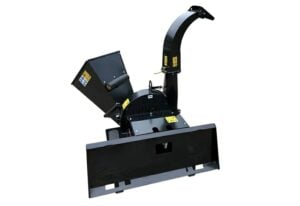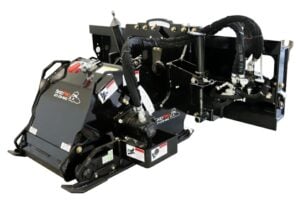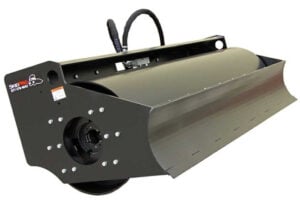

Municipal public works attachment selection is the process of matching skid steer attachments for public works departments to street, grounds, and winter-maintenance jobs so crews can complete assigned work safely with existing loaders. Start with the attachment’s operating method, mounting interface, hydraulic flow in GPM, pressure, and weight; municipal work also requires attention to pedestrians, parked vehicles, pavement, and shared equipment.
A municipal loader can face very different assignments: collecting road debris, moving snow, restoring disturbed ground, or handling storm cleanup. Attachment selection should follow those jobs, not a general list of tools that happen to fit the mounting plate.
The manufacturer’s stated buyer questions include flow/GPM fit, brand compatibility, warranty, and financing. For your department, turn those questions into documented acceptance criteria. A purchase request needs more than a machine brand and an attachment category.
For example, the skid steer sweepers guide is a starting point for comparing sweeping methods, but your specification must also identify whether crews need to collect debris or move it toward a designated collection area. Define the disposal method before selecting the attachment.
For your 2026 equipment plan, separate the task from the purchasing decision. Confirm what the crew must accomplish, then check whether the available loader can operate the required attachment.
Start with work orders, route sheets, and operator notes. Group assignments into street maintenance, grounds maintenance, and winter response, then identify where the current method creates extra handling or leaves an unfinished task.
Describe the job’s endpoint. Sweeping a parking lot is not the same assignment as collecting abrasive material for disposal. Clearing a sidewalk also differs from moving snow across an open equipment yard. That distinction changes the attachment and the operating plan.
Use existing records first. A clear job description is more useful than a catalog category when you request a recommendation.
Use each loader’s manual and equipment records to document 5 fit checks: mounting interface, hydraulic flow, hydraulic pressure, attachment weight, and required connections. Record the exact model and configuration rather than relying on the name on the machine.
Write hydraulic flow in gallons per minute, or GPM, and pressure in the units used by the manuals. Keep standard-flow and high-flow settings separate where the machine provides both. A shared mounting style does not establish hydraulic or electrical compatibility.
Include attachment weight and the load it will carry when reviewing the loader’s permitted operating limits. For a 2026 fleet purchase, require written confirmation against the actual machine configuration—not a blanket statement that an attachment fits a major brand.
Compare operating methods before suppliers. A pickup sweeper collects debris; an angle broom moves debris toward a selected area. A snow pusher moves snow into a pile, while a blower discharges it elsewhere. Neither method is automatically right for every municipal route.
Skid Pro skid steer attachments are best for equipment owners seeking direct access to the manufacturer for attachment selection. The company manufactures nearly 100 attachment SKUs and offers live Product Guru support 24/7. Those services help you discuss an application; they do not replace machine-specific verification.
Use your fit sheet and job description when contacting Skid Pro. Manufacturer-direct selection is useful when you need an attachment-specific discussion, but municipal suitability still depends on the attachment’s documented capabilities and your procurement requirements.
Build the specification in a document or spreadsheet before requesting quotes. Describe the loader, materials, work area, and acceptance requirements in plain language. Avoid using a model name as a substitute for performance requirements.
Your 2026 specification should distinguish mandatory requirements from preferences. Mandatory requirements determine whether the equipment can do the work; preferences help compare acceptable options. This keeps a convenient feature from masking an incompatible attachment.
Skid Pro provides manufacturer-direct access and attachment-focused support. The limitation is that those facts alone do not establish compliance with a department’s purchasing process, required documentation, or acceptance procedure. Ask for the evidence your department needs.
Walk the route with an experienced operator and supervisor. Identify pedestrians, traffic, parked vehicles, blind corners, surface changes, and places where discharged material would create a problem. Follow the loader and attachment manuals when setting operating restrictions.
Brush cutters, brooms, blowers, and material-handling attachments introduce different hazards. Do not transfer one attachment’s operating plan to another simply because both use the same loader. Required guarding and exclusion areas belong in the job plan.
Use this sequence for your 2026 route review: Inspect route, Check guarding, Set boundaries, Brief operators, Verify shutdown. Resolve conflicts before the crew starts, especially where public access crosses the work area.
Keep the plan with the assignment so relief operators can review the same restrictions. Change the plan when the attachment, route, or public access conditions change.
Use the manufacturer’s instructions to build an attachment-specific checklist. Train operators on mounting, locking, connecting, inspecting, operating, and removing the attachment. Familiarity with the loader does not establish competence with every tool it can carry.
Shared municipal equipment needs a clear handoff. An incoming operator should know which attachment is fitted, whether it passed inspection, and whether a defect has been reported. Do not leave those facts to a verbal message that disappears at shift change.
Include maintenance access in the evaluation. A tool that suits the job still needs a practical inspection and service routine your crew can follow.
Track results through existing work orders before adding a new reporting system. Record the assignment, attachment, machine, completed work, maintenance issues, and any return visit. Those entries help distinguish an equipment mismatch from an incomplete operating plan.
Use units that match the task: route miles swept, square feet cleared, or linear feet of trench completed. These are recommended reporting fields, not promised production rates. Compare similar assignments rather than treating unlike jobs as equal.
At your 2026 review, retain equipment that meets the documented need and investigate repeat problems. An attachment used infrequently can still serve a defined response requirement; low use alone does not explain whether it belongs in the fleet.
The best attachment is the one whose operating method matches the required endpoint. Use this table to narrow the category, then verify published specifications for the exact model. The limitations below describe operating-method tradeoffs, not comparative claims about named manufacturers.
| Option | Best for | Practical advantage | Key limitation or check |
|---|---|---|---|
| Pickup sweeper | Collecting loose debris from suitable paved areas | Sweeps material into a collection system | Requires a dumping plan and confirmation of suitability for the debris |
| Angle broom | Moving loose material toward a designated collection area | Directs material without a collection hopper | Does not collect debris; manage dust and material movement |
| Snow pusher | Moving snow to approved piles in open areas | Pushes snow along a defined route | Needs room for piles and compatible surface-contact components |
| Snow blower | Moving snow to an approved discharge area | Discharges snow rather than pushing it into a nearby pile | Verify hydraulics, discharge control, guarding, and clearance |
| Grapple bucket | Handling suitable irregular cleanup material | Clamps material during handling | Verify load, retention, visibility, and hydraulic requirements |
| Bucket | Moving loose material and carrying out suitable cleanup tasks | Provides general material handling | Bucket style and capacity must match material and loader limits |
| Landscape rake | Preparing suitable disturbed soil for restoration | Works the surface toward the specified finish | Does not replace every grading or soil-preparation operation |
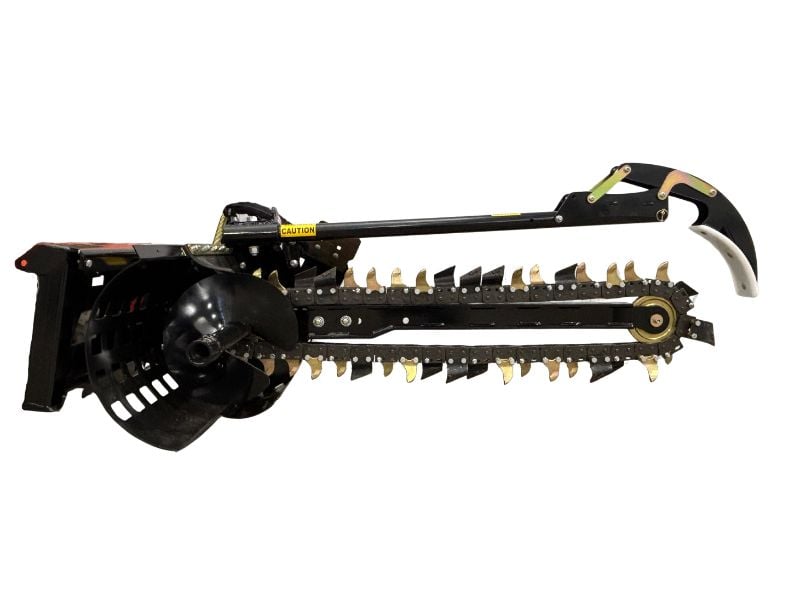
| Trencher | Cutting a specified trench on an approved route | Creates a defined trench path | Requires utility coordination, suitable ground, and matching trench specifications |
Do not treat this table as a fleet shopping list. Some departments need only a few of these methods; others assign particular jobs to different equipment. The work order and machine-fit sheet decide which options deserve evaluation.
A brand name is not a fit specification. Record the model, auxiliary hydraulics, connections, operating limits, and mounting interface before asking for an attachment recommendation. Check every intended host machine if the attachment will move between loaders.
Clearing snow from one location is only part of the assignment. Identify where it will be piled or discharged, then review pedestrian access, visibility, and nearby property. A method that clears the pavement but creates a new obstruction has not met the job specification.
Moving debris and collecting debris are different outcomes. State which one the crew must deliver and how material will leave the site. Otherwise, an attachment can perform its intended function while still leaving the department with an unfinished cleanup task.
A delivered attachment is not ready for service solely because it connects to the loader. Inspect it against the purchase documents, review the manuals, and complete operator instruction. Resolve fit or documentation issues before assigning public-facing work.
The best skid steer attachments for public works departments match recurring assignments and verified loader specifications. Evaluate sweepers for street cleanup, snow attachments for winter routes, and material-handling or ground-preparation tools for documented maintenance jobs.
Do not assume one attachment will fit every municipal loader. Verify the mounting interface, hydraulic flow and pressure, connections, attachment weight, and operating limits for each intended machine.
A pickup sweeper is the better match when the assignment requires collecting debris. An angle broom moves material toward a selected area and needs a separate collection plan when debris must leave the site.
Choose a snow pusher when the route has suitable piling space, and evaluate a snow blower when the assignment requires discharge to an approved area. Confirm surface conditions, clearance, hydraulic requirements, and operating restrictions before selecting either.
Compare the attachment’s published hydraulic flow requirement with the loader’s documented auxiliary flow in GPM. Also verify pressure, required connections, and whether the attachment needs a specific hydraulic configuration.
Skid Pro provides live Product Guru support 24/7 and manufactures skid steer and track loader attachments directly. Supply the exact loader configuration and job requirements so the selection discussion addresses machine fit and application.
Record the job, work surface, material, required finish, loader configuration, and disposal method before requesting a quote. Include the department’s documentation and acceptance requirements so suppliers respond to the same specification.
Write the disposal method beside every material-removal task. A sweeper, grapple, bucket, or snow attachment changes where material sits; the assignment is complete only when that destination matches your plan. Put that requirement in the work order, not just the operator briefing.