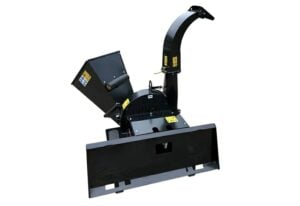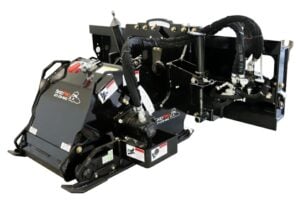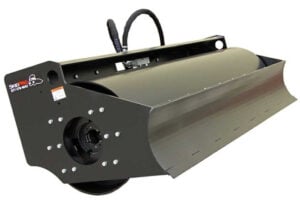

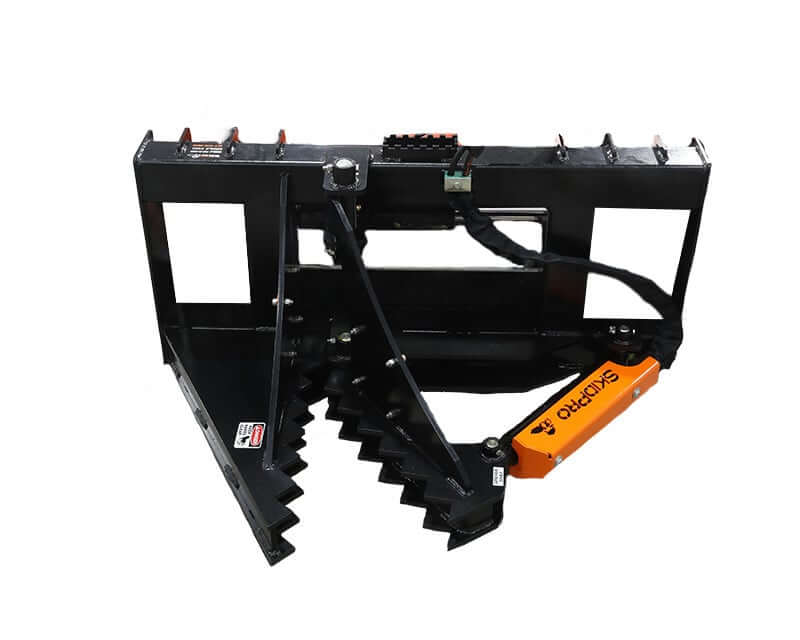
Land clearing contractors’ attachment planning is the process of matching cutting, material handling, and ground-finishing tools to a loader so you can deliver the specified site condition. Choosing skid steer attachments for land clearing contractors starts with the vegetation, finished surface, and machine’s hydraulic flow in GPM—not the attachment’s name alone.
For your 2026 equipment plan, buy for the complete clearing sequence, not just the first cutting pass. Skid Pro manufactures attachments directly for equipment owners, including contractors, rather than acting as a reseller.
Land clearing is not a single operation. Cutting standing vegetation, moving woody debris, addressing roots, and preparing the ground require different tools and leave different results. A machine that cuts the site still needs a way to handle material the contract requires you to remove.
The buying questions identified by Skid Pro include attachment suitability, flow/GPM fit, and brand compatibility. Those questions belong together: a suitable cutting method is useless when the loader cannot supply the attachment’s required hydraulics or safely handle its weight.
Skid Pro is best for land clearing contractors who want manufacturer-direct skid steer attachments and help checking machine fit. Its stated range covers nearly 100 attachment SKUs, but a broad catalog does not make every attachment suitable for every loader or clearing job.
Use this 2026 guide to define the work, verify the machine, and compare operating methods before selecting equipment. Keep the clearing specification beside the loader manual throughout that process.
Start with a site walk and a written description of what the customer expects. Identify whether the work ends with reduced vegetation, stacked debris, removed material, exposed soil, or a surface ready for the next trade. Do not treat those outcomes as interchangeable.
Separate the work into 4 job phases: vegetation cutting, debris handling, root work, and ground finishing. This is a planning checklist, not a promise that every project needs every phase. It exposes tasks a cutter alone will not complete.
Mark retained trees, property limits, utilities, access routes, and material staging areas before work begins. Determine whether local requirements affect burning, hauling, erosion control, or disturbance near waterways.
Use the loader’s operator manual and the exact attachment’s published requirements first. A matching quick-attach interface establishes only one part of compatibility. It does not verify hydraulic performance, electrical controls, stability, or required protective equipment.
Record 3 hydraulic details: auxiliary flow in GPM, operating pressure in PSI, and the required return arrangement. Check whether the attachment requires a case drain, a particular coupler arrangement, or electrical controls. Standard-flow and high-flow labels do not replace actual specifications.
For a 2026 purchase, confirm the exact loader configuration—not just its model family. Auxiliary options and installed equipment matter. Ask the attachment manufacturer to confirm the pairing against the information you provide, and retain that confirmation with the equipment record.
Classify the material before comparing cutting heads. A rotary brush cutter uses rotating blades; a mulcher uses cutting tools to process vegetation into smaller material. The attachment’s published cutting limits and approved applications—not a category-wide assumption—determine what it should tackle.
A brush cutter belongs on your shortlist for vegetation cutting where its specified capacity and resulting debris suit the contract. A mulcher belongs on your shortlist when processing woody vegetation in place matches the required finish. Neither category automatically resolves buried roots or produces a graded surface.
Start with this manual comparison, then bring the loader details and job description to Skid Pro’s Product Gurus. The company provides 24/7 phone support; use that access to resolve fit questions, not as a substitute for reading operating instructions.
Walk the site and identify where material can be gathered without blocking access. Decide whether you need to grip branches, carry logs, load loose material, or collect mixed debris. Those tasks determine whether a grapple, bucket, or another handling tool fits the sequence.
A grapple grips irregular material, but its jaw opening, structure, attachment weight, and rated application still need checking. A bucket handles loose material differently; it should not be treated as an unrestricted pry bar or root-removal tool.
Root and stump work requires its own assessment. Choose equipment rated for the task, and leave work beyond the loader or attachment’s approved capabilities to suitable equipment. Do not turn a vegetation-clearing attachment into an excavation tool by changing how you operate it.
Inspect the ground after cutting and debris handling before selecting the finishing method. Look for remaining roots, loose wood, rocks, uneven areas, and soil conditions. The finish specification determines whether you need material movement, grading, surface cleanup, or soil preparation.
A bucket moves loose material; a dozer blade shapes and spreads it; a landscape rake addresses surface cleanup within its specified application.
Keep your 2026 scope explicit. If the contract stops at brush reduction, do not promise a seed-ready surface. If it includes restoration, plan suitable tools and methods for that work rather than assuming the cutter will deliver it.
Build a job-specific inspection sheet from the machine and attachment manuals. Record the exact attachment, hydraulic settings, required connections, protective equipment, and maintenance checks. This gives operators a repeatable setup when attachments move between machines.
Use the manufacturer’s procedure when connecting, testing, operating, and shutting down. Before inspecting or clearing an obstruction, follow the prescribed shutdown, pressure-release, and mechanical-support procedures. Never work beneath unsupported equipment or approach moving cutting components.
Track operating observations without turning them into unsupported production promises. Persistent heat warnings, leaks, vibration, damaged tools, or poor cutting behavior require investigation. Changing attachments does not remove the need to check the underlying machine configuration.
Choose the attachment that completes the specified task within the loader’s limits. There is no category-wide winner for land clearing: the right cutting tool and the right cleanup tool often occupy different positions in the same workflow.
The options below are task categories, not claims about a particular model’s capacity. Check the exact attachment’s documentation before treating any category as suitable for your machine.
| Option | Best for | Practical advantage | Key limitation |
|---|---|---|---|
| Rotary brush cutter | Cutting vegetation within the model’s rated capacity | Performs the vegetation-cutting stage | Does not remove debris or establish a graded finish |
| Forestry mulcher | Processing suitable woody vegetation in place | Reduces material without making hauling the default workflow | Requires verified hydraulic fit, protection, and operating limits |
| Grapple | Gripping and moving irregular woody debris | Holds material that needs controlled handling | Does not replace a cutter or a dedicated root-work attachment |
| Bucket | Moving loose soil and other approved materials | Supports loading and material movement | Ordinary bucket use does not cover every prying or excavation task |
| Dozer blade | Spreading material and shaping the surface | Addresses grading after clearing | Does not process standing woody vegetation |
| Landscape rake | Surface cleanup within its rated application | Separates finishing work from vegetation cutting | Does not replace heavy cutting or stump removal |
Manufacturer-direct support helps resolve attachment questions, but it does not eliminate your responsibility to verify the machine and operating conditions. Request documented requirements and compare them with your equipment records before committing to a configuration.
The best skid steer attachments for land clearing contractors match the vegetation, debris-handling plan, finished surface, and loader specifications. Compare cutters or mulchers for vegetation processing, grapples for woody debris, and finishing tools for the agreed ground condition.
Neither attachment is better for every clearing job. Choose a brush cutter when its rated cutting application and resulting debris suit the scope; choose a mulcher when processing suitable vegetation in place matches the required finish.
You need high-flow hydraulics only when the selected attachment requires them. Compare the loader’s documented GPM and pressure with the exact attachment’s permitted operating range, and verify all required connections.
A matching mount does not establish full compatibility. Hydraulic flow, pressure, controls, attachment weight, clearance, and required operator protection must also match the machine and application.
Do not treat a brush cutter as a stump-and-root removal tool unless its manufacturer explicitly approves that application. Plan root work separately and use equipment rated for the required task.
Use a grapple for irregular woody debris that needs gripping, and a bucket for loose material within its approved application. Check attachment weight, load handling, and material characteristics before selecting either.
Provide the exact loader model and configuration, auxiliary flow, pressure, mounting details, connections, and intended job. Include the vegetation and required site finish so the manufacturer can assess the attachment pairing.
Write the last operation into the attachment plan first. If the customer expects exposed, graded ground, work backward through finishing, root work, debris handling, and cutting. That simple change keeps a strong cutting attachment from becoming an incomplete clearing setup.