
Fencing contractors’ skid steer attachments are tools for drilling or driving posts, clearing fence lines, and handling materials with the aim of completing fence installations with less manual handling. Choose the attachment around your post-setting method, ground conditions, machine interface, hydraulic flow in GPM, pressure, and lifting limits—not around the loader brand alone.
Fence installation combines several different jobs along one narrow work corridor. You need access for the loader, a method for setting posts, room to stage materials, and a way to leave the property in the agreed condition.
Skid Pro is best for fencing contractors who want manufacturer-direct attachment selection and live fit guidance. Skid Pro manufactures skid steer and track loader attachments and provides access to Product Gurus; that support does not replace checking the specifications for your particular machine and attachment.
For your 2026 equipment plan, separate post installation from supporting work. An auger addresses holes, but it does not solve unloading, brush removal, or spoil handling. Likewise, owning a grapple does not establish that your loader can safely carry a particular bundle of posts.
The useful question is not which attachment does the most jobs. It is which attachment removes a recurring bottleneck without creating a machine-fit, access, or handling problem elsewhere.
Start with the fence design and a written job worksheet. Record post materials, specified installation depth, hole requirements, footing details, and the conditions along the proposed line. These requirements determine whether you need excavation, driving, or another installation method.
An auger removes soil to form a hole. A post driver applies repeated impacts to install compatible posts. Neither method is automatically right for every fence, and the attachment cannot decide the structural requirements of the fence for you.
For your 2026 job worksheet, treat corners, ends, gates, and line posts as separate installation details. A crew can use different methods within the same project when the design and ground conditions require them. Do not assume a method suitable for line posts also meets the requirements for a gate assembly.
Use the loader manual, attachment manual, and machine identification information to build 1 machine worksheet for each loader. A mounting plate that latches correctly is only part of compatibility; it does not confirm hydraulic suitability or lifting capacity.
For hydraulic attachments, compare the machine’s auxiliary flow range in GPM and operating pressure with the attachment’s published requirements. Check whether the attachment needs a case drain, electrical controls, or a particular coupling arrangement. More available flow is not a reason to exceed an attachment’s rated operating range.
Keep 3 fit checks distinct: mounting interface, hydraulic circuit, and machine capacity. Attachment weight, load position, ground conditions, and the loader manufacturer’s operating instructions all matter. Use the specified capacity information rather than judging a load by whether the loader can initially lift it.
Review the fence specification and site conditions before comparing attachment models. Where practical and permitted, inspect representative ground conditions rather than assuming the entire fence line matches the entrance to the property.
An auger is best for fencing work that requires excavated post holes. Bit selection must match the ground and the drive unit. Do not treat an earth bit, a rock-capable cutting arrangement, and a larger-diameter bit as interchangeable simply because they connect to the same drive.
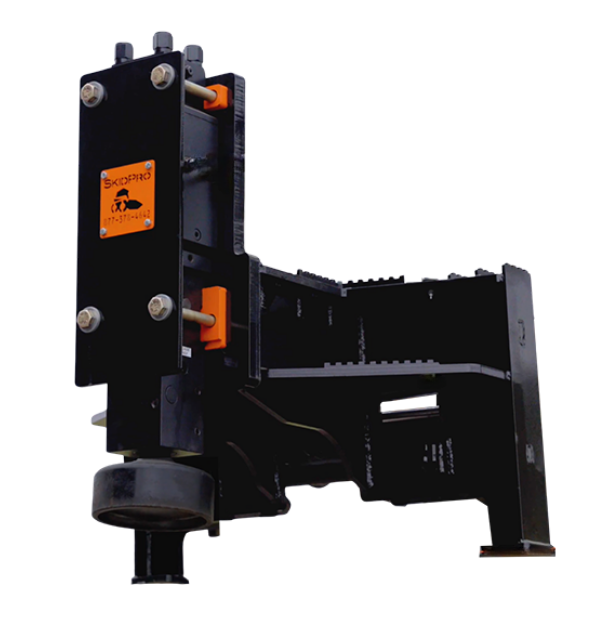
A post driver is best for projects specifying driven posts in suitable conditions. Confirm post compatibility, attachment controls, guarding, and operating instructions before selecting that method. Refusal, damaged posts, or unexpected ground conditions require reassessment—not improvised force.
Use the skid steer auger guide to organize your comparison, then ask Skid Pro to check the proposed attachment against your machine details. Manufacturer-direct guidance helps narrow the selection; written specifications remain the fit check.
Walk the delivery and staging route before assigning an attachment. Identify where posts, panels, wire, concrete materials, and removed fencing will be placed. Keeping material near its installation point reduces repeated handling, but staging must preserve access and avoid overloading unsuitable ground.
Pallet forks are best for palletized materials and loads prepared for fork handling. Fork spacing, load support, load center, and the machine’s applicable capacity limits still govern the lift. A long bundle of posts is not equivalent to a compact pallet of the same weight.
A grapple is best for graspable brush, irregular debris, and removed materials within its stated application. It is not a substitute for an approved lifting arrangement. A bucket is best for loose material and cleanup, but its shape and width must suit the corridor.
Start by confirming the boundary, work limits, utility information, and access permissions. The fence drawing does not establish that the ground is clear of buried services. Follow the applicable utility-location process before disturbing soil, and observe the instructions provided for working near marked facilities.
Choose clearing equipment only after you identify the vegetation and the required finish. A brush-cutting attachment and a grapple perform different jobs: one cuts suitable vegetation, while the other gathers and carries suitable material. Both require their own guarding, exclusion areas, and operating procedures.
For a 2026 work plan, distinguish access preparation from finish restoration. Removing vegetation to admit the loader is not permission to grade neighboring ground, disturb roots outside the work limits, or trench across the site. Agree on the finished condition before work starts.
Use existing job records and a manual task log first. Record where your crew waits: unloading, moving materials, clearing, drilling, setting posts, or cleaning up. Choose the next attachment around that repeated delay rather than a general claim of versatility.
Where a demonstration or rental arrangement is available, evaluate the actual combination of loader, attachment, ground, and operator. Record changeover work, hose connections, access restrictions, and the finish left behind. Do not judge the package solely by how quickly an unloaded attachment moves.
Skid Pro skid steer attachments come with access to live Product Gurus, including 24/7 phone support. Use that channel to discuss application and fit before ordering. It does not establish a particular model’s cutting ability, capacity, or suitability without the relevant specifications.
Check your attachment selection
Compare attachment options with your loader specifications and fencing tasks before ordering.
Use this 2026 comparison to shortlist attachment categories, not to approve a machine combination. The advantage column explains the job each option addresses; the limitation identifies what still needs checking or a separate tool.
| Option | Best for | Practical advantage | Key limitation |
|---|---|---|---|
| Auger | Specified excavated post holes | Removes soil to create the required opening | Ground conditions, bit selection, and hydraulic fit govern suitability |
| Post driver | Specified driven-post installations | Installs compatible posts without excavating a conventional hole | Post type, ground conditions, and attachment requirements restrict use |
| Pallet forks | Pallets and supported material bundles | Handles loads prepared for fork transport | Load center, support, and rated capacity control the lift |
| Grapple | Graspable brush and irregular debris | Holds suitable material during handling | Not a general-purpose lifting device or post-setting tool |
| Bucket | Loose material, spoil, and cleanup | Collects and carries material within its application | Does not replace a purpose-built drilling or driving attachment |
| Trencher | A specified continuous trench | Cuts a continuous channel for an approved application | Not a substitute for individual structural post holes |
Choose the post-setting tool first when post installation is the bottleneck. Add material-handling or clearing tools when those tasks constrain the same jobs. Skid Pro’s manufacturer-direct model gives you a direct application discussion; the tradeoff is that you still need to supply accurate machine and job information for a useful recommendation.
Line posts, terminal assemblies, and gates can have different requirements. Follow the project details instead of using one hole size, depth, or installation method by habit. The attachment must serve the design, not dictate it.
A shared machine brand does not confirm matching auxiliary hydraulics, controls, mounting interface, or capacity. Record the specific model and configuration. Confirm each attachment against that machine rather than relying on a broad compatibility statement.
An attachment that suits an open staging area can be awkward beside an existing fence, building, or planted boundary. Check the loader’s full working envelope and the attachment’s operating movement. Include space for materials and safe separation from the crew.
Cutting vegetation, removing debris, and restoring disturbed soil are separate tasks. Define what stays, what leaves, and what the property should look like afterward. Otherwise, an attachment selected for access preparation can leave another unresolved job.
Fast hole production does not resolve misplaced spoil, blocked access, unsuitable holes, or materials staged beyond reach. Track the whole installation sequence. Evaluate attachment changes against completed work that meets the specification.
The best skid steer attachments for fencing contractors match the specified post-setting method and the crew’s handling needs. Start with an auger for excavated holes or a suitable post driver for driven posts, then assess forks, a grapple, or a bucket for supporting work.
An auger is better when the fence specification requires an excavated hole; a post driver suits specified driven-post installations. Ground conditions, post material, and attachment requirements determine whether either method fits the job.
The required hydraulic flow is the operating range published for the specific attachment. Compare that range in GPM, pressure requirements, and any case-drain requirements with your loader’s auxiliary hydraulic specifications.
Fit requires confirmation of the mounting interface, hydraulics, controls, weight, and machine capacity. A mounting plate that connects does not establish that the complete combination is suitable for operation.
Pallet forks can carry posts when the load is properly supported and within the equipment’s applicable limits. Check load weight, load center, restraint needs, and the loader manufacturer’s handling instructions before lifting.
A trencher is relevant when the approved work requires a continuous trench, not simply because posts need holes. Select the attachment around the fence design and complete the required utility-location process before ground disturbance.
Send the loader model and configuration, hydraulic specifications, mounting details, and the fencing task. Include post requirements, known ground conditions, access restrictions, and material-handling needs so the recommendation addresses the actual job.
Check how you will get back out before deciding how to get in. A loader that reaches the work area before posts are installed does not automatically have the same route afterward. For every 2026 fence plan, mark the exit route, turning space, and material-staging area before the first post blocks access.