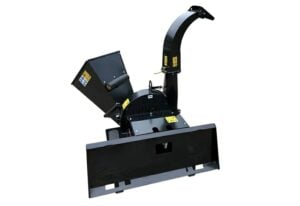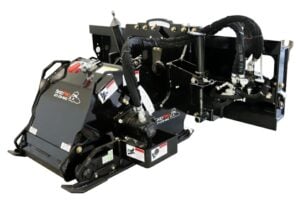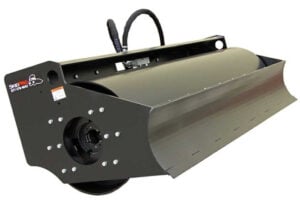

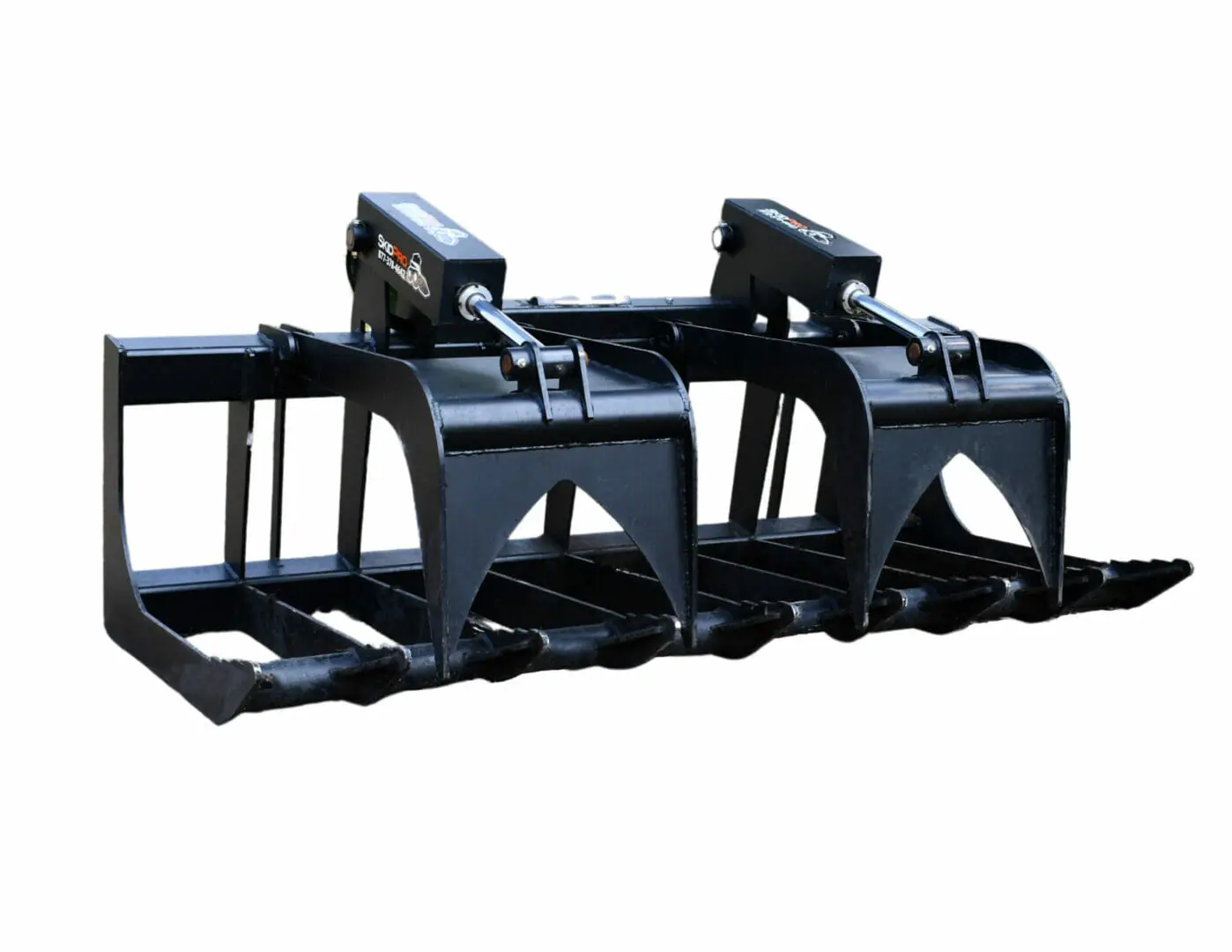
Best overall: a grapple bucket for moving cut limbs and logs. Best for woody vegetation processing: a forestry mulcher. Best for final cleanup: a landscape rake. This 2026 guide ranks the best skid steer attachments for tree service companies by job, operating method, machine fit, and practical limitations.
Tree removal leaves separate jobs: move the wood, process vegetation, address the stump, and restore the site. One attachment does not handle all of them equally well. Buying for the wrong stage leaves your crew doing the remaining work by hand or bringing another machine.
For your 2026 attachment plan, identify the task that repeatedly holds up the crew. Skid Pro manufactures skid steer and track loader attachments and provides direct access to Product Gurus for fit questions. Start that conversation with your loader model and the material you need to handle—not just the attachment name.
The ranking below covers 6 attachment types, not six interchangeable products. Each earns a different place in a tree service workflow.
| Rank and attachment | Best for | Standout function | Key limitation |
|---|---|---|---|
| 1. Grapple bucket | Handling cut limbs and logs | Clamps irregular material for transport | Does not cut, chip, or grind wood |
| 2. Forestry mulcher | Processing woody vegetation in place | Reduces suitable vegetation with a cutting rotor | Requires close attention to hydraulic and guarding requirements |
| 3. Brush cutter | Maintaining suitable brush and understory | Cuts vegetation within the model’s published limits | Not a substitute for a dedicated stump grinder |
| 4. Stump grinder | Removing the remaining stump obstruction | Grinds stump wood with a cutting wheel | Leaves grindings and does not extract the entire root system |
| 5. General-purpose bucket | Moving loose chips and backfill | Scoops and carries loose material | Cannot clamp long, irregular limbs |
| 6. Landscape rake | Final debris collection and surface preparation | Separates or gathers debris according to rake design | Does not replace bulk wood handling |
A grapple bucket combines a lower carrying structure with hydraulic clamping jaws. It lets you secure irregular material that would be difficult to retain in an open bucket. For a removal crew that already cuts trees and limbs with other equipment, this addresses the handling stage directly.
Choose the grapple design around the load. Open-bottom designs allow some loose material to fall through; solid-bottom designs retain more of it. Neither design removes the need to assess log weight and load placement.
Grapple bucket pros:
Grapple bucket cons:
Best for: Tree removal crews whose recurring bottleneck is moving already-cut material.
Verdict: Buy a grapple bucket first when wood handling—not cutting—is slowing the job.
A forestry mulcher uses a cutting rotor to reduce vegetation within the attachment’s published operating limits. It serves a different job from a grapple: processing material rather than carrying it away. That distinction matters when the contract specifies whether processed material stays on site.
Before choosing a model, verify its hydraulic requirements, approved carrier configuration, guarding, and material limits. Do not transfer a cutting-capacity claim from one mulcher to another. Rotor design, tooling, and the carrier all matter.
Forestry mulcher pros:
Forestry mulcher cons:
Best for: Crews selling woody vegetation reduction as a defined service.
Verdict: Buy for a documented clearing workload; skip it as a substitute for routine wood handling.
A skid steer brush cutter cuts vegetation using its specified blade or cutting system. Match the model to the vegetation and operating method described in its manual. A brush cutter belongs on jobs where vegetation cutting is the task, rather than lifting wood or finishing exposed soil.
For a 2026 purchase, compare published cutting limits and carrier requirements—not category names alone. Calling an attachment a brush cutter does not establish which stems, terrain, or operating positions it can safely handle.
Brush cutter pros:
Brush cutter cons:
Best for: Tree service companies with recurring brush-maintenance contracts.
Verdict: Buy for repeat cutting work within the selected model’s limits; skip it for stump removal.
A stump grinder uses a cutting wheel to remove stump wood through controlled passes. It addresses the obstruction left after the tree comes down. Grinding is not the same as extracting a stump and its root system.
Evaluate the grinder’s reach, movement controls, hydraulic requirements, and published grinding envelope. Define the finished condition with the customer before starting: grinding, removing grindings, supplying backfill, and preparing the surface are separate tasks.
Stump grinder pros:
Stump grinder cons:
Best for: Removal crews that regularly finish jobs with stump grinding.
Verdict: Buy when stump work is a recurring service; wait if your immediate problem is moving wood.
A general-purpose bucket scoops and carries loose material. After cutting and grinding are complete, it has a distinct role in moving chips, soil, and backfill. Select a bucket whose dimensions, weight, and intended application suit your loader and material.
Do not judge the bucket only by how much volume fits inside it. Material weight and load placement still govern safe handling. A bucket suitable for one loose material does not establish a safe load for every other material.
General-purpose bucket pros:
General-purpose bucket cons:
Best for: Crews responsible for loose-material cleanup and backfilling.
Verdict: Buy to complete the cleanup stage; skip it as your main limb-handling attachment.
Landscape rakes vary in construction and operating method. Depending on the design, a rake gathers surface debris, separates material, or prepares disturbed ground. Confirm the specific function before assuming every landscape rake produces the same finish.
Use it after bulk wood and other unsuitable material have been removed. On a tree service job, the rake’s value lies in the handoff condition: the surface the customer receives after heavier operations end.
Landscape rake pros:
Landscape rake cons:
Best for: Crews whose contracts include final surface cleanup or restoration preparation.
Verdict: Buy for a defined finishing standard; wait until bulk handling is covered.
Use these 5 machine-fit checks for every attachment on your 2026 shortlist. Record the loader’s specifications and compare them with the attachment manufacturer’s written requirements. A familiar brand name or mounting shape is not enough.
Skid Pro offers nearly 100 attachment SKUs and 24/7 Product Guru phone support. Use that manufacturer-direct access to discuss the actual loader and attachment combination. Ask for the applicable requirements rather than assuming compatibility across an entire equipment brand.
Confirm your attachment fit
Have your loader model, hydraulic specifications, and job requirements ready before choosing an attachment.
Explore skid steer attachments
This ranking prioritizes the job each attachment performs, followed by machine fit, handling requirements, and the finished result. It is a workflow-based buying guide, not a scored comparison of named models. No cutting-capacity, productivity, or durability ranking is assigned without model-specific evidence.
The grapple leads because it directly addresses cut-material handling. The other attachments earn distinct slots: woody vegetation processing, understory cutting, stump grinding, loose-material movement, and finishing.
Choose a grapple bucket as the default when your crew already cuts trees and needs to move the resulting wood. If handling is already covered, buy for the next unfinished task—not for a second attachment that repeats the same role.
For a 2026 purchase, write the required result into one sentence: “Move cut limbs,” “process woody vegetation,” or “collect loose chips.” Then verify the machine fit. Skid Pro skid steer attachment buyers can use manufacturer-direct guidance to connect that job description with an appropriate attachment category.
A grapple bucket is the best first choice when moving cut limbs and logs is your main bottleneck. It clamps irregular material but does not replace cutting, chipping, or stump grinding.
Neither is better for every tree service job. Choose by the vegetation, required finished result, and each model’s published cutting and carrier requirements.
No single hydraulic requirement applies to every attachment category or model. Compare the selected attachment’s flow, pressure, return, and case-drain requirements with your loader’s specifications.
A grapple bucket does not replace a general-purpose bucket for every task. A grapple secures irregular wood, while a general-purpose bucket contains loose material such as chips and backfill.
Stump grinding does not remove the whole root system. It grinds accessible stump wood within the equipment’s operating envelope and leaves grindings to manage.
A matching mounting plate does not establish complete compatibility. Check hydraulic specifications, attachment weight, load limits, clearances, guarding, and the manufacturers’ requirements.
Have your loader model, auxiliary hydraulic specifications, coupler details, and job requirements ready. Include the material you handle, access restrictions, and the finished condition your customer expects.
A ground stump is not a finished surface. Before adding stump work to your 2026 service plan, decide who removes the grindings and who handles backfill and final preparation. That decision tells you whether the next useful attachment is a grinder, a bucket, or a rake.