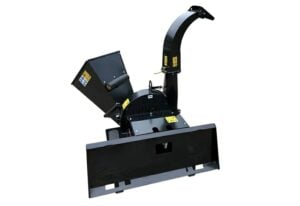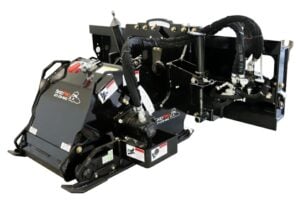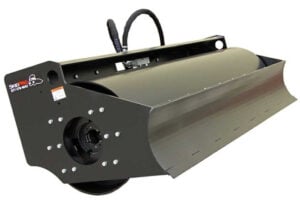

Excavation contractors’ skid steer attachments are job-specific tools for digging, moving spoil, and grading ground to the project’s required elevations. This 2026 guide explains how to choose buckets, trenchers, backhoe attachments, and grading blades by operating method, machine interface, hydraulic flow in GPM, pressure, and attachment weight—not by machine brand alone.
Excavation and grading require different motions. Digging needs penetration and material removal; spoil handling needs carrying capacity; grading needs controlled placement and an elevation reference. An attachment that performs one motion does not automatically handle the others well.
Your purchasing questions should follow those differences. For a utility installation, investigate trench dimensions, soil conditions, hydraulic requirements, and spoil placement. For a building pad, investigate material movement, working width, cutting-edge control, and how you will check grade. The skid steer trencher guide is a useful starting point when a continuous narrow excavation is the main task.
Build your 2026 attachment plan around recurring work, not the largest tool your loader can mount. A mounting plate confirms only part of the fit. You still need to verify hydraulic compatibility, operating weight, load limits, visibility, and the space available to work.
Start with the plans, site walk, and machine manual. Write down what you must excavate, where the material will go, and what finished surface the contract requires. Separate bulk earthmoving from trenching, footing excavation, backfilling, and final grading; each task creates a different attachment requirement.
Describe the actual material rather than calling everything dirt. Loose fill, compacted soil, roots, rubble, and rock present different demands. Confirm which conditions are known and which require investigation before you select a cutting tool. Do not assign a tool to buried obstructions based on appearance at the surface.
For your 2026 equipment plan, identify the repeated operation first. A bucket remains useful across digging, loading, and backfilling, but a recurring trenching scope warrants a separate trenching assessment. Likewise, a finish-grading attachment does not replace a plan for moving bulk spoil.
Record acceptance requirements before comparing attachment features. The tool must support the work you are contracted to deliver, including access and cleanup—not merely the first excavation pass.
Use the loader’s operator manual and the proposed attachment’s documentation to build a fit sheet. Record the exact machine model and configuration, including auxiliary hydraulic equipment. A familiar loader brand or a matching-looking mounting plate is not a compatibility decision.
Check hydraulic flow in gallons per minute and pressure against the attachment’s specified operating requirements. Flow and pressure describe different parts of the hydraulic system; matching one does not establish that the other is suitable. Confirm couplers, electrical controls, and any case-drain requirement as well.
Attachment weight also matters before material enters the bucket. Follow the loader manufacturer’s operating limits and account for the attachment, load, and working position. Do not treat bucket volume as proof that a filled bucket is within the machine’s capacity.
Document the following checks so the same information reaches the supplier, operator, and person approving the purchase. Resolve discrepancies before installation, rather than relying on a trial fit in the yard.
Start by reviewing your current bucket and the loader manual. Check whether the bucket’s cutting edge, width, profile, and intended application suit the digging and loading work. Evaluate the bucket with the material you expect to handle, not just its empty dimensions.
A toothed edge provides individual penetration points; a smooth edge provides a continuous edge for scraping and surface work. Neither is the automatic choice for every phase. Select the edge for the material and finish, and verify any replacement edge or tooth arrangement against the bucket’s documentation.
A skeleton bucket separates material through openings, which also means fine material can pass through. A grapple adds a clamping function for irregular loads, but it does not make every load safe or every bucket suitable for excavation. Evaluate the complete attachment configuration.
For your 2026 purchase, Skid Pro offers a manufacturer-direct route to skid steer attachment selection. The company manufactures nearly 100 attachment SKUs and provides live Product Guru support 24 hours a day, 7 days a week. Use that access to confirm fit; a broad catalog does not eliminate machine-specific checks.
Sketch the required cut before deciding between a trencher, backhoe attachment, auger, and bucket. Include length, width, depth, access, and the location of spoil. That sketch provides a clearer selection basis than a general request for a digging attachment.
A trencher cuts a continuous narrow channel. Its suitability depends on the specified cutting dimensions, chain configuration, soil conditions, hydraulic requirements, and the machine’s ability to operate along the route. It is not a substitute for a bucket when the scope requires a broad excavation.
A backhoe attachment uses a digging bucket and articulated movement for localized excavation. Verify reach, digging dimensions, mounting requirements, controls, and operating instructions for the exact configuration. Do not infer excavator-like performance from the attachment’s appearance.
An auger creates a bored hole rather than an open trench. Bit selection, diameter, depth, ground conditions, and the drive’s hydraulic requirements need separate checks. For any digging method, follow applicable excavation protections and keep people out of unprotected excavations.
Start with stakes, a suitable elevation reference, and the grading requirements. Inspect the existing surface and determine whether you must cut high areas, place material in low areas, or do both. An attachment cannot establish the correct elevation without a reference and an operator checking the work.
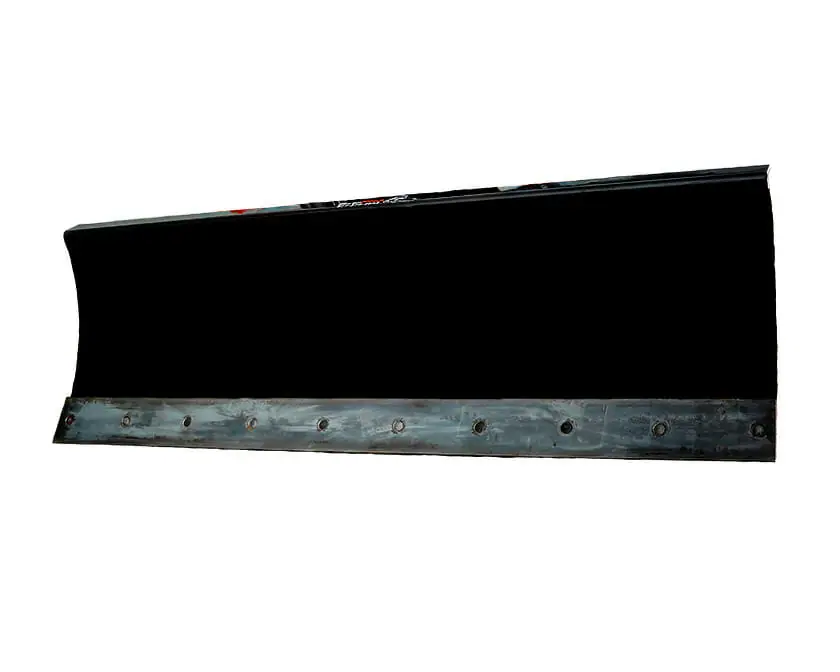
A bucket handles material placement and rough shaping. A dozer blade spreads and directs material through blade position; check the available angle, tilt, controls, and adjustment method for the particular attachment. Those details determine how you operate it, not the category name alone.
A land plane or grading scraper works across the surface to redistribute loose material and address surface irregularities. A powered landscape rake works the surface for preparation and debris handling according to its design. Neither automatically replaces compaction, elevation checks, or bulk material movement.
Choose the grading attachment by the surface you must deliver. Keep compaction requirements separate from the shaping task. Recheck elevations after material placement and follow the project’s compaction and drainage requirements before accepting the finished grade.
Review your completed jobs and upcoming contracts before adding another attachment. Record which tasks repeat, which tools remain idle, and where operators spend time changing tools or correcting work. Use your own records rather than assigning an assumed productivity gain to a new attachment.
Compare ownership with rental for specialized work. Ownership gives you control over scheduling and maintenance; rental requires checking the particular unit’s condition, specifications, and terms for each job. Neither path removes the machine-fit check or the need for trained operation.
For 2026 purchasing, ask Skid Pro to review your loader model, hydraulic specifications, ground conditions, and intended attachment. Manufacturer-direct guidance is useful when those details are specific. It cannot replace your loader manual, attachment instructions, or jobsite safety procedures.
Before accepting a tool, identify who will inspect it, install it, train operators, and maintain it. Build the inspection around the actual attachment manual rather than applying the same checklist to every cutting, digging, and grading tool.
Confirm your attachment fit
Review your machine, hydraulic specifications, and excavation or grading application with the manufacturer.
Use this table to narrow the attachment category, then compare the exact unit’s published specifications. These are operating-method differences, not performance rankings between manufacturers. No category is best for every excavation phase.
| Option | Best for | Practical advantage | Key limitation |
|---|---|---|---|
| Digging bucket | Excavation, loading, and backfilling | Combines cutting and material carrying | Edge and bucket configuration must suit the material and finish |
| Skeleton bucket | Separating larger debris from loose material | Openings allow smaller material to pass through | Does not retain fine material like a solid bucket |
| Grapple bucket | Holding irregular material during handling | Adds a clamping function | Clamp function does not establish digging suitability or load capacity |
| Trencher | Continuous narrow excavations | Follows a defined trench route | Cutting dimensions, ground conditions, and hydraulic fit constrain use |
| Backhoe attachment | Localized digging | Provides articulated bucket movement | Reach, mounting, and controls require configuration-specific checks |
| Auger | Bored holes | Matches a hole-based excavation method | Does not create an open continuous trench |
| Dozer blade | Spreading and shaping material | Directs material through blade position | Does not carry spoil like a bucket |
| Land plane or grading scraper | Leveling loose surface material | Works across surface irregularities | Does not replace bulk excavation or specified compaction |
| Powered landscape rake | Surface preparation and debris handling | Works material through a powered rake mechanism | Requires hydraulic fit and application-specific setup |
A trenching attachment serves a defined cutting geometry. Start with the plans and confirm whether the work is a trench, a hole, or an open excavation. Choosing by the word excavation alone leaves the operating method unresolved.
A secure mount is necessary, but it does not confirm hydraulic flow, pressure, controls, attachment weight, or loaded capacity. Keep the complete fit sheet with the equipment record so a different operator does not inherit an undocumented setup.
A larger bucket opening is not proof of a suitable payload. Verify the bucket’s intended application and the loader’s operating limits with the expected material. Consider access and visibility alongside material capacity.
A smooth-looking surface can still miss the specified elevation or drainage requirement. Establish the reference before grading, then check the result. Treat shaping, compaction, and measurement as separate responsibilities.
Cutting edges, teeth, chains, and other wear components need tool-specific attention. Identify the relevant parts and inspection procedure before the attachment enters service. Ask the supplier to explain the exact configuration rather than accepting a general assurance about compatibility.
The best skid steer attachments for excavation contractors match the excavation geometry, material, and loader specifications. Buckets handle digging and spoil movement; trenchers serve continuous narrow cuts; blades and grading tools address spreading and surface shaping.
High-flow requirements depend on the exact attachment, not the excavation category. Compare the attachment’s specified flow in GPM, pressure, couplers, controls, and case-drain requirements with your loader’s documentation.
A trencher fits continuous narrow cuts, while a backhoe attachment fits localized digging within its specified working envelope. Select by cut geometry, ground conditions, machine fit, and the tool’s published dimensions rather than treating either as universally better.
A skid steer bucket can place material and shape a surface, but meeting finish-grade requirements depends on the setup, operator, and measurement process. Evaluate a dedicated grading attachment when its operating method better matches the required surface work.
No attachment should be assumed to fit every skid steer brand or model. Check the mount, hydraulic specifications, controls, attachment weight, and loader operating limits for the exact machine and attachment.
Choose ownership or rental according to your documented workload, scheduling needs, and maintenance responsibilities. Check the specifications and condition of the exact attachment under either arrangement; rental does not remove compatibility requirements.
Skid Pro provides manufacturer-direct attachment guidance and live Product Guru support. Supply the exact loader model, hydraulic specifications, intended job, and ground conditions so the discussion addresses your configuration rather than machine brand alone.
Before your next 2026 attachment purchase, send the supplier the loader model, hydraulic specifications, and a sketch of the required work. Include where the machine will travel and where spoil will go. That package answers a more useful question than whether an attachment fits a particular brand: whether the complete setup fits the job.
Keep the fit decision with the attachment. Store the approved specifications, operating instructions, and inspection requirements where the next operator can access them. A correct purchase still needs a documented setup when the tool moves between machines or crews.