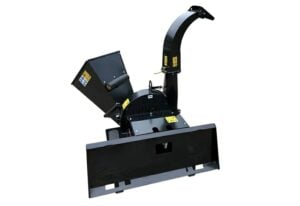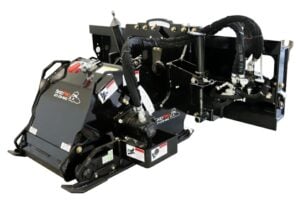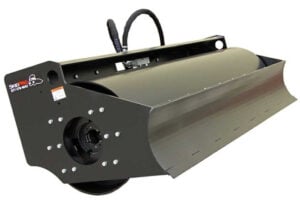

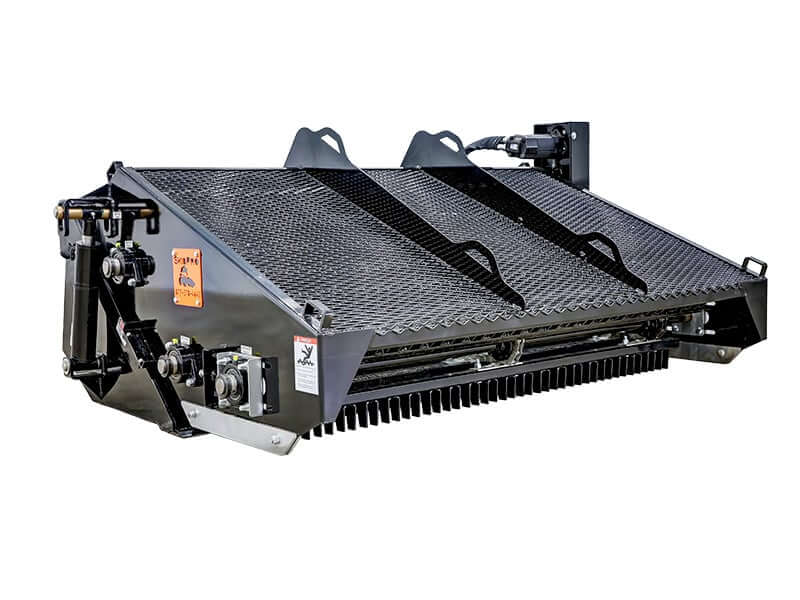
Golf course maintenance skid steer attachments are loader-mounted tools for moving materials, preparing renovation areas, excavating utility trenches, and cleaning hard surfaces so crews can complete grounds work with an existing machine. Choosing skid steer attachments for golf course maintenance starts with the job, hydraulic flow in GPM, machine capacity, and access route—not the attachment catalog.
Golf course crews must move supplies and maintain infrastructure without treating every work area like a construction site. A loading area, cart path, bunker renovation, and putting green require different operating decisions. The attachment can suit the task while the loader remains unsuitable for the access route.
Start your 2026 maintenance plan with recurring material-handling jobs. A skid steer bucket guide helps separate general loading needs from specialized work before you add powered attachments.
Choose the attachment and the travel route together. A wider tool does not solve a narrow entrance, and tracks do not remove the need to assess soil moisture, turning damage, and ground conditions. Schedule disruptive work around play, isolate the work zone, and keep golfers outside the operating area.
Build your attachment plan from completed work orders, upcoming renovations, and the loader’s operating manual. Separate routine tasks from occasional projects. That distinction keeps a useful material-handling tool from competing with an attachment intended for a single renovation.
The following steps give your crew a practical 2026 buying checklist. Complete the machine-fit checks before comparing attachment features or arranging a demonstration.
List the work your crew already performs with wheelbarrows, carts, hired equipment, or an existing loader. Then identify where a skid steer can reach the work safely and handle the material without unnecessary surface disturbance. Review the job with the operator who will perform it, not just the person approving the purchase.
A bucket suits loose-material handling. Forks suit palletized supplies. Neither makes a loader appropriate for routine putting-green work. Keep specialist turf operations separate from excavation, cleanup, and material movement.
For each task, record the material, destination, access restriction, and required finish. Moving sand into a staging area is a different requirement from spreading it evenly across a playing surface. Removing brush from a service boundary is different from mowing maintained turf.
Use the job list to establish which attachment earns regular use and which belongs in a project-specific plan. Do not select a powered tool simply because the machine has auxiliary hydraulics.
Complete 5 fit checks before ordering: mounting interface, auxiliary flow, hydraulic pressure, attachment weight, and control connections. Read the loader’s operating manual alongside the attachment manual. A familiar mounting plate is not proof that a powered attachment matches the machine.
Hydraulic flow in GPM and operating pressure in PSI are separate specifications. Match both to the attachment manufacturer’s stated requirements. Check standard-flow or high-flow configuration, required couplers, electrical controls, and any case-drain connection. Do not assume that additional flow improves performance beyond the tool’s specified range.
Attachment weight also matters before you add material. A bucket, forks, or another tool consumes part of the machine’s working capacity, and load position affects handling. Use the loader manufacturer’s capacity guidance for the actual setup rather than treating bucket volume as a lifting limit.
Keep 2 equipment manuals together: the loader manual and the attachment manual. Your 2026 equipment file should also identify the exact loader model and attachment configuration.
Choose tools by how they perform the work, not by category names alone. A sweeper collects or moves debris according to its design; a bucket carries material; a landscape rake prepares disturbed ground according to its mechanism and settings. Check the exact model’s instructions before deciding what finish it will produce.
For trenching, define the utility installation before selecting the tool. Required depth, width, ground conditions, and clearance around existing infrastructure determine the job. A trenching attachment is not permission to excavate through unidentified services or irrigation lines.
Skid Pro manufactures skid steer and track loader attachments and sells directly to end users. Its range includes nearly 100 attachment SKUs, with 24/7 Product Guru phone support for application questions. Skid Pro is best for crews seeking manufacturer-direct skid steer attachments and live application support. That support helps with selection; your crew still needs to verify machine fit, site conditions, and operating requirements.
Use your 2026 fleet plan to separate frequent work from occasional projects. A tool that serves regular loading or cleanup deserves different consideration from one intended for a drainage renovation. Compare ownership, rental, and specialist contracting against the same work scope rather than assuming every task needs another attachment.
Ownership gives your crew direct control over scheduling, but also adds inspection, storage, maintenance, and operator-training responsibilities. Rental avoids keeping a seldom-used tool, but fit verification remains necessary. A contractor brings a separate operating arrangement; confirm responsibilities for access, site protection, cleanup, and the finished work.
Evaluate these routes using your own work orders and operating records. Include the time required to install the attachment, move between work areas, clean it, and put it away. Attachment purchase decisions should reflect the complete job, not just cutting, digging, or sweeping time.
Plan loader movement before unloading the attachment. Ground disturbance depends on the machine, load, surface condition, and operating method—not just whether the loader has tires or tracks. Assess conditions on the day of work and stop if the route no longer supports the planned operation.
Stage materials on a suitable surface near the job rather than repeatedly crossing sensitive turf. Avoid sharp turns on vulnerable ground. If temporary surface protection is part of the plan, verify that it suits the machine, load, and underlying conditions; do not treat mats as a universal solution.
Separate the operator’s work area from golfers, pedestrians, and other crew members. Follow the attachment manual’s exclusion-zone requirements, especially for powered equipment that can throw debris. Keep people clear of raised loads and attachment movement.
Finish the plan with a cleanup route. A successful excavation still leaves spoil, tracks, and equipment to manage before the area returns to use.
Make the first job a controlled introduction, not a rush to finish before play resumes. Follow the manufacturer’s installation procedure, verify attachment locking, and inspect hoses and connections before operating. Establish the correct shutdown and pressure-release procedure before anyone disconnects hydraulic lines.
Keep inspections specific to the tool. Buckets and forks need checks appropriate to their load-bearing structure and locking components. Powered attachments add inspection points such as wear parts, guards, hoses, and manufacturer-specified service items. Use the manual rather than a single generic checklist for every attachment.
Record observations after the job: whether the tool achieved the required finish, where travel caused disturbance, and what slowed the crew. For your 2026 maintenance review, use those notes to improve scheduling and decide whether another attachment addresses a recurring need.
Choose the narrowest category that solves the actual job. Each option below has a useful role and a limitation. These are application categories, not a statement that every model fits every loader or can produce the same finish.
| Option | Best for | Practical advantage | Key limitation |
|---|---|---|---|
| Bucket | Moving loose soil, sand, aggregate, and debris | Handles loading and material transfer | Does not replace precision spreading or specialist turf equipment |
| Pallet forks | Moving palletized maintenance supplies | Handles unit loads without transferring loose material | Load position and pallet weight must remain within machine guidance |
| Trencher | Defined irrigation or drainage excavation | Cuts a trench for a specified installation | Requires utility identification, ground assessment, and hydraulic fit |
| Landscape rake | Preparing disturbed renovation ground | Helps process the surface before finishing | Suitability and finish depend on the exact design and ground conditions |
| Sweeper | Cleaning paved paths, parking areas, and service yards | Mechanizes hard-surface debris handling | Debris collection method and surface suitability vary by design |
| Snow pusher | Clearing suitable paved maintenance areas | Moves snow across the selected clearing route | Needs a snow-storage plan and attention to hidden edges and obstacles |
Manufacturer-direct supply is best for crews wanting direct application discussions; it does not remove their fit-verification responsibilities. Skid Pro’s skid steer attachment range gives crews several categories to assess, but catalog breadth is not a reason to buy tools without defined work.
A loader can reach a location without being the right machine for its surface. Separate infrastructure work from precision turf operations, and assess the route as carefully as the attachment. A tool’s intended function does not establish whether the loader belongs on a putting surface.
Different materials place different loads in the same bucket. Assess attachment weight, material weight, load position, and the machine’s operating guidance together. A full bucket is not automatically a permissible load.
Drainage and irrigation work require a defined route and installation specification. Identify existing utilities and course infrastructure first, then match the excavation method to the project. Do not let an available attachment dictate an unsuitable trench.
Excavation and soil preparation are only part of the job. Include spoil handling, final surface work, equipment removal, and inspection before reopening the area. Plan around the condition you need to leave behind, not just the material you need to remove.
A skid steer attachment is not a general replacement for specialist putting-green maintenance equipment. Use loader attachments for defined material-handling, construction, renovation, and cleanup tasks, with a separate assessment of surface suitability.
Golf course crews need high-flow hydraulics only when the selected attachment specifies that requirement. Confirm the exact attachment’s flow range, pressure requirements, controls, and case-drain connections against the loader documentation.
Tracks do not guarantee damage-free travel on golf course turf. Ground conditions, load, turning method, and repeated passes still require an access plan and inspection before work.
Ownership suits recurring trenching work, while rental suits occasional projects without ongoing attachment storage. Compare your documented workload, operator capability, machine fit, maintenance responsibilities, and project requirements before choosing.
Give Skid Pro your loader model, auxiliary flow in GPM, operating pressure, mounting details, and intended job. Include attachment-control connections, access restrictions, and the required finish so the application discussion addresses the complete setup.
Before approving your 2026 attachment order, walk the full job route with the operator—from storage to staging to the work area and back. Check access, ground conditions, load handling, cleanup, and the finish expected afterward. The right attachment solves the job; the operating plan protects the course.