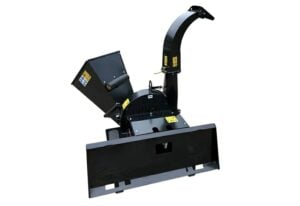

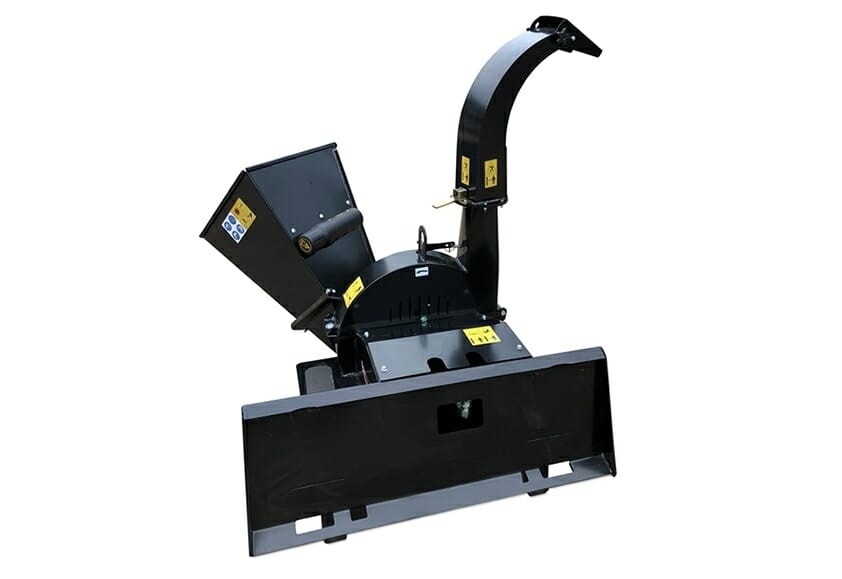
No—a skid steer wood chipper is not worth buying to make conventional firewood; it produces chips rather than stove-length rounds or split logs. It earns its place when recurring branch cleanup is a separate job and you have a use for the chips. For a 2026 buying decision, count the loader time, material handling, knife maintenance, and chip disposal—not just the attachment purchase.
A firewood operation and a brush-cleanup operation handle some of the same trees, but they produce different materials. Confusing those jobs sends usable fuel into a chip pile and leaves you needing equipment to cut and split the remaining logs.
Skid Pro manufactures skid steer attachments and provides access to live Product Gurus 24 hours a day. That support helps with attachment selection, but your first decision is about the output: do you need stackable firewood, manageable brush, or wood chips?
A skid steer wood chipper is worth considering for cleanup alongside firewood work, not as a replacement for cutting and splitting equipment. Separate the jobs before comparing attachments. A chipper changes wood into chips; it does not preserve branches or logs as conventional firewood.
| Equipment or method | Best for | Useful result | Main limitation |
|---|---|---|---|
| Skid steer wood chipper | Recurring suitable-branch cleanup | Chips that can be collected or placed where needed | Does not produce split logs; occupies the loader during use |
| Sawing equipment | Cutting sound logs to the required length | Rounds ready for splitting or suitable small logs | Does not split rounds or resolve brush disposal |
| Log splitter | Splitting rounds for a log-burning appliance | Split pieces ready for seasoning and stacking | Requires rounds to be prepared and handled |
| Grapple attachment | Sorting and moving suitable woody material | Logs and brush staged for their next operation | Moves material but does not cut, split, or chip it |
These are different stages, not interchangeable products. If cutting and splitting already work well but branches block access or require repeated handling, a chipper addresses a real remaining task. If your firewood production stalls at the log pile, chipping branches does not fix that bottleneck.
Best for: owners whose main goal is fuel for a conventional log-burning stove, fireplace, or furnace.
Start with the appliance’s permitted fuel and required log dimensions. Cut suitable wood to that length, split it as needed, then season and store it appropriately. A chipper does not replace any of those requirements.
The advantage is straightforward: usable logs remain available as firewood. The tradeoff is that you still need a separate plan for tops, twigs, and branches that do not belong in your fuel stack.
Do not treat every small limb as waste, either. Suitable small-diameter wood can remain firewood when its condition and dimensions match the appliance requirements. Sorting before processing protects that choice; chipping removes it.
For combustion readiness, use a moisture meter rather than a calendar alone. The U.S. Environmental Protection Agency’s Burn Wise guidance recommends burning wood with less than 20% moisture content and checking a freshly split surface. Chipping wood is not a substitute for meeting the fuel requirements of your heating appliance.
Best for: operators with recurring suitable brush piles and a defined use or disposal route for chips.
A chipper becomes relevant after you separate firewood from material intended for chipping. Its benefit is changing bulky branches into a different, more manageable material. That benefit matters only if the resulting chips solve your disposal or site-management problem.
The limitation is the work surrounding the cutting mechanism. Someone must stage suitable material, feed it according to the manual, manage discharge, and maintain the attachment. The loader is also unavailable for other attachments while it powers the chipper.
Walk through the whole job before buying. If your plan ends at “make a chip pile,” decide what happens to that pile before choosing equipment. Relocating unwanted material is not the same as eliminating its handling requirements.
For occasional cleanup, compare hiring the work or using suitable rental equipment against ownership. Neither alternative automatically wins; compare the actual scope, access, transport, and responsibilities in each offer.
Best for: landowners and contractors who need both usable firewood and a workable brush-management plan.
A mixed operation needs separate material streams. Keep suitable logs for cutting and splitting, route appropriate branches toward chipping, and isolate material the chipper manual excludes. Do not let convenience at the feed opening decide which wood becomes fuel.
Use this sequence when planning the work:
The sequence keeps firewood production and cleanup distinct. It also exposes the extra handling involved when the same loader must move material, power the chipper, and relocate chips.
A chipper earns its place through the work it completes, not through the largest branch shown in a demonstration. Evaluate these factors against your own material and machine:
Avoid choosing an attachment solely because its mounting plate connects. Mechanical connection does not establish hydraulic compatibility, suitable operating weight, or permission to use it on your machine.
The correct flow is the range specified for the exact chipper model, matched to your loader’s documented auxiliary hydraulic output. There is no single GPM requirement that applies to every skid steer wood chipper.
For a 2026 equipment comparison, obtain the current manuals or specification sheets for both machines. Check these items together:
More flow is not permission to exceed an attachment’s rating. Likewise, a high-flow designation alone does not establish compatibility. Match the published requirements as a complete system.
Compare the complete cleanup job, not just access to a cutting mechanism. For your 2026 decision, write down what you would supply under each arrangement: loader, operator, transport, fuel, staging, maintenance, and chip handling.
Ask a service provider whether the proposed scope includes gathering branches, chipping staged piles, and removing chips. For rental equipment, establish the permitted material, operating requirements, transport arrangements, and your responsibilities before committing.
Ownership adds control over scheduling, but it also leaves you responsible for storage, inspections, wear parts, and maintenance. Hiring transfers only the tasks included in the agreement. A rental places equipment on site without automatically supplying an operator or a disposal plan.
Choose ownership only when the attachment addresses recurring work you can operate and maintain properly. If the job is occasional, obtain a complete alternative proposal before deciding that an attachment belongs in your fleet.
Wood chips are not a direct substitute for split logs in a conventional log-burning appliance. Use only the fuel allowed by the appliance manufacturer. Equipment specifically designed for chip fuel has different fuel-handling and combustion requirements.
Do not assume that making smaller pieces makes wood ready to burn. Moisture, contamination, and the appliance’s fuel specification still matter. EPA guidance for conventional firewood calls for less than 20% moisture content, measured on a freshly split face.
Keep treated, painted, and otherwise unsuitable wood out of your household firewood supply. A chipper changes particle size; it does not remove contaminants or make prohibited fuel acceptable.
A grapple deserves attention first when sorting and moving suitable logs or brush is the main unfinished task. A chipper deserves attention when size reduction is the actual job and the material is within the model’s specifications.
The grapple’s advantage is material handling across several stages. Its limitation is equally clear: it leaves the wood intact. A chipper produces chips but does not replace a handling attachment for moving firewood rounds or staging every pile.
Skid Pro skid steer attachments are best for contractors and landowners seeking manufacturer-direct attachment selection support. Ask for a recommendation based on the job and your loader specifications; that support does not remove the need to verify the selected attachment’s fit and operating requirements.
No—a skid steer wood chipper produces chips, not conventional split firewood. Consider it for a separate, recurring branch-cleanup task rather than as a replacement for sawing and splitting equipment.
Use wood chips only if your appliance manufacturer explicitly permits them. A conventional log-burning stove is not interchangeable with equipment designed to handle chip fuel.
Your skid steer needs auxiliary hydraulic flow within the exact chipper model’s specified GPM range. Also verify pressure, connections, controls, mounting interface, attachment weight, and loader limits.
No—correctly matched hydraulic flow is the requirement, not the highest available flow. Follow the attachment’s published limits and the loader’s approved operating configuration.
Keep suitable branches as firewood when their condition and dimensions meet your appliance’s requirements. Chip appropriate remaining material only after confirming that it meets the chipper manual’s restrictions.
Firewood should have less than 20% moisture content under EPA Burn Wise guidance. Check a freshly split surface with a moisture meter rather than relying only on time in storage.
Skid Pro offers manufacturer-direct skid steer attachment guidance through live Product Gurus. Supply your machine model, hydraulic specifications, intended material, and handling task so the discussion starts with fit and application.
Before buying equipment in 2026, inspect the pile you actually need to process. Mark the material you want as firewood, identify what the proposed chipper permits, and decide where the chips would go.
If the remaining problem is moving logs, buy for handling; if it is splitting rounds, buy for splitting. A chipper belongs on the shortlist only when making chips solves the unfinished job.