
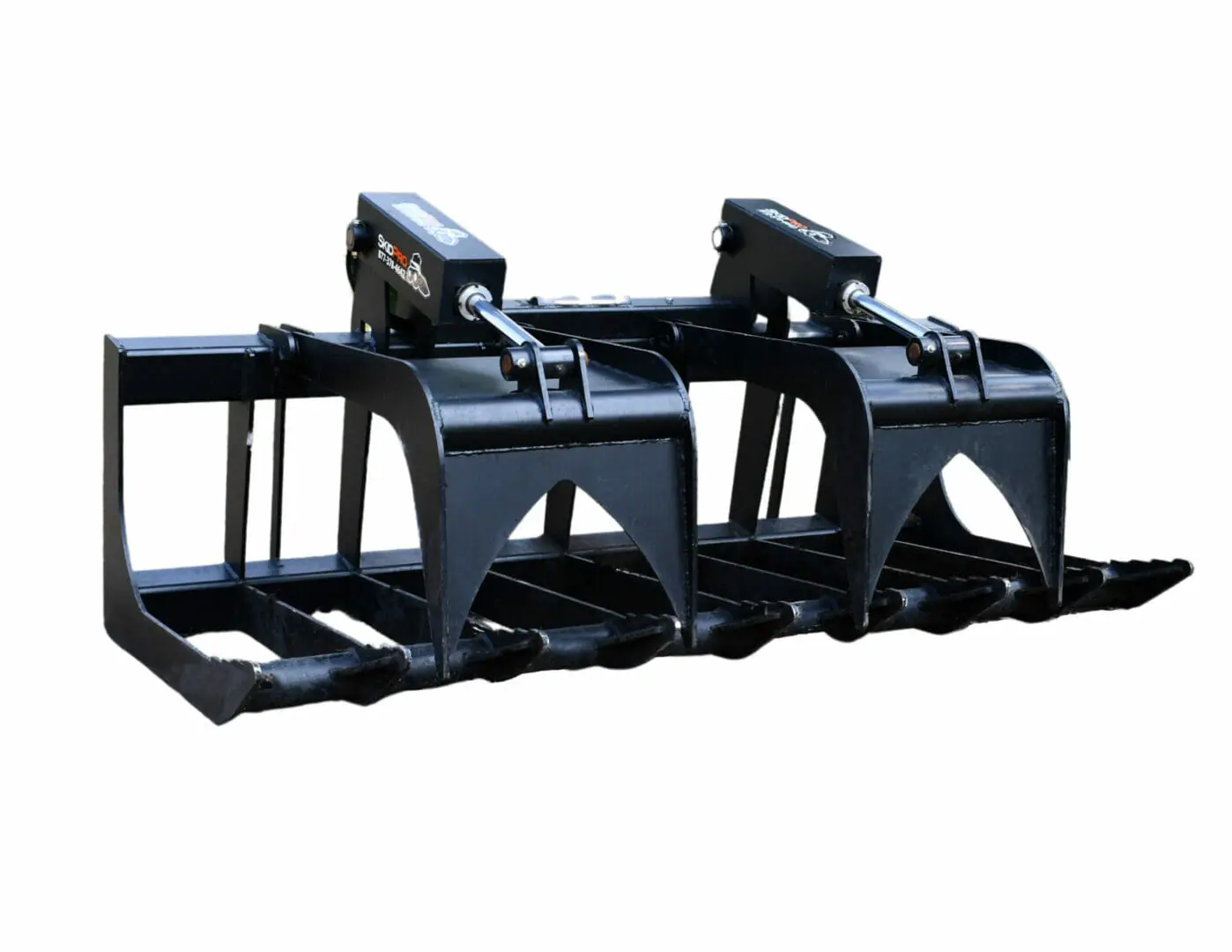
A skid steer grapple bucket is worth it in 2026 if you regularly load brush, logs, demolition debris, or other loose material that needs to be clamped during handling. It is not the right purchase for mostly loose-soil work, and its attachment weight, hydraulic requirements, and maintenance needs must fit your loader—not just your job list.
A grapple bucket gives you a way to secure material that a plain bucket only supports from underneath. That difference matters when branches protrude, debris shifts, or a load does not sit neatly inside the bucket. It does not make the loader capable of lifting any load you can clamp.
Start with the material you actually handle. The skid steer grapple bucket guide belongs alongside your machine specifications, not in place of them. Choose the operating method first, then check the attachment against the loader.
Yes, when securing awkward material is a recurring part of your work. A grapple earns its place through a specific capability: its hydraulic jaw holds material against the bucket instead of relying only on bucket shape and rollback. Brush cleanup, storm debris handling, and mixed-material loading are practical reasons to consider one.
The answer changes when your main task is moving soil, aggregate, or other material that already stays inside a conventional bucket. In that situation, the grapple adds components and attachment weight without necessarily adding a useful operating function.
| Attachment option | Best for | Main advantage | Main limitation |
|---|---|---|---|
| Solid-bottom grapple bucket | Mixed debris with loose material | Supports material underneath and clamps it from above | Retains soil along with the load; adds hydraulic components |
| Skeleton grapple bucket | Brush and debris where soil separation matters | Open floor lets material smaller than its openings fall through | Does not retain fine material like a solid-bottom bucket |
| Plain bucket | Loose soil and aggregate loading | Scoops and carries material without a grapple circuit | Cannot clamp protruding or shifting material |
| Pallet forks | Palletized loads and suitable supported items | Places support beneath a load | Does not provide a grapple’s clamping action |
These are attachment categories, not universal compatibility claims. Bucket geometry, opening size, attachment weight, and the manufacturer’s intended use determine what a particular model can do.
Look at your recent jobs. Did the material repeatedly spill, shift, or resist being gathered with your current bucket? Was the problem a lack of clamping, or was it simply the wrong bucket shape, poor access, or an unsuitable loading method?
Buy a grapple for a repeated clamping problem—not for an occasional awkward load. If a plain bucket already handles the work cleanly, keep it as your reference point. A grapple should solve a task you can name before you purchase it.
A solid-bottom grapple bucket makes sense when you need a bucket floor beneath the load and a jaw above it. Think mixed cleanup material containing both bulky pieces and smaller debris. The floor supports the smaller material while the grapple restrains what extends above the bucket.
The tradeoff is separation. A solid floor retains soil and other loose material rather than letting it sift out through the bottom. If your job requires leaving dirt behind while collecting brush, that retained material becomes part of what you transport.
Check how the bucket gathers the material, not just how far the jaw opens. Sidewalls, floor shape, and the relationship between the jaw and bucket affect the way you approach and hold a load. Choose the solid-bottom design when retaining material is part of the job.
A skeleton grapple bucket uses an open floor rather than a continuous bucket bottom. Material smaller than the openings can pass through while larger pieces remain supported. That makes the design relevant when you want to collect debris without carrying all the surrounding loose soil.
The same openings are its limitation. Fine material is not retained, and separation depends on the opening geometry and the material itself. Wet, cohesive soil does not behave like dry, loose material; do not treat an open floor as a guarantee of clean separation.
For a 2026 purchase, ask whether the material you want to keep is larger than the spaces it must bridge. Also check the attachment’s permitted applications. Choose the skeleton design for separation, not simply because it looks suited to land clearing.
The value of a grapple bucket depends on the work it changes and the machine carrying it. Use these factors to make the decision:
Use these factors in your 2026 equipment plan before discussing a particular model. The useful question is not whether a grapple has more features. It is whether those features solve your repeated handling problem within the machine’s limits.
A matching quick-attach plate is only the beginning. The mounting interface connects the attachment mechanically; auxiliary hydraulics operate the grapple. Weight and load position then determine whether the combination is appropriate for the work.
This sequence prevents a common purchasing mistake: selecting by bucket width or jaw opening before checking the complete machine-and-attachment combination. Fit means interface, hydraulics, weight, and application—not interface alone.
Bring the exact loader model and its relevant specifications. Also describe the material, how you intend to load it, and whether you want to retain or separate loose soil. Those details make the conversation about the working combination rather than a broad compatibility list.
Skid Pro is best for skid steer attachment owners who want manufacturer-direct selection advice. The company manufactures attachments and provides live Product Guru support 24 hours a day, 7 days a week. That gives you access to attachment advice; it does not replace checking your loader manual or establish universal compatibility.
You can start that conversation through Skid Pro. Ask for the proposed grapple’s published requirements and operating instructions before deciding that the attachment fits your machine.
A grapple bucket does not replace a regular bucket for every job. A solid-bottom grapple can support loose material, but its jaw assembly and hydraulic components change the attachment’s weight, geometry, and upkeep. A skeleton grapple cannot retain fine material the way a solid bucket does.
Keep the regular bucket if it remains the right tool for your soil and aggregate work. Select the grapple around the loads that need restraint. Owning both makes sense only when your work genuinely calls for both operating methods.
No—grapple bucket compatibility must be checked for the specific loader and attachment. Confirm the mounting interface, auxiliary hydraulic flow and pressure, connection requirements, attachment weight, and intended application. A machine-brand name by itself does not establish a safe working combination.
Use the same checks for a track loader. Tracks change how the carrier travels; they do not remove the need to match attachment requirements to the machine.
Occasional cleanup alone is not a strong reason to buy a grapple bucket. Compare ownership with using an appropriate attachment for the individual job, including setup, transport, storage, and maintenance. Do not assign a payback period without records of actual use and avoided work.
For recurring cleanup in 2026, document where clamping changes the task. That record gives you a sounder ownership decision than a claim that every grapple automatically saves time.
Before operating, follow the loader and attachment manuals for installation, inspection, and hydraulic connection. Check attachment locking, hose condition and routing, fittings, pins, and other specified inspection points. Do not use your hand to locate a suspected hydraulic leak.
During handling, keep the load within the machine’s permitted operating limits and follow its guidance for travel and slopes. A grapple jaw restrains material; it does not make an unstable load stable under every operating condition. Keep people clear of the operating area and suspended material.
Before servicing, follow the manufacturer’s shutdown and hydraulic-pressure-release procedure. Never treat hydraulic clamping as permission to work beneath an unsupported load. The buying decision should include whether you can inspect, store, and maintain the attachment correctly.
A skid steer grapple bucket is worth considering for recurring brush cleanup because its jaw secures material that a plain bucket cannot clamp. Choose the floor design according to whether you want to retain loose material or let it separate.
A solid-bottom grapple is better for retaining loose material; a skeleton grapple is better when separation through the floor is part of the job. Check opening geometry, intended use, and machine fit before choosing.
Use the hydraulic flow specified for the particular grapple bucket; do not assume high flow is required. Compare both auxiliary flow and pressure with the attachment’s published requirements.
No, jaw opening and grip do not establish lifting capacity. Follow the loader’s operating limits and the attachment’s permitted uses, accounting for attachment weight and load position.
Keep your regular bucket if soil or aggregate loading remains part of your work. A grapple adds clamping, while a plain bucket remains a separate option for material that does not need restraint.
Skid Pro provides live Product Guru support for attachment selection. Have your exact loader model, hydraulic specifications, and intended application ready so the discussion addresses your machine and job.
For your 2026 decision, inspect what ends up in the load—not just what the grapple can pick up. A bucket that carries unwanted soil with every brush load is solving the gripping problem while leaving the separation problem untouched.
Write down the material you want to keep and the material you want to leave behind. That simple distinction points you toward the right floor design before width, jaw opening, or brand enters the discussion.