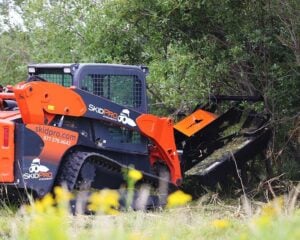

Clearing small trees can become a slow and tiring job when you rely on manual cutting, hauling, and cleanup. A powerful mulching attachment can make the work much faster by cutting trees, brush, and vegetation directly on the job site.
A Skid Steer Disc Mulcher is a useful attachment for contractors, landowners, and property managers who need to clear overgrown areas efficiently. Instead of cutting each tree separately and moving the debris afterward, the attachment can cut and process vegetation as you work.
However, getting the best results is not only about using a powerful machine. You also need to consider hydraulic flow, cutting techniques, tree size, travel speed, and cleanup methods.
This guide explains how to clear small trees efficiently while maintaining controlled operation and achieving a cleaner finish.
Before entering the clearing area, inspect both the skid steer and the attachment. Make sure the hydraulic connections are secure and the attachment is properly mounted and locked.
High-flow hydraulic machines can provide the power required for demanding mulching work. At the same time, high hydraulic flow can place significant demands on the machine.
Before starting, make sure you:
Taking a few minutes to inspect the equipment can help prevent avoidable problems once clearing begins.
Avoid rushing into the first tree immediately after engaging the Skid Steer Disc Mulcher. Allow the cutting wheel to reach its operating speed before feeding material into it.
A large flywheel can take time to spool up, especially when the hydraulic system is under load. Once the attachment reaches its proper operating speed, it can process vegetation more efficiently.
Trying to cut vegetation before the wheel reaches the required speed can place additional demand on the hydraulic system and reduce cutting performance.
Why Spool-Up Matters
The Skid Pro model uses a variable-speed piston motor and a 60-inch, 1-inch-thick ground-balanced flywheel. The attachment is designed for demanding vegetation management work and can handle trees up to 15 inches when operated within the specified conditions.
The attachment is rated for 27–45 GPM and up to 4,500 PSI. Always compare these requirements with your machine’s approved hydraulic specifications before operation.
The best way to cut a tree with a Skid Steer Disc Mulcher depends on the tree’s size, position, and surrounding vegetation.
For smaller trees, approach the tree from the base and gradually feed it into the cutting area. Maintain a steady movement instead of forcing the attachment into the material.
A controlled approach allows the cutting wheel to maintain its operating speed and helps prevent unnecessary hydraulic load.
Do not expect every tree to disappear instantly. Larger material can reduce cutting-wheel speed and may require additional passes.
For small trees:
Controlled feeding helps maintain cutting performance and reduces unnecessary strain on the hydraulic system.
Some clearing areas do not provide enough space to approach a tree directly from the base. In these situations, a top-down cutting technique can be useful.
Position the cutting area over the upper portion of the tree and gradually work downward. This approach can help when trees are crowded together or when the machine cannot easily reach the base.
Always maintain a safe operating position and use the machine’s protective features as intended.
Back dragging can help improve the appearance of the cleared area after the main vegetation has been processed.
After cutting the vegetation, position the attachment appropriately and reverse through the remaining brush and debris. This can help process loose material and leave a cleaner path.
A disc mulcher can provide high cutting capacity, but it may leave larger pieces of material compared with some drum-style designs. Back dragging gives you another opportunity to break down and spread remaining debris.
Not every tree should be handled in the same way. A Skid Steer Disc Mulcher can process small saplings quickly, while larger trees require more controlled feeding and may temporarily reduce cutting-wheel speed.
The attachment is designed to cut and mulch trees up to 15 inches. However, operators should always consider the tree species, condition, position, machine capability, and overall site conditions.
When working with larger trees:
A larger tree can significantly reduce the cutting wheel’s speed. Allowing the attachment to recover before continuing can help maintain better cutting performance.
Once the larger trees have been removed, smaller brush and vegetation can generally be processed with controlled passes.
Drive through lighter material at a suitable speed and use back dragging where necessary to clean up remaining pieces.
A skid steer disc can be useful for projects involving a combination of brush, saplings, and larger trees because the operator can adjust the approach based on the material.
You do not always need to process everything in one pass. The first pass can focus on removing the main vegetation, while a second pass can address remaining debris and uneven areas.
The attachment includes several features designed for demanding vegetation management work.
Its 60-inch cutting width provides a broad working area, while the 44 cutting teeth help process vegetation efficiently. The reinforced 3/8-inch deck adds durability, and the 3.5-inch skid shoes help maintain stability during operation.
Other features include:
These features are designed to support controlled and productive vegetation management when the attachment is properly matched with a suitable machine.
If you are looking for a skid steer disc mulcher for sale, do not focus only on the advertised cutting width. Consider the attachment’s hydraulic requirements, machine compatibility, flywheel construction, cutting teeth, deck strength, skid shoes, and serviceability.
A disk mulcher for skid steer should match the hydraulic capability of your machine and the type of vegetation you expect to clear.
For contractors, durability and productivity are important because the attachment may operate for long periods in demanding conditions. For occasional land clearing, ease of maintenance and versatility may be more important factors.
Choosing the right attachment depends on the type of vegetation you need to clear, the size of the trees, the finish you want, and your skid steer’s hydraulic capability
Comparison
| Feature | Skid Steer Disc Mulcher | Skid Steer Brush Cutter |
| Primary Function | Cuts and mulches trees, brush, and woody vegetation | Cuts grass, brush, saplings, and smaller trees |
| Best For | Small trees, brush, land clearing, and vegetation management | Grass, weeds, fields, brush, and smaller trees |
| Cutting Capacity | Up to 15-inch trees | Up to 4 inches for the HD3 model |
| Cutting System | 60-inch ground-balanced flywheel with 44 cutting teeth | Rotating blades with direct-drive hydraulic motor |
| Cutting Width | 60 inches | Available in 72- and 84-inch configurations |
| Hydraulic Flow | 27–45 GPM | Varies by model; industrial models are available in standard- and high-flow configurations |
| Power Requirement | High | Moderate to high, depending on model |
| Best Choice When | You need aggressive tree cutting with a disc-style mulcher | Speed and broad-area vegetation cutting are the priority |
Want to see how a skid steer disc mulcher handles tree clearing and vegetation management? Watch the video below for a practical look at the attachment and its operation.
https://youtu.be/xNIZxGXvjQI?si=In1GxFRJGNnuxwIY
What size trees can this attachment clear?
The Skid Pro model is designed to cut and mulch trees up to 15 inches when used within the manufacturer’s operating specifications and suitable machine conditions.
What hydraulic flow does the attachment require?
The product is designed for 27–45 GPM and up to 4,500 PSI. Always confirm that your machine meets the required specifications before operating the attachment.
What are skid steer disc mulchers used for?
Skid steer disc mulchers are used for clearing trees, brush, saplings, and other woody vegetation. They can be useful for land clearing, right-of-way maintenance, and property cleanup.
Why does the machine slow down while mulching?
High-flow mulching requires substantial hydraulic power. When the attachment works through heavy vegetation, the machine may experience reduced travel speed, maneuverability, and responsiveness.
Should I feed trees from the base or top?
Both techniques can be useful depending on the work area. Feeding trees from the base works well when you have clear access, while a top-down approach can help in tighter areas. Choose the method that provides the safest and most controlled approach.
Clearing small trees becomes more efficient when you use the right machine, attachment, and operating technique. Start by preparing the Skid Steer Disc Mulcher, allow the cutting wheel to reach full speed, and feed trees gradually instead of forcing the attachment into heavy material.
Adjust your approach based on the size and location of the trees. Use base feeding when you have clear access, consider top-down cutting in tighter areas, and use back dragging when you need a cleaner finish.
Skid Pro’s heavy-duty attachment combines a 60-inch cutting width, 44 cutting teeth, reinforced deck, ground-balanced flywheel, and high-flow hydraulic performance to support demanding vegetation management work.
If you’re ready to make your next land-clearing project faster and more productive, check the price of Skid Pro’s vegetation management equipment and choose an attachment that fits your machine and application.

Call one of our Product Gurus for more information & special promotions!

Click a category to see products
