
A skid steer trencher’s cost in 2026 depends on the attachment’s cutting setup, hydraulic requirements, condition, and delivered configuration; get a current written quote matched to your loader rather than budget from an unverified average. The attachment quote is only part of the job budget: chain wear, machine operating time, transport, and any required setup changes also belong in your comparison.
Use a written, configured quote as your purchase budget—not a category-wide average. A trencher quote only becomes useful when it identifies what you are buying and whether your loader can operate it within the attachment manufacturer’s limits.
Start with the job, then compare equipment. The skid steer trencher buying guide provides a separate starting point for evaluating attachments; the checklist below keeps the financial comparison tied to the same requirements.
| Budget component | What to have specified | Why it belongs in the comparison |
|---|---|---|
| Attachment configuration | Exact attachment, boom, chain, and cutting width | Different configurations are not interchangeable quotes |
| Machine connection | Mount, hydraulic couplers, hoses, and any required connections | A mounting match does not establish hydraulic compatibility |
| Delivery | Destination, freight arrangements, and unloading responsibility | The equipment quote and delivered total are different measures |
| Wear items | Chain condition, cutting teeth, sprockets, and adjustment provisions | Wear affects the work required after purchase |
| Operating expense | Loader use, fuel, operator time, and maintenance | Buying the attachment does not cover running the job |
| Purchase terms | Applicable taxes, payment terms, and documented coverage | The final commitment extends beyond the attachment description |
Ask the seller to separate included equipment from optional items. Keep the configuration identical when requesting another quote; otherwise, you are comparing different tools rather than different offers.
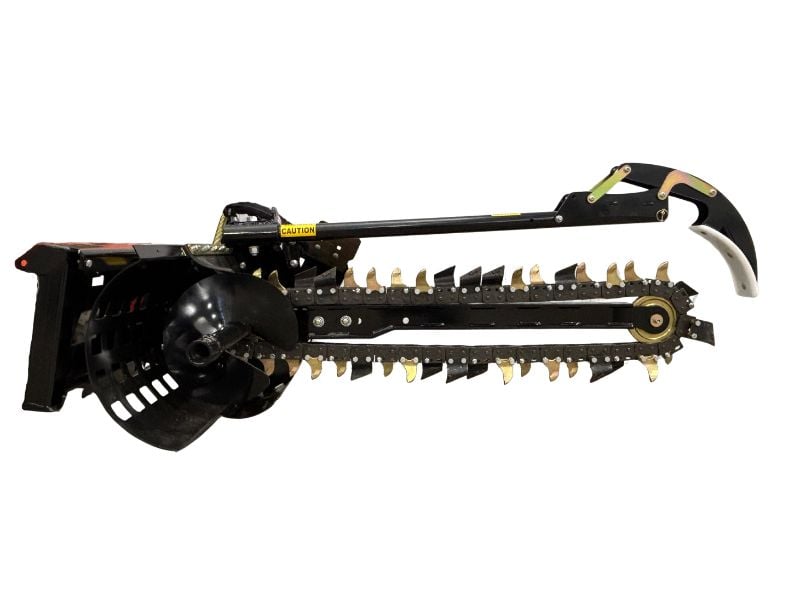
A trencher cuts a narrow excavation with a digging chain. Your loader supplies the hydraulic power and carries the attachment, so the attachment and machine must be evaluated together.
An attachment that does not match your hydraulic system or required trench dimensions is the wrong purchase regardless of the quoted amount. Confirm the job and machine fit before comparing purchase terms.
In 2026, make your first purchasing document a specification sheet, not a list of advertised figures. Record the loader model, auxiliary hydraulic specifications, trench requirements, and ground conditions so every seller answers the same request.
New equipment, used equipment, and rental equipment solve different ownership problems. Choose the arrangement that fits your expected work and maintenance responsibilities, then evaluate the actual attachment offered.
| Option | Best for | Practical advantage | Tradeoff to check |
|---|---|---|---|
| New attachment | Owners planning repeat trenching work | You can specify the required configuration before purchase | You take responsibility for ownership, maintenance, and storage |
| Used attachment | Buyers able to inspect condition and evaluate repairs | You can inspect the exact attachment being offered | Wear history, missing parts, and repair needs require investigation |
| Rental attachment | Owners with a defined, temporary trenching job | You avoid keeping an attachment after the job | Rental terms, transport, machine fit, and wear responsibilities need review |
Request the exact boom and chain configuration, compatible hydraulic requirements, attachment weight, and mounting details. Ask what comes with the attachment and what requires a separate order.
Do not assume a new attachment needs no compatibility work. Couplers, hose routing, controls, and any additional hydraulic connections still need confirmation against your loader and the attachment manual.
Best for repeat work: a new attachment deserves consideration when you expect ongoing use and want to define the configuration before purchase. The tradeoff is taking on the full ownership commitment, including maintenance between jobs.
Inspect the digging chain, teeth, sprockets, boom, bearings, hoses, frame, and adjustment mechanism. Ask for the identification plate and operating documentation so you can confirm the model and its requirements.
An operating demonstration helps establish whether the attachment functions, but it does not replace inspection. Arrange any demonstration with a compatible machine and follow the manufacturer’s safety instructions.
Best for inspection-capable buyers: used equipment requires a written list of needed repairs and missing items before you commit. A purchase figure without that list leaves the actual ownership requirement unresolved.
Confirm the attachment configuration and hydraulic requirements before booking. Ask how the rental agreement handles transport, cleaning, wear, damage, and the return deadline.
Include setup and return logistics in your plan. If the attachment does not fit the loader or the cutting setup does not suit the ground, the rental agreement alone does not solve the job.
Best for a defined temporary job: rental avoids retaining equipment you do not need afterward. The limitation is working within the agreement and arranging a compatible attachment for the required work period.
These factors explain why two trencher quotes need more than a side-by-side total. Each factor should appear in your specification request or your inspection notes.
None of these factors supplies a universal price multiplier. Their purpose is to identify what each quote covers and what you must resolve separately.
Match the attachment’s published requirements to your exact loader configuration. Machine brand alone is not enough, and the presence of a high-flow option does not establish that every trencher is compatible.
Use this sequence before requesting a final quote:
Keep that information with your 2026 quote request. It gives the seller a specific machine to evaluate instead of a general description such as skid steer or track loader.
A completed fit check does not establish the correct cutting chain. Give the supplier the ground conditions and required trench dimensions as a separate part of the request.
A useful quote identifies the exact equipment and the responsibilities attached to the sale. Ask for enough detail that another person could read the document and understand what will arrive.
Request the model identification, boom configuration, cutting width, chain type, hydraulic requirements, attachment weight, and mounting interface. Have the seller identify included hoses, couplers, and other supplied components.
Ask for the relevant operating and maintenance documentation. That documentation is where you should verify operating limits, adjustment procedures, and required service—not in an informal sales description.
Request written freight arrangements and unloading requirements for your destination. Confirm the payment terms, applicable taxes, and any coverage stated for the specific attachment.
For a used attachment, add condition notes and the repair items identified during inspection. For a financed purchase, compare the payment schedule and total obligation rather than treating the periodic payment as the attachment’s cost.
For manufacturer-direct guidance, Skid Pro manufactures skid steer and track loader attachments and provides live Product Guru support 24 hours a day. Skid Pro skid steer attachments suit owners who want manufacturer-direct guidance before choosing equipment. Ask the team to confirm the quoted trencher configuration against your machine; a broad compatibility claim is not a substitute for that check.
Buying fits repeat work; renting fits a defined temporary need. Neither option wins without considering your expected use, transport arrangements, maintenance capability, and the actual equipment terms.
For a 2026 decision, compare the same job under both arrangements. Keep the trench dimensions, ground conditions, machine, and cutting setup consistent so the ownership choice is not confused with a change in equipment capability.
If you buy, include storage and maintenance responsibilities. If you rent, review the agreement’s return, cleaning, wear, and damage requirements before scheduling the job.
Choose the required trench dimensions, not the largest available configuration. Additional capability only helps when the project needs it and the loader can operate the attachment within published limits.
A different boom or chain configuration can change the equipment you need to evaluate. Ask the supplier to explain the practical tradeoffs for your machine and ground rather than assuming a larger setup is the better purchase.
Budget for operating the loader, maintaining the cutting system, and moving the equipment. Keep those items separate from the attachment quote so you can see the difference between buying the tool and completing the work.
Before trenching, arrange utility locating and follow applicable excavation requirements. A trencher purchase does not establish where you can dig or what depth the project requires.
Get a current written quote for the exact trencher configuration and your loader. Compare the attachment, required connections, delivery terms, and operating responsibilities rather than relying on a category-wide average.
No, a skid steer trencher is not universally compatible. Verify the mounting interface, hydraulic flow, pressure, attachment weight, and required connections against the exact loader and attachment documentation.
The attachment’s published requirements determine whether you need high-flow hydraulics. Match its permitted flow and pressure to your machine instead of choosing from the hydraulic-system label alone.
A used skid steer trencher suits buyers who can inspect wear and evaluate repairs before purchase. Check the chain, teeth, sprockets, boom, bearings, hydraulic components, frame, and missing equipment.
Renting deserves consideration for a defined temporary project because you do not retain the attachment afterward. Confirm machine compatibility, cutting configuration, transport arrangements, and the rental agreement’s responsibilities first.
Skid Pro provides manufacturer-direct attachment guidance and live Product Guru support. Bring your loader model, hydraulic specifications, required trench dimensions, and ground conditions so the discussion addresses your actual setup.
The attachment quote does not establish the whole job budget. Review delivery, setup requirements, loader operation, cutting-system maintenance, transport, and project-specific excavation requirements separately.
Ask each seller to identify what the quoted setup does not include. That question exposes differences in hoses, couplers, cutting configurations, freight arrangements, and ownership responsibilities before they become purchasing surprises.
Keep your final 2026 comparison to matching configurations. A clearly specified quote is more useful than a lower-looking figure attached to a different tool.