
A skid steer snow blower requires a current, machine-matched quote in 2026, not a generic price assigned to every attachment. Your total purchase commitment also depends on what the quote includes: mounting, hydraulic connections, chute controls, delivery, and any machine preparation needed to operate the blower.
Use a written quote for a specific blower configuration as your buying number. An attachment-only quote and a delivered, ready-to-connect quote are not equivalent. Compare the same scope before deciding which offer meets your needs.
Skid Pro manufactures skid steer and track loader attachments and sells directly to equipment owners. For a snow blower inquiry, provide your loader model, auxiliary hydraulic specifications, and the work you need to complete; a brand name alone does not establish fit.
Build your 2026 quote comparison around these items:
| Quote item | What to confirm | Why it matters |
|---|---|---|
| Blower configuration | Exact attachment, working width, and hydraulic requirements | Defines what you are actually comparing |
| Machine interface | Mounting arrangement and loader compatibility | Prevents buying around an assumed fit |
| Hydraulic connections | Required couplers, hoses, and any additional connections | Establishes whether installation needs extra components |
| Chute controls | Included controls and required machine connections | Determines how you direct discharged snow |
| Delivery | Destination, unloading arrangements, and included freight terms | Separates the attachment quote from delivery scope |
| Setup | Required machine preparation and who performs it | Clarifies what remains before operation |
| Purchase terms | Written warranty and financing terms, if offered | Keeps the payment decision separate from equipment fit |
Ask the seller to mark each item as included, excluded, or not required. That turns a headline offer into a usable purchase decision without assuming that every blower needs the same accessories.
A snow blower purchase starts with two questions: can your loader operate it correctly, and does blowing snow solve your site problem? A quote answers neither question unless it identifies the attachment and its required setup.
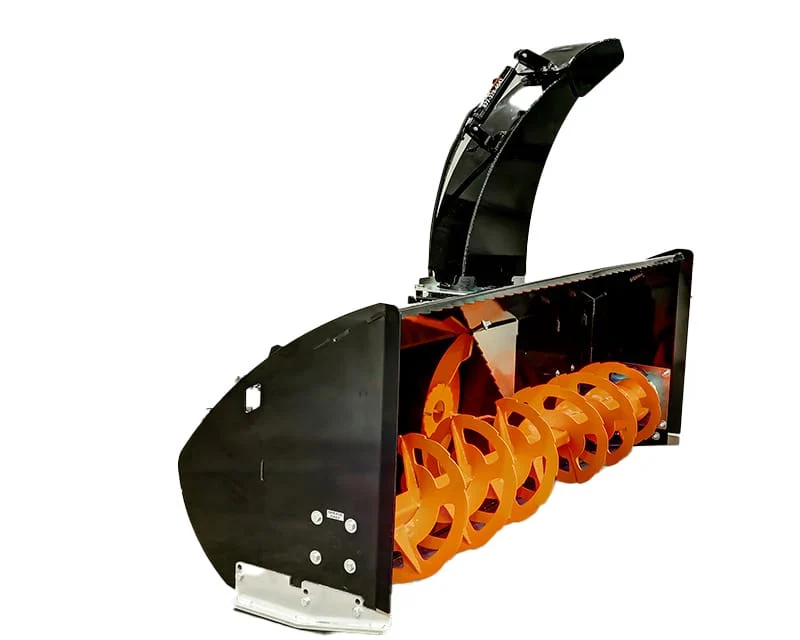
Snow blowers move collected snow through a discharge chute. That makes snow placement part of the buying decision, particularly where pushing snow into a nearby pile does not meet the job requirements.
Choose the snow-handling method before comparing attachment quotes. Otherwise, you risk choosing an attachment around the purchase figure and discovering that the site needs a different method.
For a 2026 purchase, keep the machine specifications, attachment requirements, and written quote together. Those documents should describe the same configuration throughout the buying process.
Start with the exact snow blower configuration. Record its working width, hydraulic operating requirements, weight, mounting arrangement, and control requirements from the manufacturer’s documentation.
Do not compare two unnamed blowers simply because both attach to skid steers. Differences in configuration make the comparison incomplete, even before you discuss payment terms.
Working width needs to suit your clearing route and machine. Measure gates, narrow approaches, and other restrictions; then check the attachment dimensions rather than relying on the width named in a listing.
Confirm how the blower connects to your loader’s auxiliary hydraulics. Check coupler requirements, hose routing, and whether the specified attachment requires additional hydraulic connections.
Chute direction and deflector adjustment also need a clear answer. Ask which functions are controlled from the cab, how those controls connect, and what components are supplied with the attachment.
Do not assume that a familiar mounting plate means the whole attachment is ready to operate. Mechanical mounting, hydraulic operation, and control compatibility are separate checks.
Ask whether the quote includes delivery to your actual destination. Confirm unloading arrangements before ordering, particularly if the delivery site does not have suitable unloading equipment.
List any loader preparation separately. If the selected attachment requires changes to connections or controls, get those requirements in writing before accepting the quote.
The useful comparison is not just attachment against attachment. It is the complete required purchase scope against the complete required purchase scope.
A quote needs to reflect the equipment you are buying and the work needed to put it into service. These are the factors to separate:
None of these checks justifies an automatic assumption that a larger or more complicated attachment is the better purchase. The right configuration is the one your loader can operate and your site actually needs.
Match the attachment’s requirements to the exact loader, not merely its manufacturer. Machines carrying the same badge do not necessarily have the same auxiliary hydraulic configuration or operating limits.
Use this sequence before requesting a final quote:
This sequence prevents a common buying mistake: treating attachment fit as a yes-or-no answer based only on the machine brand. Ask the supplier to confirm the selected configuration against the information you provide.
A standard-flow or high-flow label is not a substitute for the actual specifications. Record the published requirements and compare them directly; do not select a blower simply because the loader has a high-flow option.
Keep this fit record with your 2026 quote. If the attachment configuration changes, repeat the check rather than carrying over the previous approval.
Compare snow-handling methods before you narrow the purchase to a blower. Each method has a useful application and a practical limitation.
| Attachment option | Best for | Practical advantage | Practical limitation |
|---|---|---|---|
| Snow blower | Directing snow away from the clearing path | Uses a chute to place discharged snow | Requires hydraulic matching and a safe discharge area |
| Snow pusher | Moving snow toward an accessible pile area | Pushes snow without routing it through a discharge chute | Requires somewhere to accumulate the pushed snow |
| Bucket | Scooping, carrying, and loading snow | Lets the operator carry collected material | Repeated loading and carrying become part of the work cycle |
A snow blower is the appropriate method when you need to direct snow away from the route rather than keep pushing it along that route. Check the permitted discharge area before treating this as the solution.
The tradeoff is operating complexity. Hydraulic requirements, chute operation, and discharge safety all need attention; a blower is not a substitute for planning where the snow will go.
A snow pusher fits work where you can push snow to an acceptable accumulation area. Map that area before buying and check whether buildings, traffic routes, or site boundaries interfere with the push.
The limitation is placement. If the site does not permit the snow to remain where you push it, the attachment alone does not resolve that problem.
A bucket is relevant when the job includes collecting snow and carrying it to another location or loading it. That operating method differs from continuous pushing or blowing.
The limitation is the work cycle. Plan for collection, travel, and unloading rather than judging the attachment solely by its purchase quote.
A used or demo snow blower deserves a condition inspection and the same machine-fit checks as a new attachment. A familiar mount does not establish hydraulic suitability, and a clean exterior does not document the condition of rotating components.
Request the exact model identification and operating documentation. Inspect accessible wear areas and guards with the attachment shut down and following the manufacturer’s safety procedure; arrange a qualified inspection where condition is uncertain.
Ask what equipment comes with it. Missing controls, couplers, or documentation can leave you with an incomplete setup even when the attachment itself is intact.
Skid Pro offers used and demo attachments, but a specific snow blower’s condition and included components must be confirmed individually. Manufacturer-direct access is useful for equipment questions; it does not remove the need to inspect a used attachment.
Send a short equipment-and-job brief instead of asking only for the lowest-priced snow blower. Include:
Ask for a written response identifying the attachment configuration and every required component. For your 2026 comparison, retain that response with the quote so that scope changes remain visible.
Skid Pro is best for skid steer attachment buyers who want direct access to the manufacturer for fit questions. Its Product Gurus provide live support 24 hours a day; have your machine specifications ready so the discussion addresses your actual setup.
Confirm your snow blower fit
Have your loader model, auxiliary flow, pressure, and control connections ready before requesting a quote.
Get a current written quote for the exact blower configuration and your loader. Confirm whether hydraulic connections, controls, delivery, and required setup are included before comparing offers.
Your loader’s auxiliary flow must meet the selected blower manufacturer’s published requirements. Check pressure, connections, and control requirements as well; GPM alone does not establish compatibility.
No, mounting compatibility alone does not establish full operating compatibility. Check the machine interface, hydraulic flow, pressure, attachment weight, and controls against the exact loader configuration.
A snow blower suits jobs that need directed discharge, while a snow pusher suits jobs with an accessible pile area. Choose by snow placement and machine fit rather than assuming either method is always better.
A usable quote identifies the exact attachment and clearly separates included components from required extras. Confirm mounting, hydraulic connections, chute controls, delivery, setup, and written purchase terms.
Consider a used snow blower only after checking condition, documentation, included equipment, and machine compatibility. Apply the same hydraulic and control checks you would use for a new attachment.
Skid Pro provides live Product Guru support for attachment questions. Supply your exact loader model, auxiliary hydraulic specifications, mounting interface, and control connections rather than requesting approval by machine brand alone.
Before accepting a quote, describe where the snow must end up. Include the clearing route, acceptable discharge area, and places where snow cannot be deposited.
That simple job description makes your 2026 purchase discussion more useful than a request for an attachment figure alone. It lets you check the operating method before committing to the equipment.