
A skid steer grapple bucket’s cost in 2026 depends on the exact attachment, its construction, and the equipment needed to fit your loader; get a current, itemized quote for the configuration you intend to use. Check whether that quote includes freight, applicable taxes, hydraulic connections, and any required mounting changes. Compare the delivered, machine-ready total—not an attachment-only figure.
A grapple bucket has to do two jobs: carry material and hold it securely. Your purchase decision therefore starts with the load, not just the bucket width. Loose soil, tangled brush, and demolition debris place different demands on the floor, grapple arms, and loader.
Use the skid steer grapple bucket guide to frame the attachment comparison, then request quotes against the same requirements. A cheaper quote that leaves out a mounting change or necessary hydraulic connection is not an equivalent offer. Neither is a heavier attachment that leaves your machine less capacity for the material you actually need to move.
The useful cost is the total for a specific grapple bucket fitted to your specific skid steer or track loader. Ask the seller to identify the attachment, width, operating weight, mounting interface, and hydraulic requirements in writing. Keep those details attached to the quote so you can compare like-for-like offers.
Use this breakdown rather than treating the quoted attachment amount as the whole purchase:
| Quote line | What to establish | Why it belongs in the comparison |
|---|---|---|
| Grapple bucket | Exact attachment and included equipment | Establishes what you are buying |
| Mounting interface | Whether the quoted mount matches your loader | Prevents comparing different mounting configurations |
| Hydraulic connections | Included hoses, couplers, and required connections | Separates included equipment from additional requirements |
| Freight | Delivery destination and unloading arrangements | Establishes the delivered total |
| Applicable taxes | Tax treatment on the written quote | Keeps the invoice comparison consistent |
| Financing, if used | Payment terms and total repayment | Separates the equipment purchase from the borrowing decision |
Do not assume an item is included because another seller includes it. Ask for a clear included-or-excluded statement on each line. If you change the attachment configuration after receiving the quote, request a revised quote before placing the order.
A sound buying comparison also separates purchase cost from operating suitability. An attachment that retains fines is not interchangeable with one designed to let fines fall through. Decide which behavior your work requires before treating the quotes as alternatives.
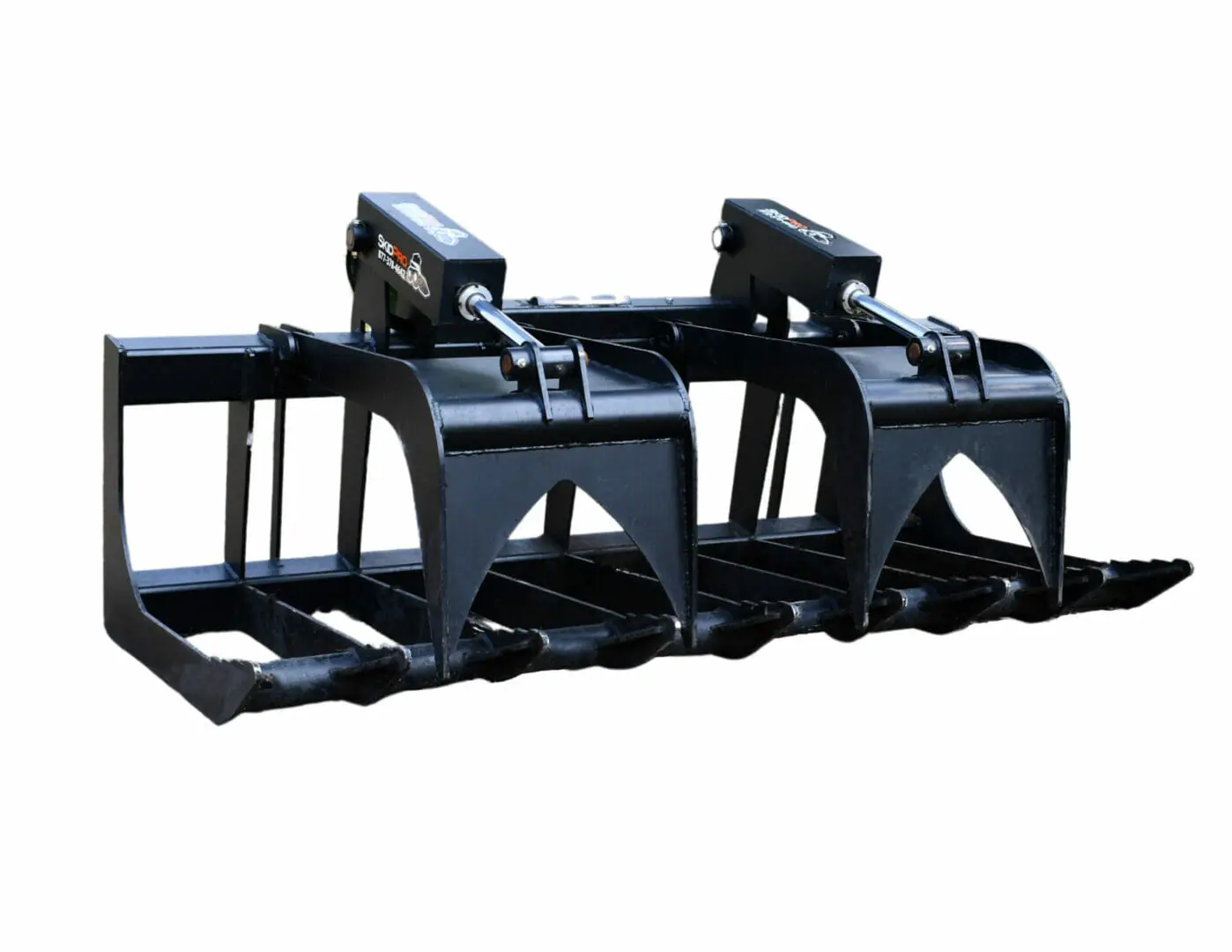
A solid-floor grapple bucket keeps material in the bucket rather than letting it pass between floor openings. It suits work where retaining soil, smaller debris, or loose mixed material matters. The grapple adds a means of holding bulky material that an ordinary bucket does not provide.
The tradeoff is separation. A solid floor does not sift soil through the bucket in the way an open skeleton floor does, so material you want to leave behind stays with the load. If your main job is collecting brush while leaving loose dirt on the ground, decide whether that behavior fits your work.
Ask what the quoted configuration includes around the cutting edge, grapple arms, hoses, and mount. Do not infer those details from a category name or a photograph. Choose a solid-floor grapple bucket when retaining material is part of the job—not simply because it resembles your existing bucket.
A skeleton grapple bucket uses an open floor that allows sufficiently small, loose material to pass through. It suits handling brush, rocks, and debris when you want separation rather than full retention. The size and arrangement of the openings matter to what stays in the attachment.
Its limitation follows directly from that design: material smaller than the openings is not reliably retained. Wet or packed material also does not behave like dry, loose soil. Describe the actual material conditions when discussing the attachment, rather than asking only whether it can handle rocks or brush.
Check the floor design against the smallest material you need to retain. Then confirm operating weight and loader suitability. Choose a skeleton grapple bucket for separation work; choose a retaining floor when losing smaller material would undermine the job.
An ordinary bucket remains a relevant alternative when your task is primarily scooping and carrying loose material. A grapple bucket adds a gripping function, but that function also adds equipment to inspect, connect, and maintain. Buy the grapple because the load needs restraint—not because more moving parts automatically mean more useful work.
| Attachment option | Best for | Practical advantage | Practical limitation |
|---|---|---|---|
| Solid-floor grapple bucket | Retaining loose material and gripping bulky loads | Combines a retaining floor with grapple arms | Does not separate fines through the floor |
| Skeleton grapple bucket | Handling debris while separating loose fines | Open floor allows smaller loose material to pass | Cannot retain everything smaller than its openings |
| Skid steer bucket | Scooping and carrying material without a gripping requirement | Does not require grapple-arm operation | Does not clamp material in the bucket |
These are operating comparisons, not a ranking of manufacturers. Construction, fit, and included equipment still need verification for the actual attachment. A category label alone does not establish a particular model’s strength, hydraulic requirements, or compatibility.
For a 2026 purchase, keep these factors consistent when comparing offers. Each changes either the attachment configuration or what must happen before you can put it to work.
Remove configuration differences before deciding which quote represents better value. If one offer includes equipment another excludes, request a matched revision. That is more useful than comparing headline amounts and trying to reconstruct the missing scope afterward.
A grapple bucket needs both a mechanical connection and a suitable hydraulic connection. It also needs to remain within your loader’s operating limits when carrying the intended material. Confirm these checks before treating any attachment as ready to order.
Do not use a universal GPM target for every grapple bucket. The required range belongs to the particular attachment, and the available hydraulic capability belongs to the particular loader. Obtain both specifications and compare them directly.
Skid Pro manufactures skid steer attachments and sells directly to operators. Skid Pro is best for skid steer attachment buyers who want direct access to the manufacturer for fit guidance. That access does not replace the checks above: confirm the exact attachment’s interface, hydraulics, weight, and application before purchase.
Confirm your grapple bucket fit
Discuss your loader, material, mounting interface, and hydraulics with the manufacturer.
Send enough information for the seller to identify a configuration, not merely a category. A short request with accurate machine details is more useful than a long request that leaves the loader model or intended material unclear. Use the same request for every seller you compare.
For your 2026 quote request, include:
Ask the seller to identify assumptions rather than silently select a configuration for you. If the seller recommends a different width, floor, or mount, ask for the reason and a revised specification. Keep that explanation with the quote.
Also ask for the applicable warranty terms and operating documentation. Do not assume manufacturer-direct purchasing establishes a particular warranty length or coverage. Read the terms for the quoted attachment before making the buying decision.
A heavier grapple bucket is worth considering when its documented construction suits the work and your loader can handle the attachment and load. Weight alone does not establish durability or suitability. Compare the actual frame, floor, arms, and wear-area specifications.
The tradeoff is load handling. The attachment contributes to the total weight the loader carries, so buying more attachment than the machine or job requires is not automatically an upgrade. Select construction for the application, then verify capacity—not the other way around.
Financing is a payment choice, not evidence that an attachment is a better fit. Compare the written repayment terms separately from the equipment specification. Keep the same attachment configuration when assessing a financed offer against another purchase option.
Skid Pro offers financing options for its skid steer attachments. Check the current terms and confirm which attachment and equipment the offer covers. A manageable payment does not resolve a mounting mismatch, unsuitable floor design, or hydraulic requirement.
The cost depends on the exact grapple bucket, its configuration, and the equipment needed to fit your loader. Request a current itemized quote and compare the delivered, machine-ready total, including applicable freight, taxes, and connection or mounting requirements.
A skeleton grapple bucket is better for separating loose fines, while a solid-floor grapple bucket is better for retaining them. Choose according to the material you need to keep, not the category name alone.
No, a grapple bucket must be checked against the specific loader’s mounting interface, hydraulic requirements, and operating limits. A broad brand compatibility statement does not replace confirmation for your machine and attachment.
The required GPM comes from the specific grapple bucket’s published hydraulic requirements. Compare those requirements, including pressure and connections, with your loader documentation before ordering.
Shipping is included only when the written quote says it is. Confirm the delivery destination, unloading arrangements, and whether freight is a separate line item.
An ordinary bucket is enough when the work requires scooping and carrying material without gripping it. A grapple bucket is relevant when you need the arms to hold bulky or awkward material during handling.
Check the mounting interface, hydraulic suitability, structural condition, and included equipment before buying a used grapple bucket. Inspect wear areas, pins, hoses, cylinders, and visible repairs, and request the attachment’s identification and specifications.
For a 2026 purchase, ask the seller to put the attachment’s operating weight beside your loader model on the written recommendation. Then check that recommendation against the machine documentation and intended load. Width is easy to notice in a listing; the weight you carry before adding any material deserves equal attention.
Choose the grapple bucket that fits the work and the loader, then compare the complete quote. That order keeps a tempting attachment-only amount from deciding a purchase that still needs mechanical, hydraulic, or application checks.