
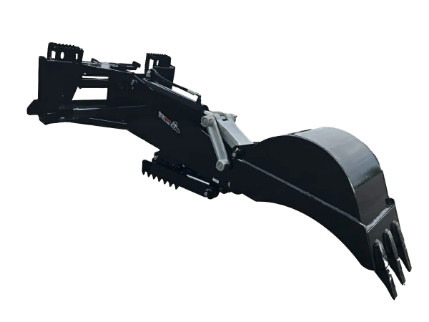
A skid steer backhoe attachment’s cost in 2026 depends on the digging configuration and equipment needed to fit your loader, so get a written, machine-specific quote before budgeting. The attachment alone does not establish your ready-to-dig total: confirm whether mounting hardware, hydraulic connections, delivery, and any required setup are included.
A lower attachment quote is not automatically a lower job cost. A backhoe that does not meet your digging requirements or match your machine is not a workable substitute for one that does. Start with the job, then compare equipment that can perform it.
Use the skid steer backhoe attachment guide to organize your shortlist. For your 2026 purchase, keep the buying decision tied to written specifications rather than a category label or an advertised starting figure.
The useful answer is the complete quoted cost for a backhoe configuration that fits your loader and your excavation work. Ask the supplier to separate the attachment, required connections, optional equipment, and delivery so you can compare equivalent packages.
Do not assume that everything shown in a photograph is included. A bucket, mounting component, hose arrangement, or control component needs written confirmation if your purchase depends on it.
| Quote component | What to confirm | Why it belongs in your budget |
|---|---|---|
| Backhoe assembly | Exact model, included equipment, operating arrangement | Establishes what the base quote actually covers |
| Digging bucket | Included bucket and available dimensions | Determines whether the quoted configuration suits your excavation |
| Machine interface | Attachment plate and any required mounting hardware | A mounting mismatch prevents installation |
| Hydraulic connections | Required flow, pressure, couplers, hoses, and any additional connections | Hydraulic fit must be checked separately from physical mounting |
| Controls and setup | How you operate the attachment and what installation requires | Identifies equipment or setup outside the attachment itself |
| Delivery and unloading | Destination, delivery terms, and unloading responsibility | Establishes what happens between shipment and usable equipment |
| Tax and optional equipment | Applicable tax treatment and separately selected items | Keeps excluded charges visible before approval |
Compare the complete package, not isolated line items. If a supplier bundles hardware into the attachment quote, record it as included rather than adding it again. If an item is optional, decide whether your work actually requires it.
A skid steer mounting interface is only part of the fit check. Hydraulic requirements, attachment weight, machine limitations, and the manufacturer’s operating instructions also matter. Never treat a familiar loader brand as proof that an attachment fits every model carrying that name.
Work through these checks before requesting a final quote:
Keep the machine information with every quote. Otherwise, a revised quote can quietly change the attachment configuration without making the difference obvious.
The checklist also gives you a direct way to question a vague recommendation. Ask the supplier to identify which specification satisfies each requirement. An attachment name alone does not answer those questions.
For a 2026 budget, separate the equipment decision from the payment decision. Buying new, buying used, and financing a purchase raise different questions. None removes the need to confirm fit and operating requirements.
| Purchase route | Best for | Practical advantage | Limitation to check |
|---|---|---|---|
| New attachment | Buyers who need a specified configuration and documented condition | You can define the equipment package before purchase | New condition does not establish machine compatibility |
| Used or demo attachment | Buyers able to inspect condition and verify completeness | You can evaluate an identified unit rather than a generic listing | Wear, missing components, and repair needs require inspection |
| Financed purchase | Buyers evaluating payment timing alongside equipment needs | Payment arrangements can be considered separately from job fit | Payment size alone does not show the full financing obligation |
Request the exact model and configuration in writing. Identify the bucket, mounting equipment, hydraulic connections, and controls included with that configuration. Ask for the applicable warranty terms rather than assuming coverage from the word new.
Best for buyers who need a clearly specified package: evaluate the delivered configuration first. Only then compare suppliers’ commercial terms.
Inspect the structure, pivot areas, pins, bushings, cylinders, hoses, and mounting components. Follow a safe inspection procedure, and have a qualified technician assess anything you cannot evaluate confidently. A listing photograph is not a condition report.
Best for buyers equipped to assess condition: establish what needs repair or replacement before judging the purchase. Confirm that the operating manual and required components accompany the unit.
Request the financing terms and the equipment quote as distinct documents. Review the repayment obligation, fees, and conditions alongside the purchase agreement. A manageable payment does not resolve an unsuitable attachment specification.
Best for buyers comparing payment arrangements: choose suitable equipment before choosing how to pay for it. Do not substitute a payment discussion for a fit check.
These factors change what you are buying. Use them to explain differences between quotes instead of assuming that the higher or lower figure represents the same equipment.
For a clean 2026 comparison, ask every supplier to respond to the same requirements. Keep optional equipment separate so a more complete package does not appear equivalent to an incomplete one.
Send your loader details, hydraulic specifications, excavation requirements, and delivery location. Include photographs of the mounting interface and hydraulic connections when the supplier requests them. Photos supplement specifications; they do not replace the machine manual.
Describe the actual work. Occasional isolated excavations and repeated digging along a route are different requirements, even when both involve moving soil. Explain access restrictions and how you expect to reposition the machine.
At Skid Pro, the attachment business is manufacturer-direct, with live Product Gurus available 24/7. Bring the machine and job details to that conversation so the discussion stays focused on fit, configuration, and operating requirements.
Before approving a purchase, request written confirmation of:
Do not approve an undefined package. A written answer gives you something specific to check when the equipment arrives.
A skid steer backhoe attachment and a trencher use different digging methods; choose by the excavation you need. A backhoe bucket excavates and lifts material, while a trencher cuts a continuous narrow trench. Neither attachment category is automatically the better purchase.
| Attachment | Best for | Main advantage | Main limitation |
|---|---|---|---|
| Backhoe attachment | Excavations requiring bucket digging and material removal | Bucket action lets you excavate a defined area | Repositioning and the approved operating method affect the workflow |
| Trencher | Continuous narrow trenching | Cutting action follows a trench route | Trench dimensions and material suitability depend on the attachment specifications |
Write down the required excavation shape before comparing equipment. Then check depth, width, material suitability, and machine requirements for each shortlisted attachment. Do not compare unlike tools solely because both can open the ground.
Mounting compatibility does not establish that a backhoe attachment is ready to operate. You must also check hydraulic flow, pressure, connection requirements, attachment weight, controls, and the manufacturer’s operating instructions.
Treat compatibility as a complete system check. If any requirement remains unresolved, settle it before shipment rather than assuming installation will reveal an easy fix.
Get a machine-specific quote that identifies the backhoe configuration, included equipment, required connections, and delivery. Compare complete packages that meet the same digging requirements rather than attachment-only figures.
A backhoe attachment quote should identify the exact model, included bucket, mounting equipment, hydraulic connections, and operating setup. It should also state exclusions and delivery responsibilities so you can establish the complete purchase scope.
No, a skid steer backhoe attachment requires checks beyond the mounting interface. Confirm hydraulic flow, pressure, attachment weight, connection requirements, controls, and the loader manufacturer’s applicable limits.
A used backhoe attachment is an option for buyers who can verify condition, completeness, and machine fit. Inspect structural and hydraulic components, and have a qualified technician assess concerns before purchasing.
Financing payments do not replace a complete equipment comparison. Confirm the attachment package first, then review the repayment obligation, fees, and financing conditions separately.
Ask the attachment manufacturer and consult your loader documentation before ordering. Skid Pro offers manufacturer-direct attachment expertise and live Product Gurus; provide your exact loader model, hydraulic specifications, and intended work.
Ask how the attachment repositions between digging locations. Reach and depth describe only part of the work; the approved sequence for stopping, moving, and resuming excavation also belongs in your decision. Read that procedure before committing your 2026 budget.
Request the operating manual before purchase, not after delivery. It gives you a concrete way to check whether the attachment’s operating method suits your site and crew.