
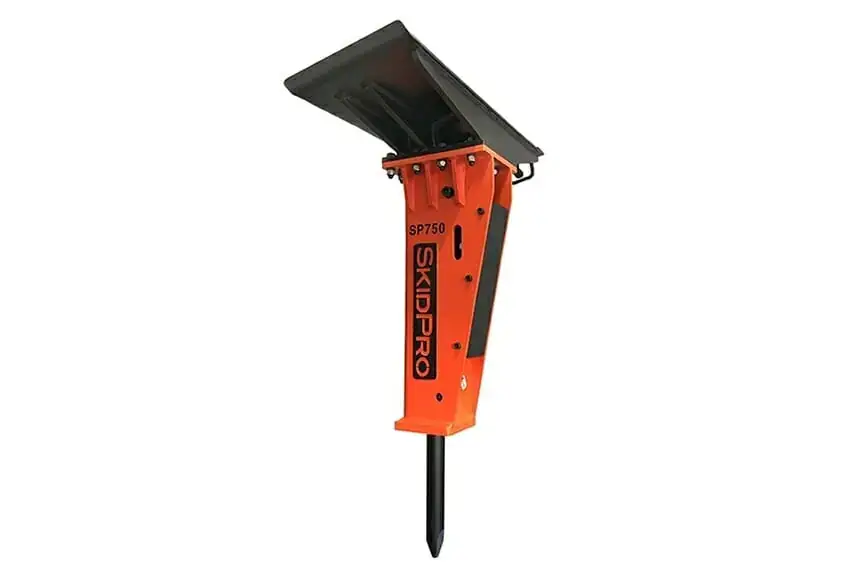
A skid steer concrete breaker needs a machine-matched quote in 2026: the purchase total depends on the breaker, mounting setup, hydraulic connections, and delivery terms. The attachment quote is not your complete demolition budget; include wear parts, maintenance, machine operating costs, and debris removal. Confirm hydraulic flow, pressure, attachment weight, and mounting fit before comparing purchase offers.
The useful figure is the delivered total for a breaker configured for your exact machine and work, not a stand-alone attachment listing. Start with the same specification sheet for every supplier so you can distinguish equipment differences from missing items.
Skid Pro manufactures skid steer attachments and sells directly to equipment owners. A manufacturer-direct conversation gives you a place to resolve fit questions, but you still need written confirmation of the quoted configuration.
Use this breakdown when requesting a 2026 breaker quote:
| Quote component | What to confirm | Why it belongs in the comparison |
|---|---|---|
| Breaker assembly | Exact model, operating requirements, and intended application | Establishes which attachment you are actually buying |
| Mounting arrangement | Machine interface and any required mounting hardware | A breaker is not ready to work without a compatible connection |
| Hydraulic connections | Hoses, couplers, and any model-specific requirements | Prevents treating an incomplete hookup as a complete package |
| Working tool | Tool type supplied and suitability for the material | Different work calls for an appropriate tool selection |
| Delivery | Freight terms, destination, and unloading requirements | Makes delivered quotes comparable |
| Ownership support | Maintenance instructions, parts information, and written warranty terms | Shows what you must manage after delivery |
Ask the supplier to mark each item as included, excluded, or separately quoted. Keep taxes and any financing charges separate so they do not obscure the attachment comparison.
A cheaper quote is not a better purchase if the breaker does not match the carrier. The mounting interface answers only whether the attachment can connect mechanically; it does not establish hydraulic or operating suitability.
Your loader supplies the hydraulic power and carries the attachment. A mismatch can leave you with equipment that needs different connections, exceeds the machine’s attachment limits, or cannot operate within the breaker’s requirements.
Compare the complete setup before committing to a purchase. That protects your equipment decision without relying on a general market average that ignores your machine and job.
Use your loader’s operator manual and the breaker’s published documentation together. Machine brand alone is not enough: the exact model, hydraulic configuration, and attachment requirements matter.
Record the auxiliary hydraulic flow in gallons per minute, or GPM, for the circuit you intend to use. Compare that figure with the breaker’s specified operating range, not with a broad description such as suitable for skid steers.
Do not assume a high-flow circuit is automatically the right choice. Use the hydraulic circuit and settings approved for the breaker and carrier combination.
Record the loader’s auxiliary hydraulic pressure in PSI and ask the supplier to confirm the breaker’s pressure requirements. Flow and pressure are separate checks; meeting one does not establish that the other is correct.
Have the supplier identify any additional hydraulic conditions in the installation instructions. Resolve these before ordering rather than treating them as installation-day questions.
Confirm the attachment interface, coupler arrangement, and complete operating weight. Check the loader manufacturer’s attachment limitations and operating instructions for the intended configuration.
An attachment that locks onto the carrier is not automatically appropriate for that carrier. Weight, hydraulic requirements, and the intended work still need separate approval.
Tell the supplier whether you are breaking a slab, removing isolated concrete, or working on reinforced material. Describe access restrictions and the material’s known dimensions without guessing at hidden conditions.
A useful recommendation connects the breaker to the job as well as the machine. Send photographs when they clarify access, exposed reinforcement, or the section you need to remove.
The configuration behind the quote matters more than the headline total. For a 2026 purchase, ask suppliers to explain these differences in writing:
Do not assign value to an unexplained claim about breaking speed or durability. Ask for published specifications or clearly attributed field evidence for the configuration being offered.
Choose the ownership route around your work schedule and ability to inspect and maintain the equipment. No route removes the need to verify hydraulic compatibility and carrier suitability.
| Option | Best for | Practical advantage | Tradeoff to investigate |
|---|---|---|---|
| Buy new | Owners planning recurring breaker work | You can specify the package before purchase | You take responsibility for maintenance, storage, and ownership commitments |
| Buy used | Owners able to assess condition and service history | You can inspect a specific attachment before deciding | Wear, missing components, and uncertain history require closer investigation |
| Rent | Operators with a defined temporary job | You can arrange an attachment for a particular work period | Contract terms, transport, condition, and damage responsibilities need review |
A new attachment gives you the opportunity to document the configuration, supplied components, and written support terms before delivery. Request those details with the quote rather than assuming every required item comes in the package.
The tradeoff is ownership responsibility. Your business must maintain, store, and inspect the breaker even between jobs, so evaluate expected use alongside the purchase decision.
A used breaker requires a condition assessment, not just a model-name check. Ask for service records, the operating manual, tool-condition information, and a clear explanation of any repairs.
Have a qualified technician assess uncertain condition or operating behavior. Do not treat a brief demonstration as proof of internal condition or future service life.
Rental lets you evaluate a particular attachment against a scheduled job without buying it. Confirm the supplied model and machine requirements before arranging transport.
Read the agreement for permitted use, maintenance duties, damage responsibility, and return conditions. A rental contract is a separate decision from whether the breaker fits your loader.
Your 2026 demolition budget should distinguish equipment acquisition from doing the work. Keeping those categories separate makes it easier to compare ownership with rental and to estimate individual jobs.
Ask for the maintenance schedule and specified lubricant before the breaker arrives. Identify the working tool and other service items by the manufacturer’s part references so you can request accurate replacements.
Follow the documented inspection and lubrication procedures. Do not apply a maintenance interval borrowed from a different breaker model.
Account for the loader’s operation, the operator’s time, and transport between jobs. Breaker ownership does not remove those job costs, and rental does not cover them automatically.
Estimate from your own equipment records and job conditions. Keep assumed production rates separate from results your crew has actually recorded.
Breaking concrete is only part of removal. You also need a plan for handling fragments, managing exposed reinforcement, loading debris, and arranging an appropriate disposal destination.
Check the disposal facility’s acceptance rules before starting. Material condition and contamination can affect the handling plan, so identify those requirements during estimating.
Build a comparison sheet before asking for a final 2026 offer. A consistent request prevents suppliers from quoting different packages against the same short description.
Skid Pro skid steer attachments are best for owners seeking a manufacturer-direct purchase and live product guidance. The company’s Product Gurus provide 24/7 phone support, but access to advice does not replace documented compatibility checks.
For a concrete breaker inquiry, provide the machine details first and request confirmation of the proposed setup. Treat any unresolved hydraulic, mounting, weight, or application question as a reason to pause the order.
Check your machine fit
Prepare your loader model, hydraulic specifications, and job details before discussing an attachment.
Explore skid steer attachments
No. Impact energy is one specification, not a complete measure of machine compatibility or job suitability.
Compare the manufacturer’s hydraulic requirements, attachment weight, tool configuration, and operating instructions alongside any impact specification. Ask suppliers to explain how published figures were defined before treating different listings as directly comparable.
No. A manufacturer-direct purchase provides direct access to product guidance, but the buyer still needs confirmation for the exact carrier and application.
For Skid Pro skid steer attachments, use the manufacturer’s expertise to resolve those details before purchase. Do not interpret compatibility with a machine brand as approval for every model that brand produces.
Request a machine-matched, delivered quote for your 2026 purchase. Compare the breaker, mount, working tool, hydraulic connections, delivery terms, and exclusions rather than an attachment-only figure.
No, a concrete breaker must match the carrier’s mounting interface, hydraulic flow, pressure, and attachment limits. Confirm the exact machine and breaker combination before ordering.
Use the hydraulic flow specified for the particular breaker. High flow is not automatically the correct setting; confirm the approved circuit and operating requirements with the equipment documentation.
A used concrete breaker is an option for buyers who can verify fit and assess condition. Review service history, inspect the attachment, and obtain a qualified assessment when condition is uncertain.
Consider rental for a defined temporary job and ownership for recurring work. Compare your expected use, transport arrangements, maintenance responsibilities, and contract terms before deciding.
Send the loader make and model, hydraulic flow and pressure, mounting details, and a description of the concrete work. Ask for a complete configuration and written confirmation of compatibility.
Plan how you will remove the broken concrete before choosing the breaker. Access, fragment handling, exposed reinforcement, and disposal requirements remain part of the job after the breaking stops.
Your breaker quote answers an equipment question. Your removal plan answers whether the whole job is ready to proceed.