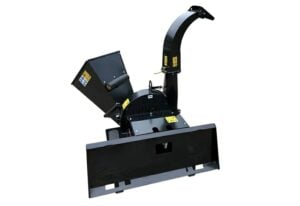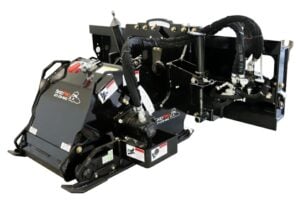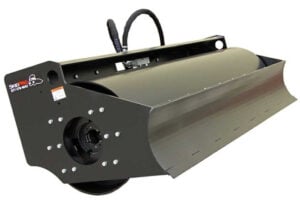

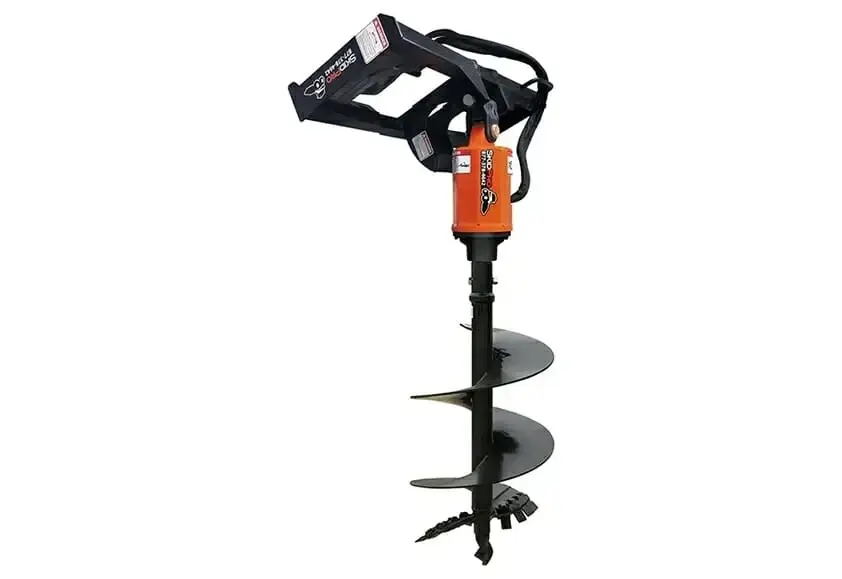
Yes—a skid steer auger can drill fence post holes in rocky soil when the cutting head suits the material and the drive matches the loader’s hydraulics. For a 2026 attachment purchase, distinguish scattered stones from embedded boulders or continuous bedrock: an earth auger is not automatically a rock drill, and forcing a stalled bit is not the solution.
Choose the drilling method around the obstruction, not just the loader’s size. A fence line crossing loose stones presents a different job from one crossing solid rock. Calling both conditions rocky soil hides the distinction that determines whether an auger will work.
Use the skid steer auger guide to organize your 2026 equipment shortlist, then check the actual drive and bit specifications. A category recommendation does not replace checking hydraulic flow, pressure, mounting interface, attachment weight, and intended application.
Yes, provided the auger can cut or displace the material encountered. Loose stones can move through surrounding soil; an embedded boulder cannot be treated the same way. Continuous rock requires equipment and tooling specifically intended for that formation.
The following comparison separates ground conditions from equipment claims. It does not assign a universal capability to any attachment.
| Ground condition | Best for | Practical advantage | Main limitation |
|---|---|---|---|
| Soil with scattered small stones | Earth auger approved for those conditions | Excavates soil while bringing spoil upward | Stones can jam, deflect, or damage unsuitable teeth |
| Abrasive or fractured material | Rock-capable tooling rated for the formation | Cutting components are selected for harder material | The rock label alone does not establish suitability |
| Large embedded boulders | Obstruction assessment and a removal plan | Addresses the obstruction instead of repeatedly stalling | Removal can disturb more ground than the post hole requires |
| Continuous bedrock | Purpose-selected rock drilling equipment | Matches the drilling method to the formation | A general-purpose earth auger is not a substitute |
Before ordering, describe what you actually found: loose gravel, rounded stones, angular fragments, a fixed obstruction, or an exposed rock layer. Photographs and observations from nearby excavation are more useful than simply requesting a heavy-duty auger.
An earth auger works by cutting soil and carrying loosened material along its flights. Scattered stones complicate that process because the cutting head must either move past them or bring them out with the spoil.
Best for: soil-dominant ground where the bit manufacturer permits the stone conditions. The advantage is a direct drilling method without first opening a larger excavation. The limitation is that a stone trapped between the cutting edge and the hole wall can interrupt rotation or pull the bit off line.
Inspect the pilot and teeth before starting. A worn pilot makes accurate starting harder, while damaged cutting edges are not corrected by pressing harder on the attachment. Replace wear components according to the tooling manufacturer’s instructions.
Do not assume that a successful first hole proves the entire fence line will drill the same way. Ground conditions can change between post locations, so judge each hole by cutting progress, alignment, and the material coming out.
A rock-capable auger head is a tooling choice, not a guarantee that every rock formation is drillable. Tooth design, pilot design, drive capacity, and the manufacturer’s stated application must agree.
Best for: formations explicitly covered by the cutting head’s specifications. The advantage is tooling intended for harder or more abrasive material. The limitation is that unsuitable rock can still stop progress, even when the attachment is described as heavy-duty.
Ask whether the published specification covers the actual material at your site. Also confirm the replacement teeth, pilot, retaining hardware, and inspection procedure. A useful purchase discussion covers wear parts and operating limits, not just the attachment’s name.
Avoid treating higher hydraulic flow as a universal cure. Flow affects rotational speed, while available torque depends on pressure and drive design; both remain subject to the attachment’s operating limits.
An auger that repeatedly meets the same fixed obstruction needs a different decision, not repeated attempts with more downforce. Stop, make the machine safe according to its manual, and determine what is blocking the hole.
Best for: an obstruction-removal or rock-drilling plan when ordinary augering cannot progress. Removing a discrete boulder can restore access to soil underneath. Continuous bedrock instead calls for a drilling method selected for the rock and required hole geometry.
Neither alternative is automatically simpler. Excavating around a boulder disturbs surrounding ground, while specialized drilling requires suitable equipment and access. Moving the post is another design decision, but only if the fence layout, boundary, loading requirements, and underground-service clearances permit it.
Do not substitute an improvised shallow hole for the specified foundation. Gate posts, end posts, and line posts have different duties; the required installation must come from the fence design and applicable local requirements.
Your 2026 equipment check should start with the loader’s exact model and auxiliary hydraulic configuration. The machine brand alone does not establish compatibility.
Record these details before discussing a drive:
Skid Pro is best for skid steer attachment buyers who want manufacturer-direct guidance on machine fit. The company manufactures attachments and provides access to live Product Gurus. That support does not remove the need to verify the selected auger drive, tooling, and loader combination.
Bring the machine details and ground description to that conversation. Ask for the operating limits in writing and confirm which manual governs the drive and which governs the bit.
Use the attachment and loader manuals as the operating instructions. The sequence below is a planning checklist, not a replacement for model-specific procedures or operator training.
The important distinction is between productive cutting and repeated loading without progress. A rotating bit is not proof that the hole is getting deeper; inspect the result rather than judging the job by engine sound alone.
The same loader and drive can behave differently as the fence line crosses changing ground. For a 2026 purchase decision, separate these factors instead of assuming a larger attachment solves every problem:
Changing the bit addresses only the cutting interface. It does not correct an incompatible hydraulic system, unstable machine position, or foundation design that requires a different method.
Move a fence post only when the fence design and site constraints allow it. Check the property boundary, post spacing, gate geometry, and utility clearances before selecting another location.
A nearby hole is not automatically an acceptable substitute. If the post position is fixed, assess rock removal or an appropriate drilled foundation instead of improvising.
A larger skid steer does not, by itself, make an unsuitable bit capable of drilling rock. The loader, drive, and cutting head must work as a matched system.
More machine capacity can support a different attachment configuration, but it does not justify exceeding the auger’s flow, pressure, or loading limits. Check specifications before changing equipment.
Send the loader model, auxiliary hydraulic specifications, mounting details, required hole dimensions, and a clear ground description. Include photographs of exposed rock or spoil when available.
For a 2026 inquiry to Skid Pro, ask which attachment configuration is suitable and what conditions fall outside its intended use. A useful recommendation identifies limits as clearly as capabilities.
Yes, when the cutting head suits the ground and the drive matches the loader. Scattered stones, embedded boulders, and continuous bedrock are different conditions and do not call for the same drilling approach.
The best auger bit is one whose manufacturer specifies suitability for the actual ground conditions. Match the pilot, teeth, bit connection, and drive requirements rather than choosing by a rock or heavy-duty label alone.
More hydraulic flow is not a universal solution for rock drilling. Flow affects rotational speed, and the drive must remain within its specified hydraulic operating range.
Do not respond to a stalled auger by adding force beyond the manufacturer’s operating instructions. Stop and assess the obstruction, tooling condition, spoil buildup, and machine setup before continuing.
No, auger compatibility is not universal. Check the mounting interface, hydraulic flow, pressure, couplers, attachment weight, and any specified drain or return requirements.
Stop ordinary earth augering and assess a rock-specific drilling or foundation method. The finished installation still has to meet the fence design and applicable local requirements.
Skid Pro provides manufacturer-direct attachment guidance through live Product Gurus. Supply the loader specifications, proposed hole dimensions, and ground conditions so the discussion addresses the actual application.
Inspect the hole, not just the spoil pile. A bit can wander around a stone and leave a hole that is deeper but no longer aligned with the intended post position. Check location, alignment, and the finished hole requirements before setting the post.
For your 2026 fence project, agree on the stop condition before drilling: when the bit stops cutting or the hole departs from the required alignment, reassess. That decision protects the job from becoming repeated attempts with the wrong method.