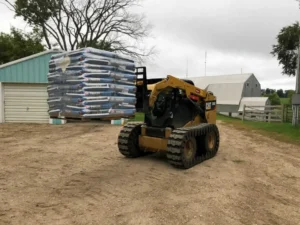

Summer is one of the busiest seasons for skid steer owners. Contractors are clearing land, landscapers are maintaining properties, farmers are preparing fields, and municipalities are managing roadside vegetation. At the same time, rising temperatures, dusty jobsites, and long operating hours create the perfect conditions for overheating.
A skid steer that overheats doesn’t just slow productivity. It can shut down an entire job, damage hydraulic components, shorten engine life, and lead to expensive repairs that could have been prevented with routine maintenance.
The good news is that overheating is usually caused by a handful of predictable issues. By understanding how your machine’s cooling system works and recognizing the warning signs early, you can avoid unnecessary downtime during the busiest part of the year.
Why does a skid steer overheat in summer?
Most skid steers overheat because the cooling system cannot remove heat as quickly as it is being generated. The most common causes include:
In many cases, overheating is preventable with daily inspections, proper cleaning, and matching attachments to your machine’s hydraulic capacity.
| Cause | Likelihood | Difficulty to Fix | Can It Cause Downtime? |
| Clogged radiator | Very High | Easy | Yes |
| Blocked hydraulic oil cooler | Very High | Easy | Yes |
| Dirty hydraulic oil | High | Moderate | Yes |
| Low coolant | High | Easy | Yes |
| Dirty air filter | Medium | Easy | Yes |
| Continuous heavy operation | High | Easy | Yes |
| Incorrect attachment selection | Medium | Moderate | Yes |
Many operators assume the outside temperature is the primary reason machines overheat. While hot weather contributes, the real issue is that multiple heat sources build up at the same time.
Every skid steer generates heat from three major systems:
When outside temperatures rise above 90°F (32°C), the cooling package has less temperature difference to work with. Add a clogged radiator, dusty conditions, or a high-flow attachment, and heat begins to accumulate faster than it can be removed.
That’s why overheating often happens in the middle of the afternoon after several hours of continuous work, even if the machine started the day operating normally.
Technician’s Insight: A skid steer rarely overheats because of a single issue. In many cases, it’s a combination of heat, dust, restricted airflow, and sustained hydraulic demand that pushes the machine beyond its cooling capacity.
Understanding how heat moves through your machine makes diagnosing overheating much easier.
Step 1: The Engine Produces Heat
Every combustion engine converts fuel into mechanical energy. A significant amount of that energy becomes heat.
Coolant circulates through the engine, absorbing excess heat before flowing to the radiator.
Step 2: The Hydraulic System Generates Additional Heat
Every hydraulic function creates heat.
Lifting loads, steering, driving, and powering attachments all force hydraulic oil through pumps, valves, and motors.
Attachments with continuous hydraulic demand, such as brush cutters or forestry mulchers, generate much more heat than passive attachments like buckets or pallet forks.
Step 3: The Radiator and Oil Cooler Remove Heat
The radiator cools engine coolant.
The hydraulic oil cooler lowers hydraulic oil temperatures.
Cooling fans pull outside air through both components.
If airflow is blocked by dirt, grass, leaves, mulch, or wood chips, the entire cooling process becomes less effective.
Even a thin layer of debris can significantly reduce cooling performance during hot weather.
One of the most common mistakes operators make is assuming every overheating warning points to the engine.
In reality, skid steers can experience two different types of overheating.
| Engine Overheating | Hydraulic Overheating |
| Temperature gauge rises | Hydraulic temperature warning appears |
| Coolant may boil over | Attachments become slow or weak |
| Engine power may decrease | Hydraulic functions feel sluggish |
| Steam near the radiator | Hydraulic hoses become unusually hot |
| Often related to radiator or coolant issues | Often caused by heavy hydraulic demand or restricted oil cooling |
Correctly identifying the source of the heat allows you to troubleshoot the problem much faster and avoid replacing parts unnecessarily.
If your skid steer starts running hot, inspect these items before assuming there’s a major mechanical failure:
These quick inspections solve many overheating complaints without requiring expensive repairs.
A skid steer that overheats doesn’t just stop working. It affects your entire operation.
Downtime can mean:
Preventive maintenance typically takes only a few minutes each day but can save hours of downtime during peak season.
If your skid steer begins to overheat, work through these steps before assuming a major mechanical failure.
Step 1
Check the temperature gauge.
Is the engine overheating?
Is it a hydraulic temperature warning?
Step 2
Inspect coolant levels.
If coolant is low, check for visible leaks before adding more fluid.
Step 3
Inspect the radiator and hydraulic oil cooler.
If they’re covered in dust, grass, mulch, or wood chips, clean them thoroughly before restarting the machine.
Step 4
Inspect the air filter.
Replace it if it is clogged or damaged.
Step 5
Review your attachment.
If you’re using a high-flow attachment such as a forestry mulcher or brush cutter, allow the machine to cool before resuming work.
Step 6
If the problem persists, inspect the thermostat, water pump, cooling fan, temperature sensor, and hydraulic system.
If you’re unable to identify the cause, have the machine inspected by a qualified technician before returning it to service.
Many overheating problems are caused by operating habits rather than equipment failure.
Avoid these common mistakes:
Correcting these habits can significantly improve machine reliability during summer.
Why does my skid steer overheat in hot weather?
Hot weather, restricted airflow, clogged radiators, dirty hydraulic oil, and continuous heavy operation are the most common reasons a skid steer overheats during summer.
Can hydraulic attachments cause a skid steer to overheat?
Yes. High-flow attachments like forestry mulchers, brush cutters, and trenchers generate more hydraulic heat than low-flow attachments, especially during extended operation.
How often should I clean my skid steer radiator in summer?
Inspect the radiator and hydraulic oil cooler before every shift. In dusty conditions, clean them daily or more often to maintain proper airflow and prevent overheating.
Is it safe to keep working if my skid steer is overheating?
No. Stop operating the machine immediately. Continuing to work with an overheating skid steer can damage the engine, hydraulic system, and other critical components.
How can I prevent my skid steer from overheating?
Regularly clean the radiator, check coolant and hydraulic oil levels, inspect air filters, and avoid overloading the machine with high-flow attachments during extreme heat.

Call one of our Product Gurus for more information & special promotions!

Click a category to see products
