A used skid steer attachment is worth buying in 2026 when it fits your machine, passes a condition inspection, and leaves enough room in your budget for identified repairs. Skip it when the seller cannot establish its identity, you cannot verify hydraulic requirements, or structural damage makes safe operation uncertain.
Buy verified condition, not a seller’s description. A working demonstration helps, but it does not replace checking the mounting interface, attachment weight, hydraulic specifications, and wear components.
For owners who want manufacturer-direct guidance on skid steer attachments, Skid Pro is a direct manufacturer serving contractors, ranchers, landowners, and operators. That gives you a source for fit questions; it does not establish the condition of a privately sold attachment.
| Used attachment option | Best for | Practical advantage | Main drawback | Buying decision |
|---|---|---|---|---|
| Nonpowered bucket | Material handling with a verified machine match | No hydraulic motor or cylinders to assess | Worn floors, damaged mounts, and structural repairs still matter | Buy after checking structure and fit |
| Hydraulic grapple | Handling brush or irregular material | Adds powered clamping | Cylinders, pins, hoses, and jaw alignment add inspection work | Buy after a safe functional demonstration |
| Hydraulic motor-driven attachment | A defined job with documented hydraulic requirements | Performs work beyond basic lifting and carrying | Motor, drive system, and hydraulic compatibility require closer review | Wait until specifications and condition are verified |
These are inspection priorities, not a ranking of brands. A sound motor-driven attachment can be a better purchase than a visibly abused bucket.
A used attachment becomes your machine’s working end. An incorrect mount, unsuitable hydraulic setup, or damaged load-bearing part affects more than job quality: it affects whether you can use the attachment safely.
For a 2026 purchase, judge the specific unit in front of you. A recent repaint, a recognizable manufacturer name, or a claim that it worked last season does not answer the questions that determine whether it belongs on your loader.
Separate repairable wear from unresolved risk. A replaceable wear edge is a different decision from a cracked mounting plate, and a hose replacement is different from an unidentified hydraulic motor problem.
Use these 5 inspection steps in order. Resolve machine fit before spending time evaluating a unit you cannot operate correctly.
Find the manufacturer, model, serial information where provided, and the attachment’s documentation. Photograph identification plates rather than relying on a listing title or a seller’s recollection.
Ask about previous work, repairs, modifications, and storage. Treat those answers as leads for inspection, not proof of condition. If you cannot identify the unit, you cannot confidently match its specifications or order the correct replacement parts.
Check the attachment interface against your machine’s manual. Inspect engagement surfaces and locking points, and confirm that the attachment mounts and locks as the equipment manufacturer specifies.
Review attachment weight and the loader manufacturer’s operating limits for the intended configuration. A mount that connects is not proof of a suitable machine match. Load position, attachment geometry, and the work itself still matter.
For powered attachments, compare the attachment’s specified flow range in GPM and pressure requirements in PSI with the machine’s documented auxiliary hydraulic capability. Check the operating mode you will actually use, not just a machine’s highest advertised capability.
Confirm couplers, electrical controls, and any specified case-drain connection. Do not assume a different coupler solves an incompatible hydraulic system. Obtain the attachment’s instructions before operating an unfamiliar powered unit.
Clean enough dirt and debris away to see mounting points, welds, moving joints, and wear surfaces. Look for cracks, distortion, loose hardware, damaged guards, leaking seals, hose damage, and evidence of contact where parts should clear each other.
Assess wear against manufacturer service limits where available. Visible movement at a pin or bearing deserves investigation; it is not something to dismiss because the attachment still moves.
Arrange a demonstration on a compatible machine with the required guards and safety equipment. Follow the equipment manuals, keep bystanders outside the specified work area, and never place yourself beneath an unsupported attachment.
Observe the complete operating cycle. Listen for abnormal noise, watch for leaks, and check whether movement is controlled and consistent. Do not use your hands to locate a pressurized hydraulic leak; follow the manufacturer’s inspection procedure.
A demonstration should answer a defined question: does this identified attachment operate correctly on a suitable machine? A video showing motion without the model information or machine setup leaves that question unresolved.
Best for: Owners who need material handling and can verify the bucket’s intended application and machine fit.
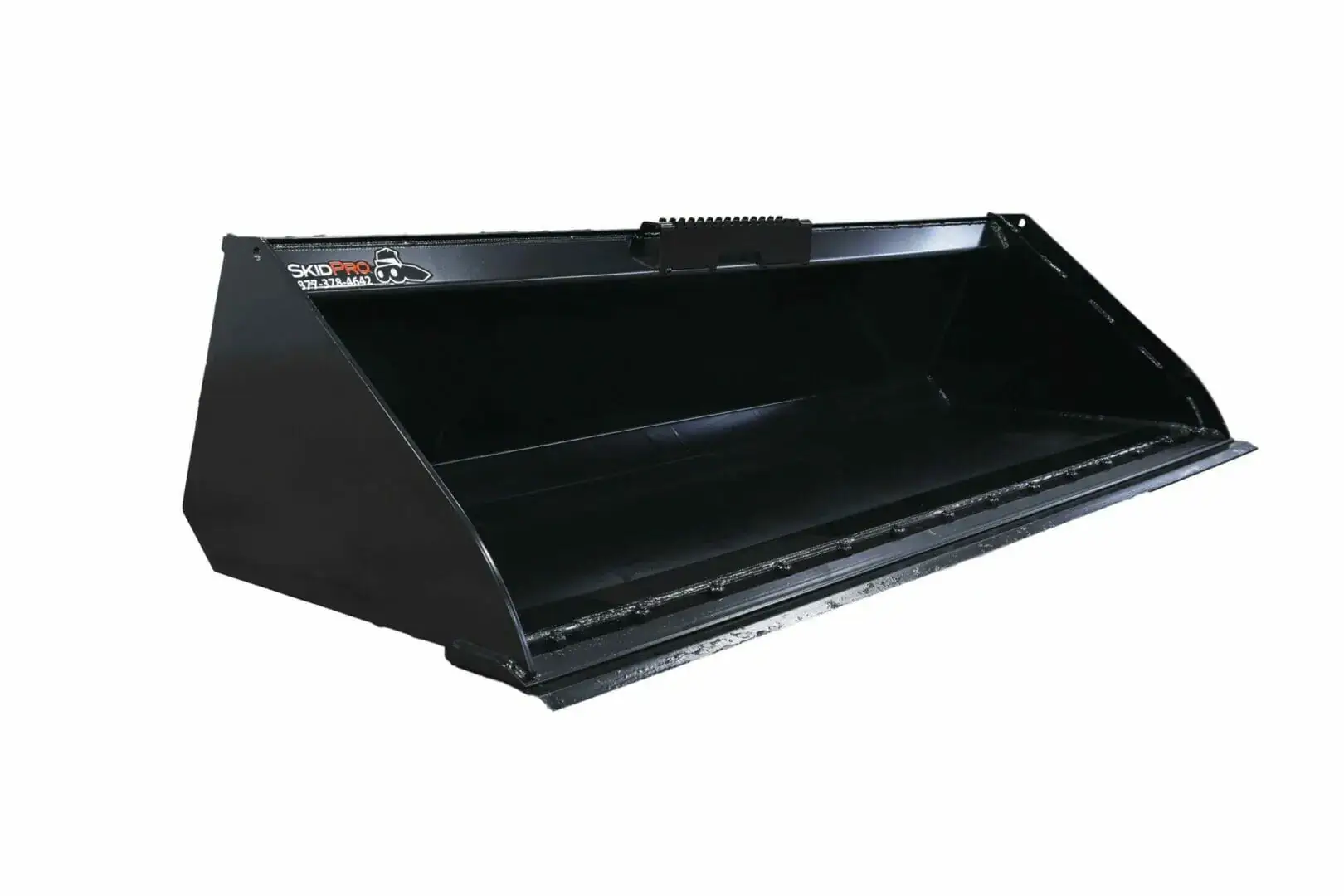
A nonpowered bucket removes hydraulic troubleshooting from the inspection. It does not remove structural risk. Inspect the mounting plate, sidewalls, floor, cutting edge, and welds, paying particular attention to bent sections and cracks near load-bearing connections.
Look at the bucket from several angles. Distortion can affect mounting, ground contact, or material handling even when photographs make the bucket look straight. Fresh paint is neither proof of damage nor evidence of a sound repair.
Ask what any repair involved and who completed it. Do not accept undocumented welding on a critical connection as equivalent to an approved repair. Buy the used bucket only when its structure, application, and mounting condition check out.
Best for: Owners handling brush or irregular material who can inspect both the frame and hydraulic clamping system.
A grapple adds cylinders, hoses, pivot points, and moving jaws to the inspection. That creates more places for wear or damage than a comparable nonpowered attachment, but it also provides powered material retention.
Watch the jaws through their intended travel during a safe demonstration. Look for interference, uneven movement, leaking cylinders, and damaged hose routing. Inspect pin bosses and attachment points rather than judging the grapple only by whether it closes.
Confirm the control arrangement suits your machine. Buy the used grapple only after checking the clamping system and the structure together. A working cylinder does not make a cracked frame acceptable.
Best for: Owners with a defined application, a verified hydraulic match, and access to the required service information.
Augers, trenchers, sweepers, and other motor-driven attachments require checks beyond whether the working tool turns. Identify the motor and drive arrangement, inspect guards and wear components, and establish what maintenance the manufacturer requires.
A no-load demonstration does not establish performance in the intended work. Where a representative demonstration is practical, conduct it within the manufacturer’s operating and safety instructions. Never improvise a test that exposes people to rotating tools, thrown material, or unsupported equipment.
Parts identification matters here. Before committing, establish how you would obtain the wear components and service information for that exact model. Wait on the purchase if hydraulic specifications, drive condition, or critical parts identification remain unresolved.
The useful comparison is between complete working setups, not just two attachments pictured in listings. For a 2026 decision, separate the following factors:
Make a written repair list before deciding. Separate required repairs from optional improvements, then confirm who will perform the work and what parts are needed. An unresolved defect is not a repair plan.
Choose a new attachment when the used unit leaves critical questions unanswered and a documented new option meets your requirements. Compare the actual specification, support, and written terms rather than assuming every new attachment has the same features or coverage.
New equipment still requires a fit check. Your loader brand alone does not establish compatibility, and an attachment category name does not establish flow requirements or operating limits.
Skid Pro is best for skid steer attachment buyers who want manufacturer-direct guidance on machine fit. Its live Product Gurus provide a route for discussing the machine and intended work; a used attachment from another seller still needs its own inspection. Skid Pro also handles used/demo units, so ask about a specific unit’s condition rather than assuming every purchase must be new.
Check your attachment requirements
Review attachment options, then confirm your machine, hydraulic setup, and intended job with a Product Guru.
Wait when the missing demonstration leaves a powered attachment’s condition unresolved. Static photographs cannot establish controlled cylinder movement, motor operation, or performance during the intended task.
For a nonpowered attachment, a physical inspection still matters even though there is no motor to run. If you cannot inspect it yourself, arrange an appropriate independent inspection rather than treating the seller’s description as a substitute.
No. Reported use does not establish condition or fit. Storage, previous applications, repairs, and maintenance all belong in the inspection.
For your 2026 shortlist, prioritize documented identity and observable condition over unsupported descriptions such as lightly used. Ask the seller to show the mounting points, wear areas, identification plate, and complete operating cycle where applicable.
Yes, when the used attachment suits the job, fits your machine, and passes inspection. Occasional use does not make structural damage or hydraulic incompatibility acceptable.
No, compatibility must be checked for the specific machine and attachment. Verify the mounting interface, attachment weight, hydraulic flow and pressure, controls, and any required case-drain connection.
Identify the exact attachment and establish machine compatibility first. Then inspect its structure, wear components, and powered functions where applicable.
A nonpowered bucket has no hydraulic motor or cylinders to inspect. Its mounting points, welds, floor, cutting edge, and structural condition still require careful examination.
Do not approve a repaired attachment on appearance alone. Establish what failed, how the repair was completed, and whether the repair follows the manufacturer’s requirements before considering the purchase.
A video can show movement but cannot replace a complete inspection or establish compatibility. Confirm the attachment identity, test-machine setup, hydraulic requirements, and physical condition.
Warranty coverage depends on the specific sale and written terms. Obtain those terms before purchase rather than assuming original coverage transfers to another owner.
Have your machine’s make, model, mounting arrangement, and documented hydraulic specifications ready. Include the attachment’s model information and a clear description of the intended work.
Before buying in 2026, write down what would make you reject the attachment. Include unresolved structural damage, an unverified hydraulic match, and missing information needed to service the unit.
Keep those rejection points unchanged when you see the machine. A convenient location or a fresh coat of paint does not answer a technical question, and neither should change your inspection standard.