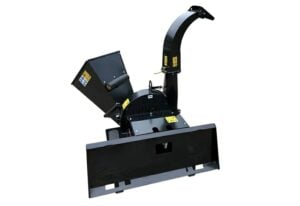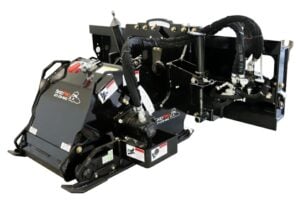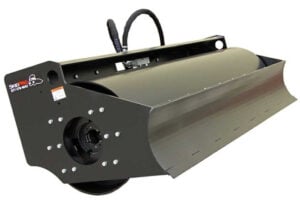

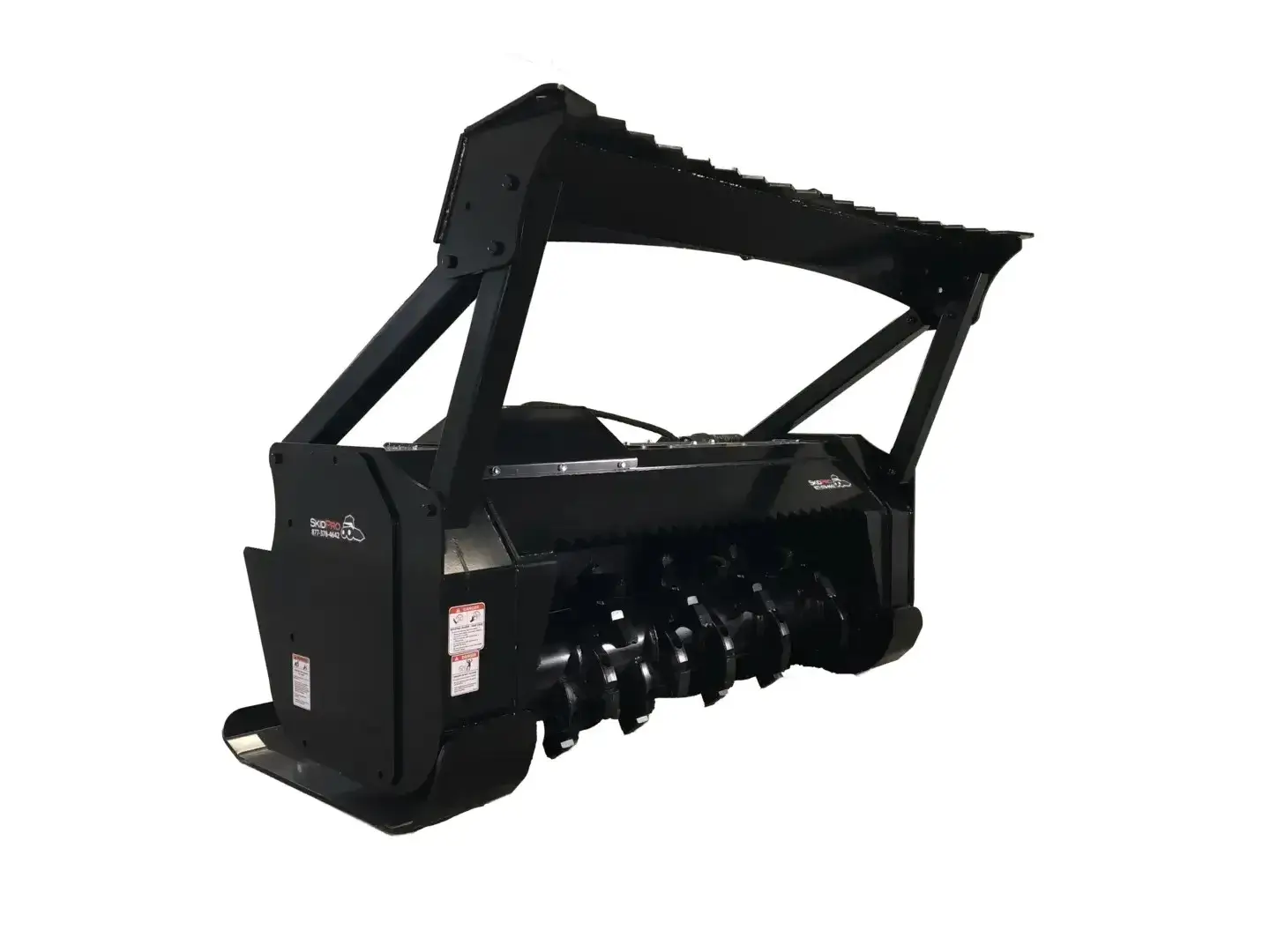
A high-flow skid steer is worth the extra cost in 2026 when the attachments you regularly operate require that hydraulic flow and the work justifies the added ownership expense. It is not worth buying solely for bucket loading, pallet handling, or attachments already matched to standard flow. The decision also includes attachment compatibility, hydraulic pressure, cooling requirements, and machine capacity—not just the high-flow option on the loader.
Buy high flow for an identified attachment and workload, not an unspecified future job. Start with the attachment’s published requirements, then check the loader’s available auxiliary circuit. Skid Pro manufactures skid steer and track loader attachments and offers direct access to Product Gurus for attachment selection.
| Setup | Best for | Main advantage | Main limitation |
|---|---|---|---|
| Standard-flow loader | Owners whose attachments fit its hydraulic specifications | Avoids paying for hydraulic capacity the work does not require | Cannot operate an attachment properly if available flow is below its required range |
| High-flow loader | Recurring work with attachments requiring higher flow | Supports compatible attachments beyond the loader’s standard-flow capability | Added capacity does not guarantee attachment compatibility or faster work |
| Renting a matched setup | Occasional specialized jobs | Lets you address a specific job without owning the entire setup | Requires arranging access and confirming the rental combination’s suitability |
The deciding evidence is the specification for the exact attachment motor and the exact loader configuration. A category name such as brush cutter, trencher, or snow blower does not establish a universal flow requirement.
High flow describes auxiliary hydraulic capability, not an across-the-board increase in loader performance. A bucket does not gain digging force merely because the machine offers a higher-flow attachment circuit. Pallet capacity still depends on the loader’s published limits and operating conditions.
For your 2026 equipment decision, separate loader work from powered attachment work. If your schedule centers on moving material, focus on machine capacity, traction, access, and the attachment itself. If a hydraulic motor drives the tool doing the work, flow and pressure become central selection criteria.
Buying the wrong combination creates two different problems: insufficient flow can limit attachment performance, while excessive flow can exceed the attachment’s permitted input. Neither problem is solved by choosing the larger hydraulic option without checking specifications.
Standard flow is the right choice when it satisfies the attachment’s operating requirements and your workload. The label does not mean light-duty, and high flow does not automatically mean a better match.
Check whether the attachment specifies a permitted flow range, a preferred operating range, or a particular motor configuration. Those distinctions matter. Being inside an allowable range does not establish identical performance throughout that range.
Standard flow also deserves consideration when powered attachments occupy little of your schedule. Avoid assigning value to hydraulic capacity that your current tools cannot use. The tradeoff is reduced flexibility if a planned attachment needs more flow than the loader supplies.
A standard-flow decision is strongest when you can name the attachments, verify their requirements, and confirm that the resulting operating performance suits the job.
High flow earns its place when a compatible attachment needs the additional flow and performs enough useful work to justify it. Suitable applications depend on the attachment’s design, not just whether the job sounds demanding.
Brush cutting, mulching, trenching, and snow removal all involve attachments with differing hydraulic requirements. Do not assume every attachment in those categories needs high flow. Check the individual model and motor option.
High flow is also not a substitute for adequate pressure, engine power, or heat rejection. The loader must support the attachment under sustained operating conditions, not merely list an auxiliary-flow figure in a brochure.
The drawback is straightforward: you take on additional ownership expense without an automatic improvement in every task. A machine fitted with high flow still needs the correct operating mode, suitable hoses and couplers, and an attachment that accepts the supplied flow.
The value of a high-flow skid steer varies with the machine–attachment combination. Use these factors to judge the fit:
These checks apply before brand preference or purchase negotiations. A documented match is more useful than a general claim that an attachment fits a machine brand.
Use the exact model information for both pieces of equipment. For a 2026 purchase, record the specifications of the actual machine being offered rather than relying on another loader from the same product family.
Ask for the compatibility decision in writing, including the relevant operating limits. Keep that information with the attachment manual so the operator can select the correct auxiliary setting before work starts.
Skid Pro is best for owners seeking manufacturer-direct skid steer attachment guidance. Its Product Gurus provide a direct point of contact; loader-side specifications and approval still need to come from the applicable machine documentation or manufacturer.
Check your attachment requirements
Use your loader model and attachment requirements to discuss machine fit with Skid Pro.
Explore skid steer attachments
More GPM increases theoretical hydraulic power when pressure remains the same. It does not establish the attachment’s usable output by itself. Motor efficiency, system losses, available engine power, and the attachment’s operating limits also matter.
The standard hydraulic relationship is:
Theoretical hydraulic horsepower = pressure difference in psi × flow in US GPM ÷ 1,714.
Use the pressure difference across the relevant hydraulic component, not an unrelated maximum-pressure figure. The calculated result describes hydraulic power before losses; it is not a guarantee of cutting, digging, or blowing performance.
Unit differences also cause specification mistakes. 1 US gallon per minute equals approximately 3.785 liters per minute, and 1 mechanical horsepower equals approximately 746 watts. Convert units before comparing documents that use different measurement systems.
For a hydraulic motor of a given displacement, flow principally affects rotational speed and pressure difference principally affects torque. The attachment manufacturer’s limits still control. Sending additional flow to an attachment that cannot accept it is not a performance upgrade.
Judge payback using useful work completed, not the size of the hydraulic system. A higher-flow setup earns a return only when its benefits exceed its added ownership and operating burden.
For your 2026 comparison, obtain written quotes for the complete alternatives. Include the loader configuration, matched attachment, required connections, and any necessary setup work. Compare financing terms separately so a payment difference does not hide a different ownership commitment.
Build the decision around records you can verify:
A practical payback calculation divides the additional upfront investment by the annual net benefit. If annual net benefit is not positive, that calculation does not show a payback. Do not insert assumed productivity gains just to make the purchase work.
A high-flow-equipped loader can run a standard-flow attachment when it provides a suitable selectable setting and the complete combination meets the attachment’s requirements. Confirm that capability in the loader manual; do not assume the high-flow circuit automatically regulates itself for every tool.
Set the correct flow mode before operating. Check pressure limits, controls, and case-drain requirements as well. A suitable GPM setting is only part of compatibility.
High flow is necessary only when the particular trencher requires it. Select around the attachment’s motor specifications and the trenching job, not the category name.
The skid steer trencher guide is a relevant starting point when trenching drives your equipment decision. Confirm the individual attachment’s flow and pressure requirements before choosing the loader configuration.
An occasional job does not justify high flow by itself. Compare owning the matched setup with renting or subcontracting the specific work, including mobilization and scheduling requirements.
Upgrade when documented benefits support the ownership decision. If the attachment is only a possible future purchase, establish its actual requirements before paying for loader capacity around it.
A high-flow skid steer is worth the extra cost for a landowner when recurring work requires a compatible higher-flow attachment and ownership makes financial sense. Acreage alone does not establish the need; identify the attachment and workload first.
The best hydraulic setup for brush cutting is the one that matches the cutter’s published flow, pressure, and connection requirements. Cutting method, material, attachment weight, and loader capacity also affect the selection.
Supplying flow above an attachment’s permitted limit can damage it. Verify the allowable input and select the correct loader setting before operation; mounting compatibility does not establish hydraulic compatibility.
High flow does not establish a skid steer’s lifting capacity. Use the loader manufacturer’s published capacity information for the machine configuration and account for the attachment and carried load.
Provide the exact loader model and configuration, available auxiliary flow and pressure, mounting interface, and intended work. Include electrical-control and case-drain information where relevant so the manufacturer can assess the complete combination.
Buy high flow for a future attachment only after identifying that attachment’s requirements and a credible workload. An unspecified future need does not establish a return on the added investment.
Compare the complete machine–attachment match, useful work output, and ownership expense when buying a high-flow skid steer in 2026. Verify flow, pressure, cooling provisions, connections, attachment weight, and machine capacity before deciding.
The attachment that determines your loader purchase should have a name and a specification sheet. Before you commit, write that attachment at the top of your comparison and put its operating requirements beside each machine’s capabilities.
If you cannot identify the attachment or the recurring work, pause the high-flow upgrade. Buy the hydraulic capability your work requires—not a label you hope to use later.