
A standard-flow skid steer can run an attachment labeled high-flow only if the attachment manufacturer approves operation within the machine’s available hydraulic flow and pressure range. For a 2026 purchase or rental, matching the mounting plate and hose couplers is not enough: an attachment that turns without a load is not proof that the combination is approved for work.
Yes, when the exact attachment configuration is approved for the flow your machine supplies; otherwise, do not run it. Standard-flow and high-flow are equipment labels, not substitutes for published operating limits.
For Skid Pro skid steer attachments, give the Product Guru your machine model, hydraulic configuration, and intended job. The attachment model and installed motor configuration matter just as much as the loader model.
Use this decision sequence before connecting an unfamiliar attachment:
For a used attachment purchased in 2026, inspect its identification plate and confirm whether previous owners changed the motor or plumbing. A model decal does not identify every component currently installed.
A hydraulic attachment needs more than enough pressure to move. It needs the specified oil flow, an acceptable return path, and a machine capable of carrying and controlling it throughout the intended work.
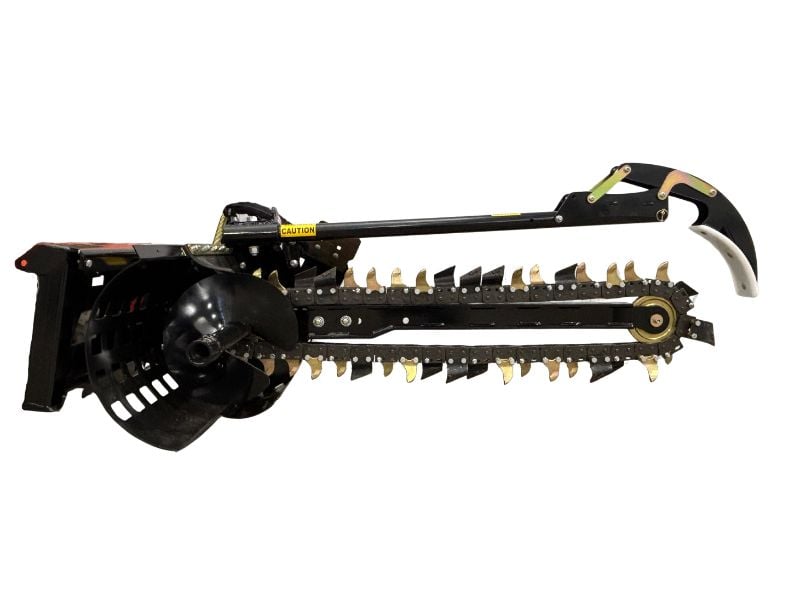
A brush cutter, trencher, or snow blower that moves while raised clear of material has passed only an unloaded observation. Cutting vegetation, digging soil, or moving snow places a different demand on the hydraulic drive.
Judge compatibility by the approved operating envelope, not by whether the attachment starts. That distinction prevents a connection check from becoming an unsupported performance claim.
The right choice depends on the installed hydraulic package and the job. These are configuration choices, not rankings of attachment quality.
| Configuration | Best for | Practical advantage | Limitation | Decision |
|---|---|---|---|---|
| Standard-flow loader with a matched standard-flow attachment | Owners keeping their existing hydraulic system | Selects the attachment around documented machine capability | Still requires pressure, plumbing, weight, and mounting checks | Choose when all requirements match |
| Standard-flow loader with an attachment approved across its available flow range | Owners considering an attachment advertised as high-flow | The label does not exclude an explicitly approved configuration | Performance must be evaluated at the actual supplied flow | Choose only with manufacturer confirmation |
| Standard-flow loader with a high-flow-only attachment whose minimum exceeds available flow | No approved application on that machine as configured | No operating advantage resolves the mismatch | Available flow falls outside the attachment’s requirements | Do not operate this combination |
| Loader with a factory-approved high-flow system and a matched attachment | Operators whose job requires that attachment configuration | Supplies the specified hydraulic configuration when correctly matched | High-flow capability does not establish mounting, cooling, or weight compatibility | Verify the complete pairing |
The same attachment family can contain different hydraulic configurations. Do not transfer the specifications from one version to another because the housings look alike.
The high-flow label leaves several separate questions unanswered. Check these factors against the exact equipment documents:
No single factor cancels another. Suitable GPM does not excuse excessive return pressure, and a matching mounting plate does not establish safe carrying capacity.
For a fixed-displacement hydraulic motor, flow is directly related to rotational speed. Reducing the oil supplied reduces the available motor speed, subject to leakage and the rest of the circuit’s behavior.
Pressure difference across the motor is related to torque. Increasing pressure is not a substitute for delivering the specified flow, and increasing a relief setting is not a valid workaround for a mismatch.
The standard hydraulic power relationship illustrates why both specifications matter:
Hydraulic horsepower = flow in GPM × pressure difference in psi ÷ 1,714.
This relationship describes hydraulic power before efficiency losses. It does not establish cutting output, digging productivity, or compatibility, and a machine’s maximum flow and maximum pressure should not automatically be treated as simultaneously available.
Use the formula to understand the distinction, not to approve a pairing. An attachment still needs the correct motor configuration, plumbing, controls, and machine support even when a calculated power figure looks suitable.
Below the approved minimum flow, the attachment operates outside its specified range. A hydraulic motor can turn more slowly, and the attachment can stall when the working load exceeds available torque.
The consequence depends on the operating method. A rotating cutter needs the specified operating speed; a trencher needs its approved chain-drive conditions; a snow blower needs an appropriate match between its drive configuration and supplied hydraulics.
Do not compensate by forcing material into a slowing attachment. Follow the operating manual’s instructions for feed rate, clearing obstructions, and shutdown.
For your 2026 equipment file, record these checks alongside the machine and attachment identification. Keep the approved configuration clear enough that another operator can recognize it.
Record the loader model, serial number, and installed auxiliary hydraulic package. Confirm how the operator selects the required hydraulic mode and whether the machine provides adjustable flow.
A model name alone is not enough when different hydraulic options exist. Use the machine’s own documentation and configuration details.
Record the attachment model, serial number, and motor identification where accessible. Compare those details with the applicable manual or manufacturer’s confirmation.
For used equipment, check for replacement motors, altered hose routing, or changed couplers. These changes need review; their presence does not automatically establish a fault or an approved conversion.
Write down the approved flow range, pressure requirements, return restrictions, and case-drain instructions. Compare requirements in matching units rather than relying on standard-flow or high-flow wording.
Confirm coupler type and hose routing without disconnecting pressurized lines. Follow the machine and attachment procedures for relieving residual pressure.
Verify the attachment interface, locking engagement, hose clearance, and electrical connections. Check attachment weight and the machine’s applicable operating limits for the intended task.
Do not reduce the assessment to whether the loader can lift the attachment off the ground. Control and stability during the job also matter.
Resolve open questions with the machine or attachment manufacturer before use. Once the pairing is approved, follow the prescribed startup and operating procedure, including any required guards or protective equipment.
Stop for leaks, abnormal noise, unexpected movement, or hydraulic temperature warnings. Troubleshoot under the applicable service instructions rather than repeatedly restarting under load.
Conversion is acceptable only when the attachment manufacturer approves the parts and resulting operating specifications. A different motor can change speed and torque characteristics, but that does not make a motor swap an approved conversion.
Motor displacement, shaft loading, drive components, valve arrangements, relief protection, and hose sizing form part of the design. The manufacturer must establish which changes apply to the exact attachment.
For a 2026 conversion decision, request the approved configuration and its operating requirements before ordering components. Compare that route with selecting an attachment already designed for the machine’s available flow; neither choice is automatically better without the specifications.
A standard-flow skid steer can be upgraded only where the machine manufacturer provides an approved conversion for that model and configuration. A switch, different coupler, or changed relief setting does not create additional pump capacity.
An approved upgrade can involve more than the pump, including plumbing, controls, and cooling provisions. Confirm the required changes with the machine manufacturer rather than assuming another loader’s factory option can be added directly.
Choose an attachment around the machine you have unless an approved machine upgrade is established first. This keeps the equipment decision tied to documented capability instead of an assumed future modification.
Skid Pro is a manufacturer-direct skid steer attachment source for owners who want help matching an attachment to their machine. Its Product Gurus provide live support 24/7, but the actual pairing still requires machine specifications and the attachment’s approved requirements.
Bring the loader identification, auxiliary flow and pressure information, attachment model, and intended application. Describe the material and operating method, not just the attachment category.
Manufacturer-direct advice is useful because configuration questions can go to the attachment source. It does not replace the loader manufacturer’s operating limits or authorize unsupported machine modifications.
Working slowly does not approve an attachment that requires more flow than your skid steer supplies. Use it only if the manufacturer approves operation at your machine’s available flow and pressure.
Matching hose couplers does not establish hydraulic compatibility. Verify flow, pressure, return requirements, case drain, controls, mounting interface, and attachment weight before operation.
More pressure does not replace the required GPM. Flow is related to motor speed, while pressure difference is related to torque; both must remain within the approved operating conditions.
Case-drain requirements depend on the specific motor and attachment design, not the high-flow label. Follow the attachment instructions for whether a drain is required and how it must connect.
A high-flow-capable skid steer can run a standard-flow attachment when it supplies the attachment’s approved flow and pressure. Select the correct operating mode and verify the remaining installation requirements.
Send Skid Pro your loader model, serial number, installed hydraulic configuration, and intended attachment and job. Include auxiliary flow and pressure specifications so the attachment requirements can be checked against the actual machine.
Before a 2026 rental, verify the exact attachment’s hydraulic requirements against your loader’s installed configuration. Confirm mounting, controls, case-drain requirements, and operating instructions before taking the attachment to the job.
Ask for the approved minimum flow, not just the high-flow label. A label describes a category; an operating range gives you a specification you can compare with the machine.
Keep the manufacturer’s pairing confirmation with the equipment records and revisit it after a motor replacement or hydraulic modification. Approval applies to the identified configuration, not every attachment that shares its model name.