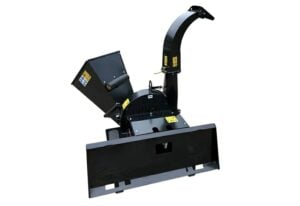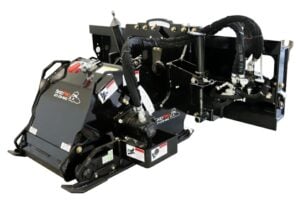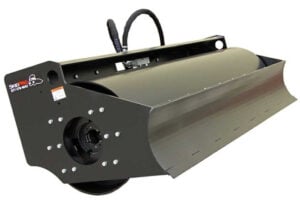

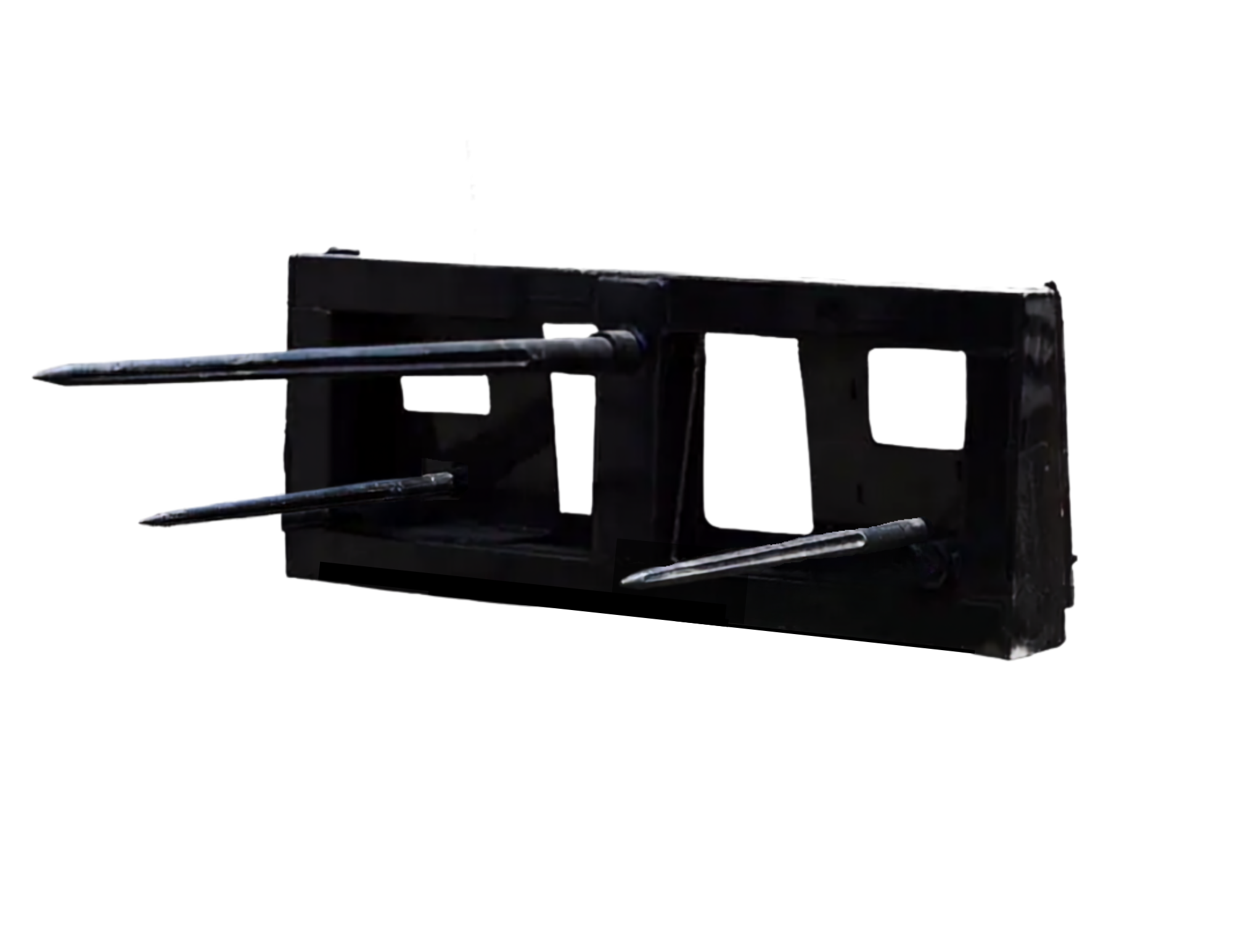
Best overall: Skid Pro Skeleton Grapple Bucket for round bale handling and pasture debris cleanup. Best for daily hay feeding: Skid Pro Bale Spears. Best for land clearing: Skid Pro HD3 Brush Cutter. Best for pen and fence line grading: Skid Pro Landscape Rake. Best for winter chores: Skid Pro Mini Snow Blower.
A cattle operation runs one skid steer through feeding, calving, fencing, brush clearing, and winter chores in the same calendar year. Buying the wrong attachment means either a machine that can’t run it (hydraulic flow mismatch) or a tool that sits idle nine months out of twelve. Skid Pro builds a full line of attachments specifically for this kind of multi-job use, which is why the ranking below leans on attachments that earn their keep across a full ranching calendar, not just a single chore.
Your loader’s auxiliary flow (GPM) must fall inside the range on the attachment’s Skid Pro spec table. That number determines which attachments actually work on your machine, and it’s the first thing to check before any purchase in 2026 — before price, before brand, before color.
| Attachment | Best for | Standout feature | Key limitation |
|---|---|---|---|
| Skid Pro Skeleton Grapple Bucket | Bale handling and debris cleanup | Grapple arms hold irregular loads bucket-only tools can’t grip | Slower cycle time than a dedicated bale spear on straight feeding runs |
| Skid Pro Bale Spears | Daily hay feeding | Single-pass bale transport, minimal hydraulic demand | Doesn’t handle brush, rock, or loose debris |
| Skid Pro HD3 Brush Cutter | Pasture and fence line clearing | Mulches brush and cedar in place instead of hauling it off | Runs on 15–25 GPM standard flow |
| Skid Pro Landscape Rake | Pen grading and fence line prep | Rolls and windrows rock and debris in one pass | Not built for heavy load-bearing work like grapples or forks |
| Skid Pro Mini Snow Blower | Winter lane clearing | Throws snow clear of barn doors and feed lanes | Seasonal use only; sits idle most of the year |
The Skeleton Grapple Bucket combines a bucket floor with hydraulic grapple arms, so it scoops loose material and clamps round bales, brush piles, and fence scrap in the same pass. Ranchers running mixed cleanup — bales one day, storm debris the next — get more use out of one attachment than swapping tools for each job. It runs on standard-flow hydraulics on most full-size skid steers, which keeps it usable across a wider range of machines than high-flow-only tools.
Skid Pro Skeleton Grapple Bucket pros:
Skid Pro Skeleton Grapple Bucket cons:
Best for: ranchers who need one tool for bales, brush, and pen cleanup instead of three. Verdict: Buy.
A bale spear is the simplest way to move round bales from stack to feed line, and simple means fewer hydraulic demands and less to service. It mounts on the same universal quick-attach plate as the rest of the lineup, so it swaps on and off in minutes during morning feeding.
Skid Pro Bale Spears pros:
Skid Pro Bale Spears cons:
Best for: operations feeding bales every day where speed matters more than versatility. Verdict: Buy.
Cedar encroachment and brush overgrowth cut usable grazing acres year over year, and a brush cutter or mulcher attacks that in place instead of requiring hauling and burning. These attachments run best on 15–25 GPM standard-flow circuits (see the Industrial High Flow Open Front at 25–60 GPM for high-flow machines) where cutting speed and material throughput hold up under continuous use.
Skid Pro HD3 Brush Cutter pros:
Skid Pro HD3 Brush Cutter cons:
Best for: ranchers reclaiming pasture from brush and cedar. Verdict: Buy if your skid steer has 15–25 GPM standard flow.
A landscape rake pulls rock, roots, and debris out of soil while leveling the surface in the same pass, which makes it useful for prepping pen floors, fence lines, and access roads before a fence crew or gravel truck shows up. It’s a lighter-duty attachment than a grapple or fork, built for surface work rather than lifting.
Skid Pro Landscape Rake pros:
Skid Pro Landscape Rake cons:
Best for: pen maintenance and fence line prep between grazing seasons. Verdict: Buy.
Winter access to calving barns and feed lanes matters more on a ranch than curb appeal, and a Mini Snow Blower attachment throws snow clear of doorways and equipment paths without a dedicated snow machine sitting in the shed eleven months a year. It’s the shortest-duty-cycle attachment on this list, which is exactly why it earns a spot instead of a full-size blower.
Skid Pro Mini Snow Blower pros:
Skid Pro Mini Snow Blower cons:
Best for: ranches needing clear access to barns and feed lines through winter. Verdict: Buy.
Check fit before you order
Confirm hydraulic flow and mount compatibility with a Skid Pro Product Guru.
Each attachment above was slotted by the criteria set earlier: hydraulic flow requirement, quick-attach mount fit, application specificity, duty cycle, and weight versus rated operating capacity. No two attachments compete for the same job — a grapple bucket and a bale spear both touch hay, but one is built for mixed loads and the other for speed. That’s a decision tree, not a leaderboard: pick the job first, then the attachment.
If your skid steer doesn’t hit the flow number stamped on the attachment spec sheet, the tool won’t run at rated speed no matter how heavy the steel is.
For most cattle operations, the Skid Pro Skeleton Grapple Bucket is the default first purchase — it covers feeding, cleanup, and brush handling in one tool while you build out the rest of the lineup. Add Bale Spears once daily feeding volume justifies a dedicated tool, then a HD3 Brush Cutter if pasture reclamation is on the to-do list. Rake and snow blower attachments round out the fleet for seasonal work. Machine interface, hydraulic flow, weight rating, and application still have to be checked against your specific skid steer or track loader before any of these ship — no attachment on this list is universally compatible.
The Skid Pro Skeleton Grapple Bucket is the best all-around pick for 2026 because it handles round bales, brush, and pen debris in one tool. Ranchers feeding daily should pair it with a dedicated Bale Spears for speed.
Most grapple buckets run on standard-flow hydraulics, though grapple arm speed improves on higher-flow circuits. Check the attachment’s rated flow against your skid steer’s spec sheet before ordering.
A single skid steer can run bale spears, grapple buckets, rakes, and snow blowers if it meets the flow and weight requirements for each. The Skid Pro HD3 Brush Cutter runs on 15–25 GPM standard flow; the Industrial High Flow Open Front (25–60 GPM) is the high-flow option.
A bale spear moves round bales quickly with minimal hydraulic demand but can’t handle loose material. A grapple bucket clamps bales, brush, and debris, trading some speed for versatility.
Universal quick-attach mounts cover most skid steer loaders, but the exact interface, hydraulic flow, and weight rating still need to be confirmed for your specific model. No attachment fits every machine without that check.
A mulcher processes brush and small trees in place, leaving mulch on the ground instead of a pile to haul. A brush cutter shears material faster but usually leaves debris that needs a second cleanup pass.
A skid steer snow blower clears access lanes to barns, feed lines, and calving areas by throwing snow clear of the path in a single pass. Compact models fit smaller skid steers and tight barn lanes better than full-size units.
Financing options are available directly through manufacturers like Skid Pro for qualifying purchases. Terms and availability vary, so check current options before budgeting a purchase.
The attachment that gets skipped most often on this list is the landscape rake, and it’s usually the one that saves the most time — a single pass of rock-picking and grading before a fence crew arrives beats a full day of hand tools. Before adding any attachment to a skid steer fleet in 2026, confirm hydraulic flow and mount interface first; the right tool on the wrong circuit just sits in the shed.