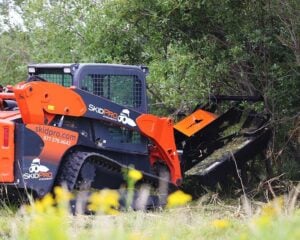


Are all skid steer attachments compatible with every machine? Not always. While many skid steers feature a “universal quick attach” system, fitting the right attachment to your specific model requires careful consideration of coupler types, hydraulic flow, lift capacity, and control systems. Choosing the wrong attachment can lead to poor performance or worse, equipment damage.
In this in-depth guide, we’ll show you exactly how to match skid steer attachments to your machine to ensure safety, performance, and return on investment whether you run a Bobcat, Kubota, Case, or any major brand.
Choosing the wrong attachment isn’t just inconvenient, it can:
With so many attachments available (from augers and trenchers to brush cutters and snow blowers), knowing what fits your skid steer model is essential for both safety and efficiency.
Most modern skid steers use a Standard Skid Steer Quick Attach (SSQA) or Bobcat-style coupler, which allows cross-brand compatibility. If your machine is made in the last 10-15 years, chances are it uses SSQA.
Compatible brands using SSQA:
Check older or mini skid steers: Brands like Toro, Vermeer, and Ditch Witch often use specialized mount styles like the Dingo-style plate or Mini Universal.
When selecting a hydraulic attachment (e.g., post drivers, trenchers, cold planers), your hydraulic specs must match.
Types of Hydraulic Flow:
| Type | Flow Rate (GPM) | Examples of Compatible Attachments |
| Standard Flow | 15–22 GPM | Augers, grapples, mowers, sweepers |
| High Flow | 22–45+ GPM | Forestry mulchers, snow blowers, planers |
| Super High Flow (optional) | 45+ GPM | Specialized commercial-grade tools |
Also check hydraulic pressure (PSI). Some attachments require 3,000 PSI or more to operate effectively.
How to verify hydraulic compatibility:
Every attachment adds front-end weight. That weight shifts your center of gravity, which can lead to tipping or damage if your machine isn’t built for it.
Use Your Rated Operating Capacity (ROC):
| ROC Range | Suggested Attachment Use |
| Under 1,500 lbs | Buckets, forks, mini grapples |
| 1,500–2,500 lbs | Augers, concrete mixers, trenchers |
| 2,500+ lbs | Mulchers, breakers, brush cutters |
Don’t max out your capacity. Leave room for materials you’ll be lifting (e.g., logs, dirt) and account for terrain conditions.
Some attachments need electrical input to activate functions like:
Modern joystick-controlled skid steers often come pre-wired, but older models may need a plug-and-play harness or custom wiring.
Key connector types to check:
Ask your dealer or attachment supplier about plug compatibility and adapter kits for your model.
Every skid steer brand is a little different, here’s what you should watch out for:
Bobcat skid steer attachments are the most commonly searched compatibility question we see — if you’re running a Bobcat, SSQA-standard attachments (including Skid Pro’s full line) will fit without modification across nearly all current and recent Bobcat models.
No. While many are designed for universal quick attach (SSQA), compatibility also depends on hydraulic and electrical requirements.
No. High-flow attachments won’t function properly and may damage your hydraulic system if used with standard-flow output.
Standard flow is typically 15–25 GPM. High flow starts around 25+ GPM and powers demanding attachments like planers and mulchers.
Some machines support retrofit kits, but it’s often more economical to choose attachments that match your machine’s current flow.
Check your machine’s manual or contact an expert. Reputable manufacturers like Skid Pro provide full compatibility support.
Not entirely. Most modern skid steers (10–15 years old or newer) use the Standard Skid Steer Quick Attach (SSQA) system, which makes skid steer attachments interchangeable across major brands like Bobcat, Kubota, Case, and John Deere. However, “universal” fit still depends on matching hydraulic flow, pressure, and for powered attachments – electrical connectors to your specific machine.
No. Even attachments built for the SSQA mounting standard can differ in hydraulic flow requirements, pressure ratings, and electrical connectors, so a physical fit doesn’t guarantee full compatibility – always check GPM, PSI, and control requirements alongside the coupler type.
In most cases, yes – both Bobcat and Kubota skid steers typically use the SSQA mounting system, so attachments built to that standard will physically fit either brand. Confirm hydraulic flow (GPM) and pressure (PSI) match between the attachment and your specific Kubota model before use.
Generally yes for newer models – most current CAT and John Deere skid steers use the SSQA coupler, so attachments are physically cross-compatible. Older John Deere models may use a proprietary coupler, so check your specific model year before assuming fit.
Yes. Newer John Deere skid steers support SSQA and joystick-based controls, making them compatible with most standard attachments. Older Deere models may require a proprietary coupler or adapter – check your operator’s manual to confirm.
Skid steer attachments are built for skid steer loaders, not tractors – the two use different mounting systems, hydraulic setups, and weight distributions. If you’re running a Kubota tractor rather than a Kubota skid steer, you’ll need tractor-specific implements, not skid steer attachments.
Call our team or contact Us – our experts will help you choose the right tools to match your exact model and job needs.